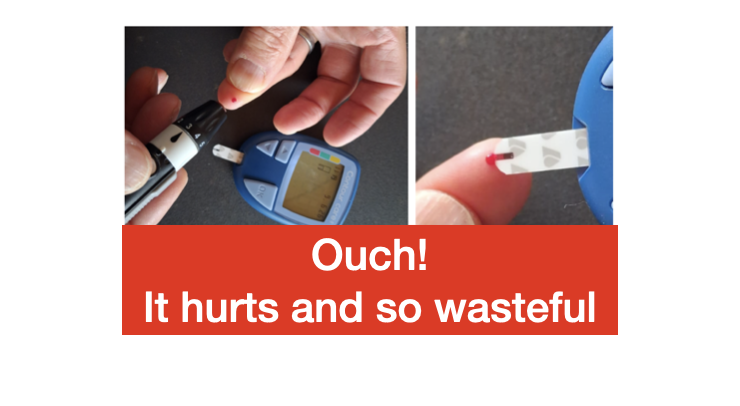
The dream has always sounded deceptively simple. Measure glucose without puncturing the body. Replace finger pricks, filaments and implanted sensors with something as ordinary as a watch, a patch or a scanner. Yet for decades the history of non-invasive glucose monitoring has been less a story of steady progress than a graveyard of elegant ideas defeated by biology, signal noise, regulation and the unforgiving arithmetic of clinical accuracy. The newest chapter in that history, and one of the most interesting to emerge from Finland, is being written by GlucoModicum, a University of Helsinki spinout built around an unusual physical principle: magnetohydrodynamic extraction of interstitial fluid through intact skin. To understand why that matters, it helps to begin with the field’s long record of disappointment.
The basic obstacle is not a lack of ingenuity. It is that glucose is a small molecule present in a complex, noisy, variable biological environment. Non-invasive systems generally try to infer glucose through skin, sweat, optical spectra, impedance changes or indirect correlations. Every one of those routes is vulnerable to confounders such as hydration, tissue composition, sweat, temperature, local blood flow, motion artefacts, skin thickness, calibration drift and the temporal lag between blood and interstitial compartments. Reviews of the field repeatedly describe the same pattern: promising laboratory signals, attractive prototypes, disappointing real-world robustness, and a stubborn gap between proof of principle and clinically dependable product performance.
The best historical symbol of that cycle remains the GlucoWatch Biographer. Approved by the FDA in 2001 as an adjunctive device, it was the first widely noticed attempt to move glucose monitoring onto the wrist without drawing blood. Its method was reverse iontophoresis, in which a small current pulls interstitial glucose through intact skin for electrochemical sensing. On paper, the concept was revolutionary. In practice, the device required warm-up and calibration, could lag blood glucose by about 15 minutes, and could skip readings in the presence of sweating or temperature fluctuations. It was authorised as a supplement to, not a replacement for, standard blood glucose testing. Even before one gets to commercial fate, the regulatory language itself tells the story: novel, impressive, but not yet trusted for sole clinical decision making.
That caution echoes loudly in the present. In February 2024, the US Food and Drug Administration warned consumers not to use smartwatches or smart rings that claim to measure blood glucose without piercing the skin. The FDA stated plainly that it had not authorised, cleared or approved any such smartwatch or smart ring as a stand-alone glucose measuring device. That is a remarkable marker of where the field still stands. After decades of effort, a large part of the public-facing market for “non-invasive” glucose wearables remains populated not by regulated medical breakthroughs but by overclaiming gadgets. For policy makers, clinicians and innovation funders, that warning is more than consumer guidance. It is a reminder that this category remains scientifically alluring and commercially hazardous.
The paradox is that glucose monitoring itself has, in another sense, been a major medtech success story. Continuous glucose monitors have transformed diabetes care. The mainstream systems named in the GlucoModicum human pilot paper already define the clinical standard: Abbott’s FreeStyle Libre, Dexcom’s CGM line and Senseonics’ implantable Eversense are built around interstitial glucose sensing and have improved glycaemic management, time in range and quality of life. But they do so through minimally invasive means, using a subcutaneous filament or implanted sensor. The field therefore sits in an awkward middle ground. We know continuous monitoring works. We know patients benefit. We also know the dominant products still ask the body to accept a needle, a filament or an implant.
That is why the phrase “non-invasive glucose monitoring” can be misleading. The real contest is not simply between invasive and non-invasive. It is between different ways of getting trustworthy access to the glucose signal. Optical methods try to detect glucose through tissue. Sweat-based systems try to use a more easily accessible fluid, though the correlation to blood glucose can be poor or unstable. Reverse iontophoresis tries to pull interstitial fluid across skin. Raman and related spectroscopic approaches try to isolate a faint molecular fingerprint from overwhelming biological background. Each approach lives or dies not on elegance but on whether it can produce clinically useful numbers, across populations and conditions, with enough consistency to survive regulators, physicians and reimbursement systems.
Other needle-free glucose-monitoring efforts
Seen against that backdrop, today’s “needle-free” efforts separate into at least two broad camps. One camp aims to infer glucose indirectly and non-invasively, most often using optical or electromagnetic methods. The other tries to access interstitial fluid without needles, preserving a more direct biochemical link while avoiding skin penetration. The distinction matters. Optical systems promise a cleaner user experience if they work, but they face the hardest signal-extraction problem. Surface or transdermal fluid-sampling systems still have to contend with barriers of transport, lag and skin interface, but they are trying to measure glucose closer to the source rather than infer it from more distant proxies. GlucoModicum belongs firmly to the second camp.
The old reverse-iontophoresis lineage illustrates both the attraction and the frustration of the transdermal approach. GlucoWatch showed that extracting interstitial glucose through skin was possible, but it also exposed the operational burdens of warm-up time, calibration, skipped readings and skin irritation. Later efforts, including Nemaura’s SugarBEAT, have sought to modernise the concept with more wearable patch formats and improved algorithms. Yet the wider field has still not delivered a globally established, widely adopted, needle-free CGM equivalent to the big minimally invasive leaders. That disconnect between recurring technical promise and limited clinical penetration is one reason why the GlucoModicum case deserves close attention rather than automatic celebration.
At the same time, the optical camp has continued to improve. In 2025, a Nature Metabolism study reported non-invasive glucose sensing in humans using multiple micro-spatially offset Raman spectroscopy, a depth-selective Raman approach designed to target the capillary-rich dermal-epidermal junction rather than averaging signals across all illuminated skin layers. A related commentary described this as an important advance because ordinary through-skin optical measurement often suffers from mixed signals from multiple skin layers. This is serious science, not gadget theatre. Yet even here the message is not that the problem has been solved, only that the field has found a cleverer path through one of its core obstacles.
What makes GlucoModicum interesting is that it sidesteps the central weakness of many optical claims. It is not trying to “see” glucose through skin. It is trying to sample interstitial fluid from beneath the skin surface without using a needle, then measure glucose in that extracted fluid. That may sound like a technical nuance, but in glucose monitoring it is a philosophical divide. Instead of inferring the signal at a distance, GlucoModicum is attempting to bring the analyte itself, or at least a representative fluid carrying it, into contact with a biosensor. In other words, the company’s wager is that the hardest part of needle-free glucose monitoring is not measurement alone. It is sampling.
That wager is also what links GlucoModicum to the history of failed or partial successes in a more useful way than many press releases do. Too often, companies talk as if the field’s past collapses simply reflect old hardware awaiting better software. But the literature suggests something deeper. Sampling has been the missing bridge. If you cannot extract or access a fluid that tracks blood glucose reliably enough, a superb sensor is irrelevant. Conversely, if you can sample representative interstitial fluid efficiently through intact skin, the rest of the engineering stack begins to look more tractable. The company’s scientific chain, from ex vivo fluid extraction to biosensor integration to first-in-human correlation, is therefore unusually coherent by the standards of this field.
The wager: solve the sampling problem
GlucoModicum was founded in 2018 as a spin out of the University of Helsinki. The university says explicitly that the underlying innovation emerged from university research and was commercialised through its spinout process, with the university becoming one of the company’s owners in 2018. The company today presents itself as the creator of a needle-free glucose monitor platform built on proprietary magnetohydrodynamic technology, and says its first product is a wearable non-invasive glucose monitor. As a narrative of translational research, the chain is unusually visible: academic physics and bioelectrochemistry at one end, named university commercialisation structures in the middle, and a product-focused medtech company at the other.
The policy significance of that chain is worth pausing on. University spinout rhetoric is cheap across Europe. What is uncommon is a case where the institution publicly describes the commercialisation path, the spinout formation year, the ownership relationship, and the technologies involved, while peer-reviewed publications supply technical stepping stones rather than a vague halo of “science-backed innovation”. The University of Helsinki’s commercialisation framework explains that research innovations can move into spinouts through intellectual property agreements and dedicated commercialisation projects. Its GlucoModicum page places this particular company inside that machinery, not outside it. For innovation-policy audiences, that matters because it allows scrutiny. The public can actually inspect the bridge between laboratory claim and corporate promise.
So what, exactly, is the technology? In its 2021 Scientific Reports work, the GlucoModicum-linked research team introduced magnetohydrodynamics as a way to extract dermal interstitial fluid through skin using Lorentz force. In simple terms, the method uses the interaction of electric current and magnetic field to drive movement of conductive fluid. In ex vivo porcine skin, the authors reported that this MHD sampling route was superior to reverse iontophoresis and, according to the University of Helsinki and company summaries of that paper, about 13 times faster and more effective than the predecessor approach. This is the first important point: GlucoModicum’s claim does not begin with an app, a wristband or an algorithm. It begins with a new sampling mechanism.
The second step in the chain arrived in 2022 with a Biosensors and Bioelectronics paper on integrating MHD extraction with an amperometric glucose biosensor. That paper focused on enzyme immobilisation and the skin-sensor interface, which may sound pedestrian next to the poetry of “needle-free”, but it is exactly the kind of engineering detail that often destroys flashy biosensor concepts. The researchers reported development of a wearable device concept in which reproducible extraction through skin and efficient transport of the extracted fluid to the sensor surface were prerequisites. They optimised both the biosensor chemistry and the interface layer, then evaluated glucose detection after fluid extraction through porcine skin. This is not merely a nice supplementary result. It is the translational hinge between raw fluid movement and an actual measuring system.
Only after those stages comes the paper that matters most for credibility: the 2022 Scientific Reports first-in-human pilot. In ten glucose tolerance tests across five healthy volunteers, the researchers found a significant correlation between glucose concentration in MHD-extracted interstitial fluid and capillary blood glucose. After calibration and time-lag removal, the study reported a mean absolute relative difference of 12.9 per cent and a precision absolute relative difference of 13.1 per cent. The paper and the related company statement also noted that no long-lasting skin effects were observed. For a field crowded with claims that never survive contact with human skin, this was real evidence, modest in scale but importantly concrete.
It is also worth dwelling on the phrase “after calibration and time-lag removal”, because everything serious about this story lives inside those qualifying words. The first temptation in startup reporting is to read a MARD number and home in on competitiveness. The second, more useful instinct is to ask what conditions had to be imposed to reach that number. In GlucoModicum’s case, the human pilot did not show a magically self-sufficient, ready-to-market patch producing clinical-grade values from first principles. It showed that, once calibrated and corrected for lag, MHD-extracted interstitial fluid can track capillary blood glucose with a promising level of agreement. That is a milestone, not a finish line.
The evidence
For scientific and medtech readers, the value of GlucoModicum lies partly in what the evidence does not overclaim. The pilot was small. The participants were healthy volunteers rather than a broad diabetic population. The study design used oral glucose tolerance tests in controlled settings. The signal required calibration and lag correction. That matters because interstitial-fluid glucose monitoring is always negotiating a physiological delay relative to blood glucose, and because diabetes technology ultimately has to perform not during neat laboratory excursions alone, but during meals, exercise, sleep, sweating, stress, variable temperatures, imperfect adhesion and the asymmetries of ordinary life. The GlucoModicum paper itself frames the results as proof of potential and discusses limitations. That restraint is one reason the case is stronger than many non-invasive glucose stories.
At the same time, the pilot’s strengths should not be understated. One of the most revealing failures in this field is the absence of believable human data. Startups often stop at benchtop chemistry or ex vivo skin models. Here there is a visible chain: ex vivo extraction efficiency, sensor integration, then first-in-human correlation. The human study may be small, but it is a human study. It measures extracted interstitial fluid rather than a distant optical surrogate. It compares against capillary blood glucose. It reports a recognisable accuracy metric. It places limitations on the table. In a field where the FDA has had to warn the public off bogus watches, that combination of peer review, methodological specificity and institutional provenance carries weight.
The most intriguing conceptual advantage of GlucoModicum’s path is that it attempts to keep the biochemical logic of interstitial-fluid sensing while removing the needle. Commercial CGMs already proved that interstitial glucose is clinically useful, but they require a filament or implant. Purely optical or electromagnetic approaches must prove they can infer glucose accurately enough through a noisy barrier without gaining direct access to that fluid. GlucoModicum’s MHD approach occupies the middle territory. It says, in effect, that the body’s chemistry need not be inferred from afar if one can persuade interstitial fluid to come to the sensor through intact skin. That is why, despite the company’s rhetoric about “non-invasive” monitoring, “needle-free interstitial-fluid extraction” may be the more analytically precise phrase.
That precision in language matters for regulators and payers. “Non-invasive” can imply to the public that a device simply reads glucose from outside the body without manipulating tissue or requiring calibration. GlucoModicum’s method is gentler than a needle but is not a magical passive scan. It uses applied fields to extract fluid and then measures analyte concentration. The result may indeed prove genuinely non-invasive in the procedural sense, because the skin is not pierced, but clinically it belongs to a category closer to active transdermal sampling than to fantasy wristwatch optics. If the product reaches market, its success may depend not only on accuracy but on whether users, clinicians and reimbursement systems accept that distinction.
From laboratory method to product platform
The company’s more recent public updates show how it is trying to cross that last, often fatal, stretch from published method to manufacturable device. In 2024, GlucoModicum said its Talisman needle-free CGM had demonstrated strong correlation with blood glucose in clinical studies and was moving towards large-volume manufacturing with world-class manufacturing partners. In 2025, the company reported results from an extensive clinical performance study involving 646 participant visits, saying its next-generation needle-free CGM achieved 11.5 per cent MARD using mass-manufactured devices and that full results would be reported to Finland’s medicines agency, FIMEA, as part of the regulatory process. It also described progress on ISO 13485 quality systems and the expected CE-marking pathway. These are significant claims, but they remain company-reported, not yet publicly peer-reviewed at the same level as the 2021 and 2022 academic papers.
That distinction is central to any responsible assessment. There is a strong temptation, especially in startup ecosystems hungry for success stories, to let recent company metrics overwrite the more limited but more robust published evidence. They should not. The 11.5 per cent MARD figure from 2025 may indeed represent a major commercial-scale advance, especially if achieved with mass-manufactured hardware and in more varied conditions. But until the dataset is fully documented in regulatory or peer-reviewed form, the scientific core of the GlucoModicum story remains the earlier chain: superior ex vivo extraction versus reverse iontophoresis, successful biosensor integration, and a first-in-human pilot with 12.9 per cent MARD after calibration and lag correction. Everything beyond that should be treated as promising trajectory, not settled fact.
Even so, the company’s recent positioning deserves attention because it suggests a sophisticated understanding of where this market may actually open. Its home page now describes Sofio as a modular, single-day glucose monitoring solution that can be used on the days a person needs it, rather than only as a conventional always-on CGM replacement. That is strategically subtle. It hints that GlucoModicum may not need to beat Abbott or Dexcom at every dimension of long-duration continuous wear from day one. It may instead find room by offering lower barrier, intermittent or modular use cases for people who want glucose insight without needles or long sensor commitments. For a needle-free technology, that might be a faster route to adoption than a direct head-on assault on entrenched CGM incumbents.
There is another reason why this matters. Not every valuable glucose-monitoring product needs to be a total replacement for current CGMs. The field has become accustomed to a binary script in which “the winner” will one day deliver the first fully non-invasive, fully continuous, fully calibration-free system that instantly obsoletes current devices. Real medtech markets rarely work that way. Products often enter through niches, adjunctive uses, intermittent monitoring, selected patient groups or lower-cost segments. If GlucoModicum can offer clinically useful needle-free measurement even before it matches the very best minimally invasive CGMs on every performance metric, it may still create a meaningful category. The company language around accessible, modular use suggests it knows this.
Unresolved questions
Still, every serious virtue of the GlucoModicum case is paired with a serious unresolved question. The first is scale and population diversity. Five healthy volunteers in a controlled human pilot are enough to validate possibility, not generalisability. Diabetes care devices must cope with type 1 and type 2 diabetes, rapidly changing glucose, insulin therapy, scar tissue, age variation, comorbidities, diverse skin properties and a host of behavioural realities. The company’s later studies may address some of this, but the published literature so far does not yet provide that breadth. Until it does, GlucoModicum remains one of the strongest scientific candidates in the field, not a clinically settled winner.
The second question is calibration. The pilot’s headline MARD depended on calibration and lag correction. Those may be acceptable in an early-generation product, but they shape user burden and regulatory positioning. The holy grail in this space has long been a system that demands as little user intervention as possible while maintaining accuracy across changing physiological states. Some newer optical work, such as the 2025 depth-selective Raman study, draws attention precisely because it seeks high accuracy without personalised calibration. GlucoModicum’s challenge is therefore not only to maintain accuracy but to reduce dependence on compensatory algorithmic steps that can complicate real-world deployment.
The third question is skin interface and wearability. The 2022 Biosensors and Bioelectronics paper itself makes clear how important the skin-sensor interface is. That alone should temper any casual assumption that the move from laboratory set-up to day-to-day wearable is straightforward. Glucose monitoring technologies often fail not because the central principle is wrong, but because adhesives, microenvironments, sweat, skin irritation, transport geometry, enzyme stability or manufacturing tolerances undermine reproducibility. GlucoWatch, after all, was not defeated by a lack of imagination. It was defeated by the cruelty of the skin as a measurement environment. GlucoModicum’s focus on interface engineering is therefore a strength, but it also identifies where future weaknesses may still emerge.
The fourth question is clinical meaning. A decent MARD under controlled conditions is necessary, but diabetes devices are judged in the end by what they let patients and clinicians do safely. Can the system detect hypoglycaemia reliably? How does it perform during exercise or post-prandial spikes? How stable is it across wear sessions? Can it sustain acceptable accuracy across large populations with straightforward workflows? Does it fit into therapeutics, remote monitoring and reimbursement systems? These are not afterthoughts. They define whether a compelling physics story becomes an adopted healthcare product. The broader literature on minimally and non-invasive monitoring stresses that commercialisation depends on exactly these issues as much as on sensing principle.
The Finnish case matters
And yet, even with those caveats, GlucoModicum may be one of the most important Finnish medtech stories of the decade. Not because it has already won, but because it embodies a relatively rare sequence in a field notorious for wishful thinking. A new physical principle emerges in university research. The principle is tested against a known predecessor and shown to improve extraction efficiency. It is coupled to a biosensor. It is taken into a first human study. The university explicitly frames it as a commercialised spinout and remains connected to the venture. The company then reports progress through design, manufacturing and regulatory preparation. For a policy audience, that is a more instructive model than a hype cycle built around speculative apps or generic AI claims.
The University of Helsinki material underscores this translational path in unusually direct terms. It says the innovation was commercialised according to the university’s process and that the spinout was established in 2018. It also situates the company within the university’s broader approach to technology transfer and spinout support. This is significant because medtech commercialisation often fails in the translation layer, where patents, prototyping money, regulatory know-how and founder-market fit all have to align. Finland has often been strong in scientific competence and weaker at converting niche research into durable product companies. GlucoModicum, whether it reaches market quickly or not, demonstrates how a more explicit institutional hand-off can look.
There is also something symbolically apt about the company emerging from Helsinki. Non-invasive glucose monitoring has become a kind of global technological mirage, pursued by Silicon Valley giants, consumer-electronics hopefuls and an army of startups. Against that backdrop, GlucoModicum’s route feels almost stubbornly Nordic. It is less about grand ecosystem mythology than about methodical accumulation of evidence, university IP structures, patient technology needs and manufacturing partnership discipline. That does not guarantee success. It simply makes the story legible in a way that many blood-glucose moonshots are not.
If the company succeeds, the implications could extend beyond diabetes wearables. Both the university and the company present MHD as a platform technology for biomarker monitoring, not only a single glucose gadget. That is an ambitious proposition, and one that should be treated with caution, because biomarker transferability is not automatic. Still, the underlying logic is powerful. If a safe, reproducible, needle-free means of sampling interstitial fluid through intact skin can be industrialised, then glucose may be only the first test case rather than the final destination. In medtech, platform claims are usually overused. Here, unusually, there is at least a physical and translational basis for asking the question seriously.
A cautious conclusion
The long history of non-invasive glucose-monitoring failures should make everyone sceptical. It should make journalists suspicious of miracle language, regulators strict about evidence, and innovation officials wary of funding visions detached from measurement reality. It should also make us alert to the rare cases where the evidence chain is stronger than the rhetoric. GlucoModicum is one of those cases. Not because the science is finished, and not because the product challenge has been solved, but because the company stands on something more solid than most of its category peers: a novel sampling principle, a peer-reviewed progression from bench to human pilot, and an identifiable university-to-spinout pathway that can actually be examined.
The right way to describe GlucoModicum in 2026 is therefore neither as a miracle nor as another doomed glucose fantasy. It is better understood as one of the clearest laboratory-to-company medtech trajectories currently visible in Finland, and one of the more scientifically credible attempts anywhere to solve the needle-free glucose problem by addressing the hardest part first: sampling. Whether that becomes a durable product platform will depend on all the brutal downstream details that have undone others before it. But for now, in a field crowded with invisible science and visible hype, GlucoModicum has managed something valuable and still rare. It has made the difficult middle ground visible.
Source note
This article is based primarily on the University of Helsinki’s public material on GlucoModicum as a university spinout and commercialised innovation, the 2021 and 2022 peer-reviewed publications in Scientific Reports on MHD extraction and first-in-human testing, the 2022 Biosensors and Bioelectronics paper on integrating MHD extraction with an amperometric glucose biosensor, and GlucoModicum’s own public product and regulatory updates.
Broader context on the history and technical obstacles of needle-free and non-invasive glucose monitoring comes from the 2023 Sensors review, the 2025 RSC Sensors & Diagnostics review, the FDA’s February 2024 safety communication on purported glucose-sensing smartwatches and smart rings, and historical FDA documentation on the GlucoWatch Biographer.
Statements about GlucoModicum’s 2024 and 2025 clinical and regulatory progress are identified as company-reported unless otherwise indicated.