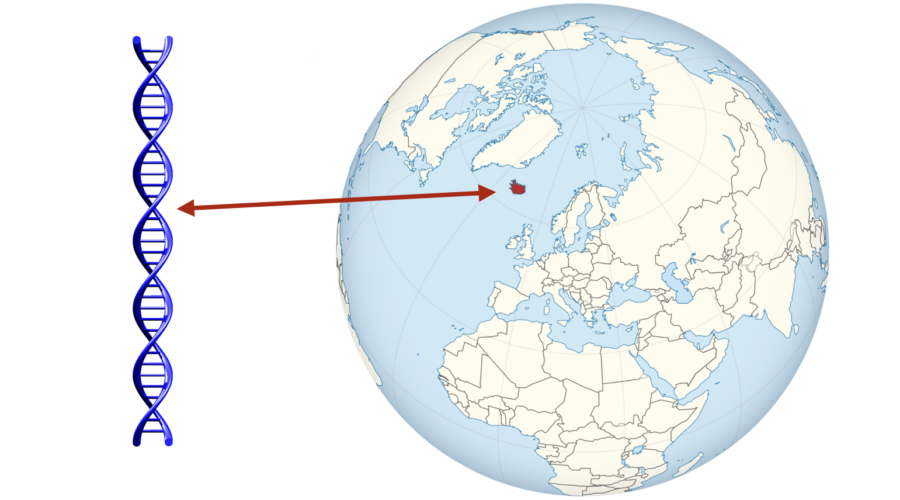
Iceland has become one of the world’s most consequential laboratories for human genetics, not because it is large, but because it is small, well documented, medically organised and unusually legible to science. In 2025, deCODE genetics again showed the power of that model, with company-led work on recombination, pregnancy loss, infertility, migraine, osteoarthritis, heart failure and bipolar disorder. Yet the same success raises a harder question for innovation policy: when a nation’s biological history becomes a discovery platform, who owns the value, who governs the risks, and can a small country remain sovereign over the science it makes possible?
There is a particular kind of scientific power that does not look like power at first. It does not announce itself through a giant campus outside Boston, a sovereign fund in the Gulf, or the vast patient pools of China, India or the United States. It looks instead like an island in the North Atlantic with fewer people than many European cities, long genealogies, a public health system, experienced clinicians, high participation in biomedical research and a cultural memory unusually suited to family history.
Iceland’s life-science story is often told as a tale of genetic exceptionalism. That is only partly right. The country’s advantage is not merely that Icelanders are genetically interesting. Many populations are. It is that Iceland has been turned, over three decades, into a working interface between population history, clinical records, high-throughput biology, private capital and public legitimacy. At the centre of that interface sits deCODE genetics, founded in 1996 and acquired by Amgen in 2012 in a $415 million all-cash deal explicitly justified by Amgen as a way to improve target discovery and validation in human populations.
That acquisition marked a change in the meaning of Icelandic genomics. deCODE was no longer simply a national biotech phenomenon or a controversial start-up built around Iceland’s research infrastructure. It became a strategic discovery engine inside one of the world’s largest biotechnology companies. Amgen’s own language at the time was revealing: deCODE would “enhance our efforts to identify and validate human disease targets”, while Kári Stefánsson argued that the full value of human genetics lay in making research “synergistic with drug development efforts”.
More than a decade later, 2025 offered a striking answer to what that synergy can look like. In a few months, deCODE-linked publications and announcements ranged across the fundamentals of inheritance, the genetic causes of early pregnancy loss, infertility genetics, machine-learning diagnosis of migraine, osteoarthritis genomics, heart-failure subtypes and rare psychiatric risk variants. The output is not a conventional venture-capital map of many young companies. It is more concentrated and more unusual than that: an island-scale biomedical discovery system, dominated by one company-science institution, with surrounding applied platforms such as Matís and ORF Genetics showing that Iceland’s biotechnology capacity extends beyond human population genomics.
The policy question is therefore not whether Iceland can matter in global biomedicine. It plainly can. The harder question is whether Iceland’s model is a template, a warning, or both.
The company as national instrument
deCODE’s January 2025 Nature paper on complete human recombination maps is the kind of result that can appear technical until one notice its scale of implication. Recombination is one of the basic mechanisms by which human genomes are reshuffled across generations. It shapes genetic diversity, inherited risk and reproductive failure. deCODE described the work as the first map to incorporate shorter-scale non-crossover shuffling of grandparental DNA, a type of event difficult to detect because the DNA sequences involved are so similar. The work also identified genomic regions with little major reshuffling, possibly because recombination there would threaten critical functions or generate chromosomal problems.
For a scientific audience, the point is that the paper deepens the empirical map of human meiosis. For a policy audience, the point is different: this is foundational science produced through a company-led, population-scale infrastructure. It is not a laboratory curiosity. It sits upstream of future reproductive medicine, disease-risk interpretation and potentially clinical decision support. deCODE itself framed the work as part of “25 years of research” into how diversity is generated in the human genome and how it relates to health and disease.
This is the Icelandic model in miniature. A private company, working in a country whose population structure and records give it exceptional statistical reach, generates results that belong simultaneously to basic biology, public health and commercial translation. Few small countries can build particle accelerators or compete with the scale of the United States National Institutes of Health. Iceland chose, or allowed itself to become, something else: a genomic observatory.
Yet observatories are never neutral. Someone chooses where to point the instrument. Someone pays for it. Someone stores the data. Someone decides which discoveries become papers, which become targets, which become intellectual property, and which return to the people whose biology made the science possible.
Fertility, loss and the ethics of prediction
The most emotionally charged of deCODE’s 2025 outputs may be the Nature paper “Sequence diversity lost in early pregnancy”. The study examined early pregnancy loss and concluded that around 1 in 136 pregnancies is lost because of a pathogenic small sequence variant genotype in the foetus. deCODE’s own news account described the result more starkly: millions of pregnancies worldwide are lost because of mutations every year.
Scientifically, the paper moves a difficult field forward. Chromosomal abnormalities are known causes of pregnancy loss, but the genetic causes of euploid loss remain less fully explained. By sequencing foetal and parental samples, the study connected new mutations and inherited combinations to developmental failure. It also suggested that some couples may have recurrent-risk patterns that could potentially be selected against in IVF treatment.
That is where science begins to become policy. The ability to detect genetic causes of pregnancy loss can relieve uncertainty and improve counselling. It may also deepen the medicalisation of reproduction. If a population-scale research system identifies variants linked to loss, infertility or developmental failure, what follows? Better diagnostics? More precise IVF selection? New anxieties for prospective parents? Insurance discrimination unless tightly governed? A widened gap between those who can pay for reproductive genetics and those who cannot?
deCODE’s 2025 infertility paper in Nature Genetics adds to that tension. The study identified 25 genetic risk loci for male and female infertility across seven cohorts, with up to 42,629 cases and 740,619 controls, and also identified hundreds of loci associated with reproductive hormones. It reported limited polygenic overlap between reproductive hormone levels and infertility at the population level.
For clinicians, the message is that infertility genetics is becoming more granular. For policymakers, it is that reproductive biology is entering the same data-intensive commercial pipeline as cancer and cardiometabolic disease. For Iceland, the implication is sharper still: the same infrastructure that makes humane explanations possible also makes reproductive futures more computable.
The unresolved issue is not whether this research should exist. It should. Pregnancy loss and infertility are serious burdens, and families deserve better answers. The issue is whether Iceland’s governance model is strong enough, transparent enough and democratically trusted enough to manage the eventual uses of these answers.
From association to interpretation
A second pattern in the 2025 evidence is movement from association to clinically interpretable computation. The Brain paper on diagnosing migraine from genome-wide genotype data used machine-learning and deep-learning approaches in more than 43,000 participants from the Trøndelag Health Study. The best models achieved hold-out area-under-curve values around 0.62 to 0.63 and performed better than polygenic risk scoring, though the effect size remains far from a stand-alone clinical diagnostic test.
This matters because it shows the changing business layer of genomics. The first era of population genetics was about finding variants and associating them with traits. The next era is about turning many weak signals into usable stratification tools, decision support and target-discovery pipelines. Migraine is an instructive example because it is common, heterogeneous and poorly captured by simple biomarkers. If machine learning can extract non-additive and interactive structure from genomic data, even modestly, it opens a commercial frontier around neurological classification.
A similar translational logic appears in deCODE’s listed 2025 publications on osteoarthritis and heart failure. deCODE’s publication page lists a Nature paper on the translational genomics of osteoarthritis in 1,962,069 individuals, and a Nature Genetics meta-analysis on heart failure and its subtypes. The fields are commercially consequential: osteoarthritis lacks disease-modifying treatments, while heart failure is clinically heterogeneous and costly for health systems. In both cases, genetics promises not only risk markers but drug-target prioritisation and patient segmentation.
Here the Amgen ownership becomes analytically important. deCODE’s discoveries are not floating in the open scientific ether. They are institutionally connected to a pharmaceutical company whose core interest is the conversion of human biology into validated therapeutic hypotheses. That connection can accelerate translation. It can also shift the balance between public knowledge and proprietary advantage.
This is the fundamental bargain of Icelandic company science: the country receives jobs, publications, prestige, technological capacity and participation in global biomedical discovery. In return, its collective biological legibility becomes part of a private and partly foreign-owned innovation pipeline.
Psychiatry and the patience of slow translation
The 2025 bipolar-disorder work illustrates both the promise and the limits of that bargain. deCODE announced Nature Genetics findings associating rare loss-of-function variants in HECTD2 and AKAP11 with bipolar disorder, using whole-genome sequencing data from Iceland, the UK Biobank and replication through the Bipolar Exomes study. The deCODE release stressed that these variants may inform biology because both gene products interact with GSK3β, a protein inhibited by lithium, still the best-known mood stabiliser for bipolar disorder.
Psychiatric genetics has long promised more than it has delivered therapeutically. Common variants explain some heritable risk, but they often frustrate drug development because each signal is small and mechanistically diffuse. Rare loss-of-function variants can be more biologically interpretable, but they are difficult to find without large, well-characterised datasets. Iceland’s value is precisely that it can make rare signals more visible.
Still, one should not oversell the result. A risk gene is not a medicine. A pathway is not a reimbursed therapy. Psychiatric translation is slow, and genetic explanation can carry stigma if communicated badly. The social risk is particularly acute in small countries, where anonymity is harder to guarantee and where family histories are not abstractions. Iceland’s scientific strength, its connectedness, is also its ethical vulnerability.
The old controversy that never quite ended
Any serious account of Icelandic genomics must return to the late 1990s, when the proposed Icelandic Health Sector Database made the country a global test case in population data, consent, monopoly and commercialisation. In 1998, Iceland’s parliament passed legislation enabling a private company to construct a database of national health records, with deCODE granted an exclusive licence to build and commercially exploit it for a period. Contemporary and later ethical commentary focused on informed consent, privacy, scientific freedom, public benefit and commercial monopoly.
The BMJ’s Ruth Chadwick captured the dilemma in 1999: the debate was not simply about whether rules had been followed, but whether older categories could cope with a new kind of database society. The Icelandic case forced a question still unresolved across the world: can a democratic population meaningfully consent to the commercial structuring of its collective medical past and genetic future?
Critical Icelandic scholarship was sharper. Vilhjálmur Árnason and Garðar Árnason argued that the Health Sector Database debate did not provide a good example of democratic community consent and that the process was procedurally and substantively flawed because the necessary free, reasoned and informed public dialogue had not taken place.
Those arguments are not museum pieces. They return with each new machine-learning classifier, reproductive-risk estimate and drug-target discovery. Consent in genomics is not a one-off signature. It is an ongoing political relationship among citizens, researchers, companies, regulators and future users of data.
This is particularly important because the value of Icelandic genomics is relational. A single genome has value. A genome linked to relatives, medical records, disease phenotypes and national genealogies has far more. But the more relational the dataset, the less individualistic consent becomes. Your genome says something about your relatives. Their participation can reveal information about you. A small society intensifies both the scientific signal and the governance problem.
The broader ecosystem
The danger in writing about Iceland as “the island that sequenced itself” is that it reduces the country to deCODE. That would be inaccurate. Iceland’s biotech landscape is broader, though less visible in open, company-linked primary-source trails. ORF Genetics and Matís show another Icelandic pattern: applied biotechnology built around natural resources, renewable energy, specialised production systems and translational services.
ORF Genetics, founded in Iceland, uses barley grain as a molecular-farming platform to produce recombinant human and animal proteins. Its ISOkine, MESOkine and DERMOkine portfolios serve stem-cell research, organoid platforms, regenerative medicine, cultivated meat and skincare. The company presents its growth factors and cytokines as animal-origin-free, animal-component-free, high-purity and endotoxin-free, with barley used as the production vehicle.
This is not population genomics, but it belongs to the same national innovation story. Iceland is using biological specificity as industrial strategy. In deCODE, the asset is a population and its records. In ORF Genetics, the asset is a plant expression system, renewable energy and controlled production. In both cases, small-country constraints are turned into platform advantages.
Matís plays a different role again. It is an applied food and biotech R&D organisation supporting Icelandic industry through biotechnology, genetic analyses, sequencing, metabolic engineering, marine biotechnology, enzymes, algae utilisation and cell factories. Its biotechnology group explicitly describes work on underused resources and by-products, genetic engineering, gene cloning and expression, genomics, transcriptomics, metagenomics and systems biology.
Matís matters because small countries need translational institutions that do not look like Silicon Valley start-ups. They need platforms that help firms cross the valley between research and product, especially in sectors where Iceland has place-based assets: seafood, algae, cold-adapted and heat-adapted microorganisms, renewable energy and traceable food systems.
The Icelandic life-science ecosystem is therefore not simply a deCODE monoculture. Reykjavík Science City describes more than 80 per cent of Iceland’s life-science companies as being based in the capital region, close to universities, laboratories and the national hospital, and presents the sector as spanning pharmaceuticals, medtech, biotechnology, marine biotechnology and digital health. It also reports that life sciences have grown by 23 per cent in five years, generating ISK 299 billion annually and employing more than 4,300 people.
Those are promotional figures and should be read as such. But the clustering claim is plausible and important. Iceland’s advantage is proximity. In larger countries, policy, hospitals, universities, regulators and companies often operate in separate worlds. In Iceland, the distance between them is short, socially and geographically. That can accelerate innovation. It can also blur lines of accountability.
Small-country power, small-country risk
Iceland’s 2035 science, technology and innovation policy frames science and innovation as foundations for prosperity, competitiveness, public services, health and environmental protection. It describes Iceland as a desirable location for talent, research institutions and companies carrying out basic and applied research and innovation.
The policy language is familiar. Every advanced economy now says some version of this. Iceland’s difference is that it has already demonstrated a niche where smallness is not a handicap. In human genetics, smallness can mean dense records, shared institutions, high trust and manageable coordination. In biotechnology, it can mean renewable energy, specialised platforms and agile collaboration.
But smallness also concentrates power. If one company dominates the highest-value scientific output, national capability becomes tied to corporate strategy. If that company is foreign-owned, the question of value capture becomes more complicated. If citizens’ data are central to discovery, trust becomes infrastructure. If public institutions depend on private platforms for frontier science, democratic oversight must be more than retrospective ethics approval.
The deCODE story is often defended by results. And the results are real. The 2025 papers and announcements are not marginal. They address fundamental recombination biology, pregnancy loss, infertility, neurological classification, osteoarthritis, heart failure and psychiatric risk.
But scientific productivity does not settle political legitimacy. A model can be productive and still under-governed. It can generate public benefit and private asymmetry at the same time. It can make a small country globally visible while making its citizens’ biological data part of value chains they cannot fully inspect.
What other small countries can learn
For policy audiences, Iceland offers at least five lessons.
First, small countries should not imitate scale. They should build around asymmetry. Iceland could not outspend the United States or Germany in biomedical research. It could, however, combine genealogical depth, health data, sequencing capacity and company-led analytics.
Second, research infrastructure is industrial policy. deCODE’s value to Amgen was not a single molecule. It was a capability: population-based target discovery and validation. ORF Genetics’ value is not simply a catalogue of growth factors. It is a production system using barley. Matís’ value is not merely laboratory service provision. It is a translational bridge between biological resources and companies.
Third, public trust must be treated as a renewable but exhaustible resource. Iceland’s biomedical advantage rests partly on participation and legitimacy. Once damaged, trust is hard to rebuild. Governance must therefore be anticipatory, not only reactive.
Fourth, benefit-sharing needs sharper definition. Publications, jobs and prestige are benefits, but they may not be sufficient when national biological resources contribute to global pharmaceutical assets. Policymakers should ask what returns accrue to the health system, to patients, to research institutions and to citizens whose participation underwrites discovery.
Fifth, consent must evolve. Static consent forms are poorly suited to machine learning, data linkage, reproductive genomics and future uses that cannot be fully specified at enrolment. Dynamic consent, public deliberation, independent data trusts, stronger audit rights and transparent commercial-use reporting should be part of the policy discussion, not treated as obstacles to innovation.
Iceland has done something extraordinary. It has shown that a very small country can become indispensable to global biomedical discovery by organising itself around data, trust, records, biology and translation. In 2025, deCODE’s output again demonstrated that the island remains a genomic micro-superpower. ORF Genetics and Matís show that the wider ecosystem has other routes to relevance, from barley-based recombinant proteins to marine biotechnology and cell factories.
Yet the achievement cannot be separated from the unease. Iceland’s model asks citizens to accept that private and public interests can be aligned around the most intimate material imaginable. Sometimes they can. Sometimes they cannot. The country’s experience suggests that the frontier of biomedical innovation is not only in sequencing machines, statistical models or Nature papers. It is in the political design of trust.
“The Island That Sequenced Itself” is therefore not only a headline about scientific triumph. It is a question. Did Iceland sequence itself for itself, for the world, for Amgen, for patients not yet born, or for a future in which national biology becomes a strategic asset traded through global pharmaceutical markets?
The honest answer is all of these, uneasily at once.
That is why Iceland matters. Not because it resolves the dilemma of twenty-first-century biomedicine, but because it makes the dilemma visible.
References
- Amgen. (2012, December 10). Amgen to acquire deCODE Genetics, a global leader in human genetics. https://www.amgen.com/newsroom/press-releases/2012/12/amgen-to-acquire-decode-genetics-a-global-leader-in-human-genetics
- Árnason, V., & Árnason, G. (2004). Informed democratic consent? The case of the Icelandic database. Trames, 8(1/2), 164–177. https://doi.org/10.3176/tr.2004.1/2.11
- Arnadottir, G. A., Jonsson, H., Hartwig, T. S., Gruhn, J. R., Møller, P. L., Gylfason, A., et al. (2025). Sequence diversity lost in early pregnancy. Nature. https://doi.org/10.1038/s41586-025-09031-w
- Chadwick, R. (1999). The Icelandic database: Do modern times need modern sagas? BMJ, 319(7207), 441–444. https://doi.org/10.1136/bmj.319.7207.441
- Danelakis, A., Kumelj, T., Winsvold, B. S., Bjørk, M. H., Nachev, P., Matharu, M., et al. (2025). Diagnosing migraine from genome-wide genotype data: A machine learning analysis. Brain. https://doi.org/10.1093/brain/awaf172
- deCODE genetics. (2025, January 22). Complete recombination map of the human-genome, a major step in genetics. https://www.decode.com/complete-recombination-map-of-the-human-genome-a-major-step-in-genetics/
- deCODE genetics. (2025, March 25). Rare loss-of-function variants in HECTD2 and AKAP11 confer a risk of bipolar disorder. https://www.decode.com/rare-loss-of-function-variants-in-hectd2-and-akap11-confer-a-risk-of-bipolar-disorder/
- deCODE genetics. (2025, May 21). Lethal mutations in pregnancy loss. https://www.decode.com/lethal-mutations-in-pregnancy-loss/
- deCODE genetics. (2025). Selected publications. https://www.decode.com/publications/
- Government of Iceland. (2025, September 1). Policy on science, technological development, and innovation until 2035. https://www.government.is/publications/reports/report/2025-09-01-Policy-on-Science-Technologial-Development-and-Innovation-until-2035
- Jónatansson, H. (2000). Iceland’s Health Sector Database: A significant head start in the search for the biological grail or an irreversible error? American Journal of Law & Medicine, 26(1), 31–67. https://doi.org/10.1017/S0098858800010819
- Matís. (n.d.). Biotechnology. https://matis.is/en/rannsoknir-og-nyskopun/thjonustuflokkar/liftaekni/
- ORF Genetics. (n.d.). Plant-based growth factors. https://www.orfgenetics.com/
- ORF Genetics. (n.d.). ISOkine growth factors. https://www.orfgenetics.com/product/isokine
- Palsson, G., et al. (2025). Complete human recombination maps. Nature. https://doi.org/10.1038/s41586-024-08450-5
- Reykjavík Science City. (n.d.). Life sciences in Iceland. https://rsc.is/life-sciences-in-iceland/
- Thorgeirsson, T. E., Tragante, V., Sveinbjornsson, G., Jonsdottir, G. A., Walters, G. B., Ivarsdottir, E. V., et al. (2025). Rare loss-of-function variants in HECTD2 and AKAP11 confer risk of bipolar disorder. Nature Genetics. https://doi.org/10.1038/s41588-025-02141-1
- Venkatesh, S. S., Wittemans, L. B. L., Palmer, D., Baya, N., Ferreira, T., Hill, B., et al. (2025). Genome-wide analyses identify 25 infertility loci and relationships with reproductive traits across the allele frequency spectrum. Nature Genetics. https://doi.org/10.1038/s41588-025-02156-8