From space-based climate instruments to 3D-printed hydrogen engines, the Technical University of Denmark (DTU) is producing research in 2026 that spans the most urgent challenges of our time.
1. A New Eye on Earth’s Climate — From the International Space Station
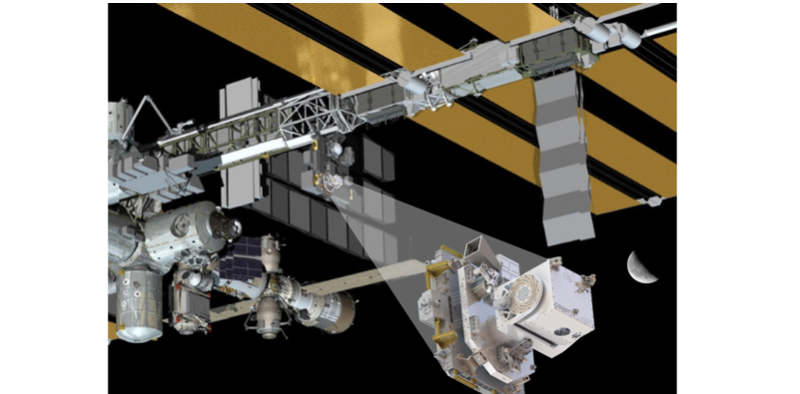
On 16 May 2026, NASA successfully launched the CLARREO Pathfinder mission to the International Space Station — and at its heart is navigation and positioning technology developed and built at DTU Space. The instrument’s purpose is to measure with unprecedented precision how much of the sun’s incoming energy is reflected away by Earth’s atmosphere and clouds — a figure central to understanding and forecasting climate change. According to NASA, CLARREO’s measurements will be five to ten times more accurate than existing Earth observation data. DTU Space developed the camera-based stabilisation technology that keeps CLARREO’s instruments pointed precisely at their targets at all times, compensating for movements of the space station. The data will be used to calibrate a wide range of existing climate satellites, improving the accuracy of global climate models.
2. 3D-Printed Ceramic Fuel Cells Deliver a Fivefold Power Leap for Hydrogen
Researchers at DTU Energy, led by Professor Vincenzo Esposito, have developed a new class of solid oxide fuel cell (SOFC) that delivers power-to-weight ratios of around 1 watt per gram — approximately five times higher than the 0.2 watts per gram typical of conventional flat-cell designs. The breakthrough, published in April 2026, uses ceramic 3D printing to produce a monolithic cell shaped around a gyroid geometry — a complex, nature-inspired internal structure that maximises surface area and eliminates the interconnects and seals that add weight and reduce efficiency in standard designs. The cells were printed in yttria-stabilised zirconia using a Lithoz CeraFab system. The technology is targeted directly at hydrogen-powered transportation, where power density and weight are decisive parameters, and DTU is now working toward scaling it to industrial production.
3. The Hidden Cost of Storm Surges — Beyond Government Compensation
A May 2026 analysis from DTU has put hard numbers on what storm surges actually cost Danish coastal households — and the picture goes well beyond what official damage statistics capture. The research shows that affected households incur significant out-of-pocket costs and spend hundreds of hours on clean-up and reconstruction that is never compensated. Nearly 40 per cent of owners suffered physical or mental health consequences following flood events. The findings add a new dimension to DTU’s earlier nationwide modelling, which found that total flood damage to Danish homes and infrastructure could reach DKK 406 billion over the next 100 years — with storm surges accounting for DKK 249 billion of that total. The new analysis strengthens the economic case for proactive coastal protection investment across Denmark’s 7,300-kilometre coastline.
4. Turning Industrial Carbon Emissions into Sustainable Fuels
In May 2026, DTU announced a two-year partnership with US biotechnology company LanzaTech to establish a next-generation C1 biofoundry at DTU’s Novo Nordisk Foundation Biotechnology Research Institute for the Green Transition (Bright). The facility will use specially engineered microbes capable of consuming so-called C1 gases — carbon monoxide, carbon dioxide, and methane — captured directly from industrial emissions, and converting them into sustainable fuels, chemicals, and materials. The partnership places DTU at the centre of a process that transforms pollution into products, rather than releasing it into the atmosphere. “DTU has a history of driving innovation from the lab to commercial deployment,” said DTU Provost Christine Nellemann. The biofoundry represents a significant step toward industrial-scale carbon utilisation in Denmark.
5. Green X Accelerator — A National Engine for Clean Technology Commercialisation
In April 2026, DTU announced that its national innovation centre — previously known as the VILLUM P2X Accelerator — would be relaunched as the Green X Accelerator, with a new DKK 80 million grant from the Villum Foundation extending the programme to 2031. The centre, hosted at DTU, helps promising clean technology research projects from across Danish universities move from laboratory to market, offering funding, laboratory access, and business development support. The scope has been broadened beyond Power-to-X to cover green fuels, CO₂ reduction, and materials innovation more broadly, with partner universities including the University of Copenhagen, Aarhus University, Aalborg University, and the University of Southern Denmark. DTU President Anders Bjarklev described the expansion as central to keeping Denmark competitive and resilient in the global green transition.
All five developments were published or announced by DTU in April–May 2026. The Technical University of Denmark, founded in 1829, is Denmark’s largest engineering university and ranks among Europe’s leading technical institutions.
Photo: Nasa