Granarium Technologies arrives wrapped in an almost irresistible Finnish story. Waste wood and agricultural residues are transformed into fast-response electricity storage. Forest-derived nanocellulose is recast as grid infrastructure. A VTT spinout promises a cleaner, cheaper route to supercapacitors at a moment when Europe is worrying about resilience, electrification and critical raw materials. It is a compelling narrative, and not a frivolous one. Behind the company lies a real research lineage, a patent family, a named pair of inventors and a long gestation period inside one of Europe’s better organised public technology institutes. Yet the public evidence also shows something less tidy. Granarium’s strongest claims are not yet matched by a publicly visible peer-reviewed paper on the exact platform now being sold to investors and prospective customers. The story, in other words, is neither vapourware nor verified breakthrough. It is a high-conviction gamble built on plausible science, protected intellectual property and a conspicuous gap between commercial rhetoric and independently auditable proof.
That distinction matters because Granarium is not pitching another lab curiosity for wearables or biodegradable gadgets. VTT says the company is commercialising “the world’s first renewable, affordable supercapacitors” for grid stabilisation and industrial reliability, built on a nanocellulose-based materials platform that binds biocarbon structures for power storage. The company is targeting the kinds of short-duration, high-power tasks that batteries often complement rather than dominate, such as frequency response, peak load management and industrial power quality. It also says the manufacturing route can cut production capital expenditure by up to 80 per cent. Those are not small promises. They imply not only scientific novelty, but manufacturability, cost advantage and a credible path into critical energy infrastructure. Publicly, however, those claims rest on a press release, startup coverage, conference disclosures and a patent record, not on a peer-reviewed journal article that sets out the full device architecture, the materials stack, the performance metrics and the economics in a form that outside experts can interrogate line by line.
The strongest part of the case is the historical trail. Granarium does not appear to be an opportunistic rebrand of fashionable themes in biomass and energy storage. VTT’s research portal lists a patent family titled “Cellulose based functional composites, energy storage devices and manufacturing methods thereof”, invented by Vesa Kunnari and Otto-Ville Kaukoniemi. The priority date is 6 November 2014, with an international publication in 2016 and multiple granted or published family members across jurisdictions. The patent’s central technical idea is not merely that cellulose can appear somewhere in a green device. It describes the use of high-consistency fibrillated cellulose with at least one functional additive to form composite structures suitable for electrically functionalised uses, including energy storage devices. That is the kind of language that signals process engineering and materials formulation, not just sustainability branding. It is also consistent with Granarium’s present emphasis on simplified production and locally available feedstocks.
A year after that priority filing, the same research line surfaced in a public technical forum. VTT’s portal lists a 2015 conference paper, “Energy storage devices based on high consistency cellulose”, by Kaukoniemi, Kunnari and Jari Keskinen. This is an important document in one sense and a limiting one in another. It shows that the team’s energy-storage direction was established publicly long before Granarium existed as a startup. It also confirms that high-consistency cellulose was not an after-the-fact marketing phrase borrowed for pitch decks. But the paper is catalogued as a conference article in proceedings and, crucially, as non-refereed rather than as a peer-reviewed journal article. That means it strengthens the claim that there is real underlying work, while doing little to satisfy the harder question of whether the current commercial assertions have been subjected to external scientific scrutiny.
The commercial bridge is also visible. VTT’s portal records a Business Finland project called SESE, short for Scalable Electricity Storages, running from June 2021 to November 2022 under Kaukoniemi’s management. Its description is unusually direct: the project was developing a new type of electricity storage technology based on nanocellulose, with the aim of commercialisation. This matters because many institutional invention stories stall between patent filing and market formation. Here, at least on paper, there is a recognisable sequence: invention, technical disclosure, funded scale-up effort, incubation and then spinout. Granarium therefore deserves to be treated as a serious technology transfer effort, not as an empty startup shell. But seriousness of intent is not the same thing as public proof of performance. A commercialisation project can validate manufacturability, pilot interest and investor appetite without producing the kind of peer-reviewed evidence that makes extraordinary technical claims easier to trust.
The richest public explanation of the scientific logic behind Granarium came not from a journal paper but from an interview at Y Science in late 2024, after the project won a sustainable materials pitching competition. There, Paula Viinamäki described how Kaukoniemi and Kunnari had asked whether electricity storage could be made entirely from renewable materials. According to the interview, they identified several candidate biomaterials, concluded that supercapacitors were the most interesting target because conventional supercapacitors already use carbon-based components, and then found that high-consistency nanocellulose was the right biomaterial to replace the non-sustainable parts. In the same account, they also discovered that the manufacturing process could be simplified. This is a coherent and technically plausible thesis. Supercapacitors do indeed rely heavily on carbon-centred architectures, and replacing some conventional materials with renewable carbon and cellulose-derived structures is conceptually more straightforward than trying to build a renewable lithium-ion battery. But an interview remains an interview. It explains the internal logic of the invention. It does not independently validate the resulting device.
What, then, is Granarium actually claiming in 2026? VTT says the startup is commercialising nanocellulose-based energy storage technology that upcycles waste wood and agricultural residues for fast-response power storage, with lower production costs and environmental impact than conventional solutions. It says the platform binds biocarbon structures for power storage, supports safe, scalable and locally producible systems, and can enable up to 80 per cent lower production capex. It says Granarium already has pilot customers and value-chain partners, plans its first pilots within six months, and will begin small-scale production at up to 50 units per year. These are all potentially significant statements. They suggest VTT believes the technology has moved beyond curiosity and into pre-commercial engineering. Yet outside observers are asked to take them largely on trust. There is, in the publicly visible record, no journal article detailing the exact electrochemical performance of Granarium’s cells or modules, no published techno-economic analysis explaining the 80 per cent capex claim, and no open bill of materials establishing what “100 per cent renewable” includes and excludes.
That last phrase, “100 per cent renewable”, deserves particular scrutiny. In startup language it sounds decisive. In engineering language it is slippery unless every boundary is defined. Does it refer only to the active materials in the storage stack, or also to current collectors, electrolytes, separators, binders, housings and power electronics? Are the materials renewable by origin, renewable by mass balance, or simply renewable in the sense that their carbon skeleton derives from biomass? Public documents do not answer those questions. VTT’s release and the Y Science interview repeat the “100 per cent renewable” idea, and media coverage amplifies it, but none of the public-facing material I found offers a component-level materials audit. That does not make the claim false. It does mean the claim is not yet precise enough to survive aggressive technical scrutiny without qualification. A safer formulation would be that Granarium is developing a supercapacitor platform built primarily around renewable carbon and nanocellulose-derived structures.
The “world’s first” language is even more vulnerable. It may be effective copy. It is not careful science writing. The wider literature contains a substantial body of work on cellulose-derived and nanocellulose-based supercapacitors. Review articles in “Polymers and Membranes” describe cellulose and nanocellulose as attractive substrates, separators, conductive scaffolds and carbon precursors for sustainable supercapacitors. VTT-linked and Finland-linked work long predates Granarium’s spinout. A 2015 paper on pigment-cellulose nanofibril composites explored their use as separator-substrates in printed graphene and carbon nanotube supercapacitors. A 2022 paper on biowaste-derived electrodes and cellulose nanocrystal hydrogel electrolytes demonstrated a fully renewable flexible symmetric supercapacitor with published performance figures. None of these is Granarium’s exact product. All of them are enough to puncture any broad suggestion that the idea of cellulose-based renewable supercapacitors begins here. If Granarium is first at anything, the most defensible narrow claim would concern a particular patented manufacturing route, a specific materials integration strategy, or a move from biomaterial supercapacitors into grid-oriented, industrially targeted products. Public copy does not make that narrowing clear enough.
This matters not because pedantry is fashionable, but because startup overstatement can distort how the public understands risk. Granarium’s position might still be genuinely impressive if restated properly: a decade-old VTT invention around high-consistency cellulose composites has matured into a spinout that aims to make fast-response supercapacitor systems from renewable, locally sourced biomass-derived materials, with potentially lower manufacturing complexity than incumbent systems. That would still be a strong story. It would also be more robust than the blanket phrase “world’s first renewable, affordable supercapacitors”, which invites immediate challenge from anyone familiar with the literature. When a company reaches for totalising language before releasing peer-reviewed evidence, it weakens its own case. Investors may tolerate that. Journalists and technical readers should not.
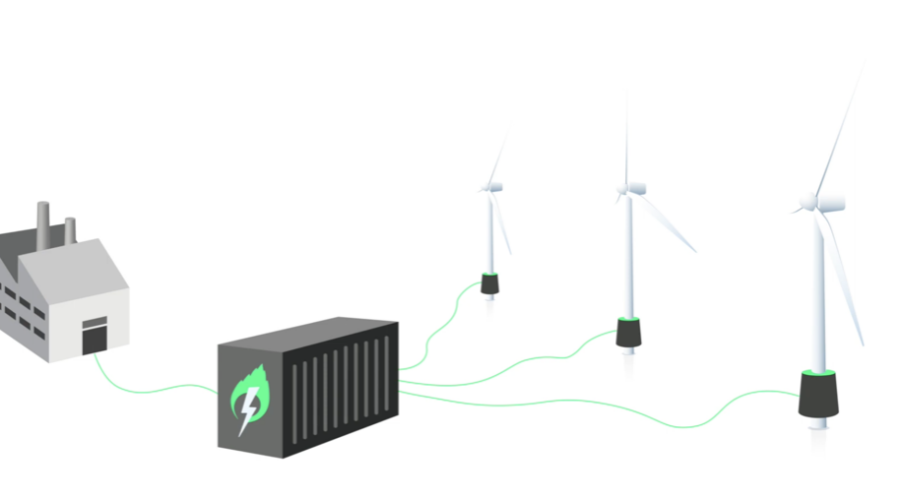
None of this should obscure the strategic significance of what Granarium is attempting. Supercapacitors occupy a real niche. They charge and discharge rapidly, can survive many cycles and make sense as a power layer that complements batteries in grids and industrial systems. Europe is indeed looking for storage technologies that reduce reliance on critical minerals and long transnational supply chains. VTT’s own framing places Granarium squarely in that political and industrial context. The use of waste wood and agricultural residues, if it scales, would align neatly with Nordic bioeconomy narratives and with broader concerns about supply-security in electrified systems. On those terms, Granarium is an unusually Finnish proposition: forest industry logic translated into power electronics and grid services. It is not hard to see why VTT LaunchPad incubated it, why investors found the pitch attractive, or why the story resonates beyond Finland.
VTT’s own role deserves attention here. The institute presents LaunchPad as a science-based deep-tech incubator designed to turn VTT’s technologies and IPR into fundable startups. It says the incubator has produced 17 companies since 2019 and notes that VTT-originating startups have attracted a material share of Finnish startup funding in recent years. That is a reminder that Granarium is not simply a standalone company. It is a specimen of a wider institutional model in which public research bodies increasingly try to commercialise their own inventions rather than wait for industry to license them passively. In such systems there is inevitable tension between public-science norms and startup norms. Patents are filed early. Technical details stay partly confidential. Peer-reviewed publication may lag behind commercial activity, or never fully catch up. Granarium sits squarely in that tension. VTT’s infrastructure makes the spinout plausible. It also means the public may encounter the commercial story first and the scientific substantiation later, if it comes at all.
The sharpest question, then, is not whether Granarium is “real”. The patent family, conference trail and scale-up project are enough to answer that. The sharper question is how much confidence outsiders should place in the exact commercial claims being used now. On that point the answer remains mixed. There is enough evidence to treat the company seriously. There is not enough public evidence to treat its strongest claims as settled fact. Until Granarium or VTT publishes a peer-reviewed paper, a detailed white paper, or module-level performance and cost data that outsiders can examine, the company should be described neither as hype nor as proven breakthrough. It is better understood as a highly plausible, high-risk attempt to move cellulose-based energy storage out of the literature and into infrastructure. That is ambitious. It may work. It may even become important. At present, however, its public case rests more heavily on patents, process logic and institutional credibility than on openly reviewable scientific proof.
For Granarium, the next decisive step is obvious. It does not merely need more investor coverage or more elegant language about resilience and renewable materials. It needs disclosure. A proper technical paper on the exact platform. Clear boundaries around the phrase “100 per cent renewable”. Benchmarking against incumbent supercapacitors on cost, cycle life, energy density, power density and thermal stability. Evidence that the route remains simple and cheap beyond pilot scale. If those documents appear and hold up, Granarium could become one of the more interesting examples of Northern European deep-tech commercialisation in the energy transition. If they do not, the company risks becoming another case in which a strong public institute, a good patent and a timely market anxiety produced a superb narrative that outran the public evidence.
Source note
This article is grounded primarily in VTT’s 9 June 2026 press release on Granarium’s funding and technology transfer, the VTT research portal entries for the relevant patent family and 2015 conference paper, the SESE commercialisation project record, and the 2024 Y Science interview with Granarium’s team. Comparative context on the wider scientific field comes from review literature and adjacent peer-reviewed work on cellulose and biowaste-based supercapacitors.
Principal sources consulted
- VTT press release on Granarium’s funding and product claims, 9 June 2026. [vttresearch.com]
- VTT Research Information Portal entry for the patent family “Cellulose based functional composites, energy storage devices and manufacturing methods thereof”. [startupres…archer.com]
- WIPO / Google Patents publication WO2016071573A1. [research.fi], [vttresearch.com]
- VTT Research Information Portal entry for “Energy storage devices based on high consistency cellulose”, TAPPI conference proceedings, 2015. [academia.edu]
- VTT Research Information Portal entry for SESE, Scalable Electricity Storages. [pubmed.ncb…lm.nih.gov]
- Y Science 2024 interview with Paula Viinamäki on Granarium’s origin story and materials logic. [cris.vtt.fi]
- Review literature on cellulose-derived and nanocellulose-based supercapacitors. [research.fi], [patents.google.com]
- Peer-reviewed comparative context on renewable flexible supercapacitors using cellulose-related and biowaste-derived materials. [scholar.google.com]