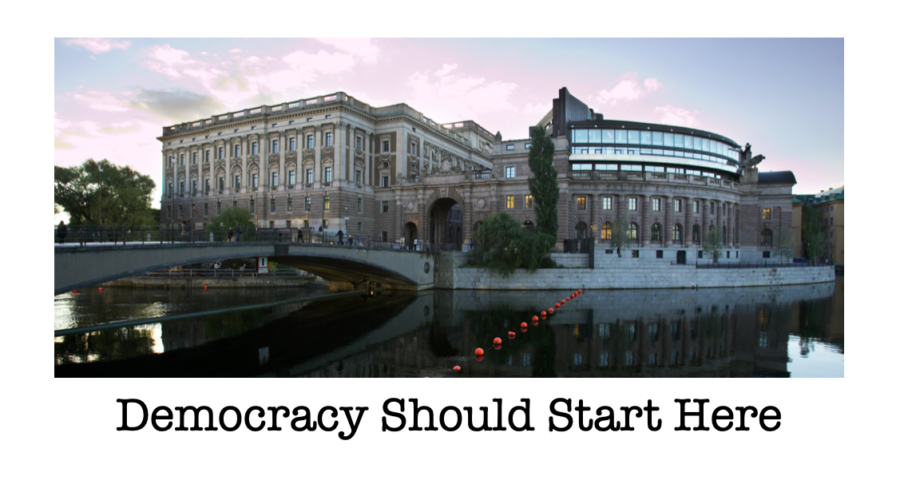
The greatest danger to Swedish democracy is not that it will suddenly disappear. It is that it will continue to look healthy while becoming less meaningful.
Sweden still holds free and competitive elections, protects fundamental rights and maintains institutions that many countries rightly admire. Yet these strengths can obscure a quieter problem: the growing distance between the democratic rights citizens formally possess and their practical ability to exercise them. Participation remains unequal, important channels of influence are difficult to scrutinise, and consultation does not always translate into meaningful power. Political engagement can also carry a growing personal cost for elected representatives, journalists and ordinary citizens.
A democracy can weaken without cancelling elections, closing Parliament or abandoning its constitution. It can become thinner as influence grows more opaque, participation more unequal and citizens less certain that voting, speaking or being consulted will make a difference.
Sweden does not need to begin again. Nor does it need a democratic revolution. It needs to fulfil the promises of the democracy it already has: that power can be scrutinised, participation has consequences and every citizen possesses not merely the right, but a genuine opportunity, to influence public life.
Sweden remains one of the world’s strongest democracies. That is precisely why its weaknesses are dangerous: they can be dismissed as minor imperfections in a political system assumed to be indestructible.
***************************************************************************
There is a flattering story Sweden tells about itself. It is a country of high electoral participation, honest institutions, independent courts, constitutionally protected public access to official documents, strong municipalities and peaceful transfers of power. Elections are competitive. Votes are counted accurately. Governments leave office when they lose parliamentary support.Most of that story is true.
International IDEA classifies Sweden as a high-performing democracy and places it in the top quarter of countries across almost every component of its democratic framework. Yet its country assessment also records deterioration between 2019 and 2024 in civil liberties, including freedom of association and assembly and freedom of the press (International IDEA, n.d.).
Sweden’s democratic problem is therefore not institutional collapse. It is the growing distance between constitutional rights and citizens’ practical capacity to use them.
The machinery of representative government continues to function. What has weakened is the connection between citizens and that machinery. Elections remain free, but participation is socially unequal. Parliament remains representative, but some large social groups remain conspicuously underrepresented. Political parties are indispensable to the constitutional system, but their memberships have declined and their most consequential internal decisions can remain only partly visible. Public access to documents is constitutionally protected, but journalists report growing practical obstruction. Sámi representatives must be consulted, but consultation does not necessarily transfer decision-making power. Politicians remain legally free to speak, but threats and harassment cause some to censor themselves, modify their conduct or consider leaving office.
Sweden is not becoming a dictatorship. The more credible danger is that democracy becomes progressively thinner while retaining all its familiar forms.
A democracy of impressive averages
Swedish electoral participation looks exemplary until the national average is disaggregated.
Turnout in the 2022 parliamentary election was 84.21 per cent, down from approximately 87 per cent in 2018. Among Swedish-born eligible voters it was 89 per cent, compared with 67 per cent among foreign-born voters. Participation reached 90 per cent among Swedish-born citizens with two Swedish-born parents, but only 77 per cent among Swedish-born citizens with two foreign-born parents. People with disabilities voted at a rate of 76 per cent, compared with 87 per cent among the rest of the population (Statistics Sweden, 2023a, 2023b; Swedish Election Authority, 2026).
These are not marginal variations. They reveal different democratic realities inside the same constitutional order.
Turnout among first-time voters also varies according to educational programme, family background and parental political participation. Statistics Sweden found that the strongest correlation with a first-time voter’s estimated probability of voting was having at least one parent who voted. First-time voters in university-preparatory upper-secondary programmes participated more frequently than those in vocational programmes (Statistics Sweden, 2023a).
Political inequality is reproduced through families, schools, neighbourhoods, workplaces and social networks. Voting is formally an individual act, but the confidence and knowledge required to participate are socially transmitted. One young person enters adulthood having heard political arguments at home, met elected representatives and learnt how institutions work. Another receives a voting card but little practical preparation for using it.
Sweden has attempted to address this. The Swedish Agency for Youth and Civil Society supports methods for increasing young people’s participation in local democracy. Its school-election programme has reached hundreds of thousands of pupils. More than 400,000 students voted in participating schools before the 2022 election, with turnout of 78 per cent (Swedish Agency for Youth and Civil Society, n.d.).
That is valuable, but a simulated election cannot compensate for exclusion from real decisions. Democratic education should teach more than the mechanics of voting. Pupils should learn how to:
- inspect a municipal budget;
- request an official document;
- evaluate political advertising;
- distinguish reporting from manipulated media;
- respond to a government consultation;
- contact a parliamentary committee;
- organise an association;
- understand how candidate lists are assembled;
- identify who financed a political campaign.
Sweden needs a national strategy for democratic equality focused on measurable participation gaps. Local initiatives should be concentrated in areas where turnout is persistently low, but without treating residents as politically deficient. The objective must be to remove obstacles, not to lecture people about civic virtue.
Measures should include accessible election information, strengthened civic education in vocational programmes, disability-access audits of polling arrangements, support for multilingual community organisations and sustained outreach between elections. The test should be whether participation gaps narrow, not how many dialogue meetings an authority can report having organised.
Parliament works, but representation is incomplete
The Swedish Riksdag is not a failing legislature.
The 2026 SNS Democracy Council concluded that Parliament legislates at a stable rate, that scrutiny by the Committee on the Constitution has become more consensual and that the representation of women and several other groups has improved greatly over the past half-century. Its analysis also found that members of Parliament perform comparatively well on certain educational and cognitive indicators (Teorell et al., 2026).
But the same report identified persistent weaknesses. People over 65 and those from working-class occupations remain substantially underrepresented. Progress in the representation of younger and foreign-born citizens has stalled during recent parliamentary terms (Teorell et al., 2026).
Descriptive representation is not a demand that every assembly reproduce society with mathematical precision. Nor does identity determine political opinion. Workers, migrants, older people and disabled people are not politically homogeneous.
Nevertheless, lived experience affects which problems are recognised, which administrative burdens appear reasonable and which citizens are assumed to possess time, confidence, money and institutional knowledge. A legislature dominated by people with similar professional trajectories can be intelligent and public-spirited while still sharing blind spots.
Sweden’s personal-vote system gives voters some influence over which candidates are elected. In parliamentary elections, however, a candidate normally needs personal votes equivalent to at least 5 per cent of the party’s constituency vote to move ahead of the party list. Party organisations therefore retain decisive influence over nominations and ballot ordering (Swedish Election Authority, 2026).
That makes internal party democracy a matter of public importance.
The parties are private associations performing a public function
Political parties are not public authorities. They must remain free to develop distinct ideologies, organisational cultures and methods of selecting candidates. State control of internal party life could itself become anti-democratic.
But parties collectively control the principal route into public office. Their internal procedures therefore affect the quality of representative government.
Research on Swedish parties shows that selection committees have retained considerable power over leadership choices and that Swedish parties have generally been resistant to the more inclusive methods adopted elsewhere. Formal party congresses often approve a single candidate who has emerged from a much less visible filtering process (Aylott & Bolin, 2023; Bolin & Aylott, 2023).
This does not mean that membership ballots are always more democratic. A small and unrepresentative group of highly mobilised members can capture an apparently open process. Nor are selection committees necessarily illegitimate. They can reconcile regional, ideological and demographic interests that a simple winner-takes-all vote would ignore.
The problem is opacity.
Swedish parties have become more professionalised while membership rates have declined, increasing their organisational reliance on public subsidies. Comparative research indicates that membership decline can produce higher expenditure, increased staffing, greater dependence on state support and a reduced local organisational presence (Kölln, 2015). Sweden’s 2024 Sustainable Governance Indicators assessment similarly identifies declining party membership, professionalisation and increasing reliance on state subsidies (Bertelsmann Stiftung, 2024).
Parties receiving substantial public funding should therefore publish more information about how they exercise their gatekeeping power. This should include:
- membership numbers and long-term membership trends;
- rules governing nominations and leadership selection;
- the composition of selection committees;
- the number of candidates considered;
- whether members were consulted or permitted to vote;
- the demographic composition of candidate lists;
- conflicts of interest among selectors;
- written explanations when advisory membership ballots are overridden.
This should be disclosure, not state direction. Parties should remain free to choose different procedures, but citizens should be able to see how the people asking for their votes reached the ballot.
Political finance has improved, but the public still sees only part of the picture
Sweden no longer has the almost entirely self-regulated political-finance system it once had.
The Act on Transparency in Party Financing requires political parties and certain political officeholders to report revenue to Kammarkollegiet. National party organisations represented in the Riksdag or European Parliament must report annually, while other political organisations and officeholders report when their revenue exceeds a statutory threshold. The law also restricts anonymous contributions (Act on Transparency in Party Financing, 2018; Kammarkollegiet, n.d.).
That is a significant advance. It should be acknowledged rather than ignored.
Yet revenue alone does not reveal the complete financial structure of political power. Until the reforms scheduled to enter into force in 2027, the reporting system does not provide equally comprehensive disclosure of expenditure, assets, liabilities, loans and all indirect forms of support.
The parliamentary Transparency Committee proposed prohibiting all anonymous political contributions, requiring disclosure of costs, assets and debts and creating a new transparency regime for lobbying contacts. The government subsequently announced that it intended to strengthen the system. Amendments already incorporated into the legislation are scheduled to take effect on 1 July 2027 (Government Offices of Sweden, 2025; Act on Transparency in Party Financing, 2018).
These reforms move Sweden in the right direction. Their success will depend on the details.
Political-finance records should be searchable, machine-readable and linked across national, regional and local party organisations. Loans, guarantees, donated professional services, campaign work conducted by nominally independent organisations and benefits routed through associated bodies should be visible when they materially support a party or candidate.
The law must also protect ordinary political participation. Publishing the identity of every citizen who makes a small contribution would discourage engagement and create privacy risks. Disclosure thresholds should therefore focus on contributions large enough to create a reasonable appearance of influence, while allowing regulators to identify attempts to divide larger donations into smaller payments.
The hidden constitution of lobbying is finally becoming visible
Lobbying is not an aberration from democracy. It is one of the ways democracy works.
Trade unions, employers, environmental organisations, disability associations, universities, municipalities, religious communities and civil-rights organisations must all be able to communicate with decision-makers. Expertise outside government is indispensable to competent lawmaking.
The democratic problem is not influence.
It is influence that leaves no intelligible public trace.
For years Sweden lacked a general statutory lobbying register. The country’s Permanent Representation to the European Union voluntarily published certain meetings held by its ambassadors, but this limited arrangement demonstrated the inconsistency of the broader system rather than resolving it (Government Offices of Sweden, n.d.-a).
GRECO, the Council of Europe’s anti-corruption body, has repeatedly called for greater transparency in contacts between senior executive officials and lobbyists. Its 2025 compliance assessment found that several recommendations concerning the integrity of senior executive officeholders remained only partly implemented or unimplemented (GRECO, 2025).
The position changed materially after the parliamentary committee Stärkt insyn i politiska processer proposed a statutory register covering specified lobbying contacts. By 2026, the legislative process had advanced beyond abstract discussion, with implementation proposed for July 2027. The scheme is intended to cover contacts with members of Parliament, ministers, political appointees and relevant officials in the Government Offices (Government Offices of Sweden, 2025; Act on Transparency in Party Financing, 2018).
Sweden should enact and implement a register broad enough to be useful but focused enough to remain administratively credible.
A workable system should disclose:
- the organisation seeking influence;
- any client represented by an intermediary;
- the public body and office contacted;
- the policy, bill, procurement or regulatory issue discussed;
- the principal documents supplied;
- the date and form of contact;
- relevant former public positions held by professional lobbyists.
It should cover corporations, consultancies, trade associations, unions, NGOs and other organised interests on equal terms. Exempting politically favoured sectors would convert transparency into selective suspicion.
There should also be proportionate exemptions for private individuals approaching elected representatives about personal cases, whistleblowers, protected journalistic contacts and communications whose disclosure would create legitimate security risks.
The register must be searchable and supplied as open data. A database that technically exists but cannot be analysed is not meaningful transparency.
Revolving doors require enforceable judgement, not blanket suspicion
Movement between government, politics, civil society, academia and business is not automatically corrupt. Former officials possess useful expertise, and a public career should not become a professional prison.
But knowledge acquired in public office can include privileged access, personal networks, confidential strategic information and an unusually detailed understanding of regulatory vulnerabilities. Research across seven European political systems found that interest groups can gain greater access by recruiting people with public-sector experience, particularly in policy fields where relatively few organisations are mobilised (Belli & Stevens, 2024).
Sweden needs an independent public-ethics commissioner with authority to:
- issue binding or presumptively binding rulings on post-office employment;
- impose cooling-off periods proportionate to an official’s former responsibilities;
- publish decisions and reasons;
- monitor gifts, conflicts of interest and outside employment;
- advise ministers, state secretaries, senior officials and political advisers before a conflict occurs.
Restrictions should normally be targeted and time-limited rather than universal. A six-month restriction may be sufficient where the risk is narrow. A period of 12 to 24 months may be justified when an official moves directly into lobbying or regulated activity closely connected to a former portfolio.
Where the state substantially limits a former officeholder’s ability to work, fair compensation may be necessary. Otherwise only wealthy individuals will be able to comply fully.
Parliament must listen when its constitutional alarm sounds
Sweden does not have a constitutional court. Constitutional review is dispersed among ordinary courts, administrative courts and public authorities. The 2010 constitutional reform strengthened the practical basis for judicial review by removing the previous requirement that a legislative error be “manifest” before a rule could be set aside (Nergelius, 2019, 2024).
This model reflects a legitimate democratic concern. A powerful constitutional court can defend rights, but it can also transfer controversial political questions from elected institutions to a small judicial elite.
The immediate Swedish problem is not the absence of a constitutional court. It is Parliament’s insufficiently structured response to the constitutional scrutiny Sweden already possesses.
The Council on Legislation examines major legislative proposals for conflicts with fundamental law and the legal system. The 2026 SNS Democracy Council found that, between 2006 and 2024, Parliament adopted 57 of 64 bills without amendment despite those bills having received serious criticism from the Council. It also found no clear and consistently applied parliamentary procedure for dealing with such criticism (Teorell et al., 2026).
That is constitutionally complacent.
When the Council on Legislation identifies a serious defect, the government should be required to publish a point-by-point response. The responsible parliamentary committee should hold a public hearing and explicitly state whether the objection has been corrected, accepted as a calculated legal risk or rejected.
For the most serious constitutional objections, passage could require an absolute majority of all members of Parliament rather than a majority only of those voting. This would not give judges a veto. It would ensure that elected legislators knowingly assume responsibility for proceeding.
A constitutional court should remain a possible subject of future debate. It should not become a substitute for making existing parliamentary scrutiny work.
The inquiry system must be protected from political acceleration
Swedish legislation has traditionally been built through a recognisable sequence: inquiry, published report, consultation, legal scrutiny, government bill, parliamentary committee consideration and final decision.
The government initiates most legislation. Committees of inquiry work under government-determined terms of reference, while the consultation process allows agencies, municipalities, organisations and members of the public to comment before the government adopts a final position (Ministry of Justice, 2016).
This is one of Sweden’s democratic strengths. It combines expertise, transparency, institutional memory and organised participation.
Yet independence is never automatic. The government controls an inquiry’s instructions, timescale and appointments. A formally independent inquiry may still be shaped by a narrow mandate or an unrealistic deadline.
Swedish research has also identified concerns about deteriorating consultation conditions, insufficient time and resources and a reduced willingness among agencies to “speak truth to power”. An Expert Group on Public Economics study estimated that central government agencies spend approximately SEK 1 billion annually on consultation work, illustrating both the system’s scale and the importance of using it well (Expert Group on Public Economics, 2024).
Every major inquiry should publish an independence and inclusion statement identifying:
- how experts were selected;
- which affected interests were represented;
- which affected groups were not represented;
- whether members could publish dissenting opinions;
- the evidence considered;
- important evidence excluded because of time or mandate;
- the consultation period and reasons for any unusually short deadline.
The government already publishes requested consultation responses on its website, and members of the public may also submit observations (Government Offices of Sweden, n.d.-b).
The next step should be a unified, searchable portal with a formal response map. For each major objection, the government should state whether the proposal changed and, if not, why the objection was rejected.
Emergency legislation will sometimes be necessary. Urgency should, however, trigger later scrutiny. Expedited laws should normally contain a statutory review date or sunset clause unless Parliament gives explicit reasons for permanence.
Local government is powerful, but participation can be decorative
Swedish municipalities and regions are not merely branches of central administration. Local self-government and local taxation are constitutionally protected. Municipal and regional councils exercise extensive authority over schools, social services, planning, healthcare, public transport and local development (Riksdag Administration, 2024).
That makes local democracy unusually consequential.
The 2024 survey by Statistics Sweden was sent to all 290 municipalities and 20 regions. Responses were received from 257 municipalities and 18 regions. Sixty-eight per cent of responding municipalities reported conducting at least one citizen dialogue during 2023. Yet 57 per cent reported having none of three more institutionalised democratic arrangements: a dedicated political body, a democracy strategy or specially allocated funding for democratic development (Statistics Sweden, 2025).
The existence of a citizen dialogue says nothing by itself about its democratic value. A meeting may transfer influence, gather information, manage conflict, explain a decision already made or merely provide the appearance of listening.
Too many participatory processes ask citizens to contribute ideas while retaining every consequential choice for officials. That produces consultation fatigue. People are invited to speak but cannot determine whether anyone was required to respond.
Every publicly organised dialogue should therefore begin with a democratic contract explaining:
- what remains open to influence;
- what has already been decided;
- who will make the final decision;
- how participants were recruited;
- which groups are underrepresented;
- when the authority will respond;
- how recommendations affected the outcome.
Participatory budgeting can transfer genuine authority if the amount is meaningful, the process is inclusive and the winning projects are delivered. International guidance recommends that it be binding, adequately funded, inclusive and followed through from deliberation to implementation (de Paiva Bezerra, 2023).
Gothenburg has experimented with participatory budgeting, digital participation and citizens’ assemblies. The Lundby initiative Din Idé was designed to include children, young people and adults in a socioeconomically disadvantaged and linguistically diverse neighbourhood, using schools, housing providers and community organisations to reach residents through institutions they already trusted (Digidem Lab, n.d.; Swedish Association of Local Authorities and Regions, n.d.).
Such experiments deserve continuation, but not uncritical celebration. They should be independently evaluated against five questions:
- Who participated?
- Who did not?
- How much money or decision-making authority was actually transferred?
- What changed because of participation?
- Were the adopted proposals implemented?
Citizens’ assemblies should complement elected councils, not bypass them. Members should be selected by civic lottery with demographic stratification, compensated for their time, given balanced evidence and allowed to commission independent expertise. Elected councils should remain free to reject recommendations, but should be required to explain their reasons publicly.
Threats are editing Swedish democracy
Democratic freedom cannot be measured solely by whether citizens and politicians possess a legal right to speak. It must also consider the personal cost of exercising that right.
In 2024, 25.4 per cent of Swedish elected representatives reported experiencing threats, harassment, violence, vandalism or theft connected with their public role. The proportion was 65 per cent among members of the Riksdag, 31 per cent among regional representatives and 25 per cent among municipal representatives. Women reported higher victimisation than men. Among victimised representatives, 47 per cent said the experience affected the performance of their duties through either contemplated or actual changes in behaviour (Frenzel & Afifi, 2025).
A subsequent analysis found particularly serious consequences for women, younger politicians and representatives with foreign backgrounds. Self-censorship was the most common consequence. Women with foreign backgrounds were more than twice as likely as women with Swedish backgrounds to report leaving a particular assignment because of victimisation or fear, 5.6 per cent compared with 2.7 per cent (Gustafsson, 2026).
Threats therefore do more than frighten individual politicians. They alter the composition and substance of democracy. They influence who remains visible, which subjects are avoided and whose family must bear the cost of public service.
Every political party, municipality and region should meet national minimum standards for:
- threat and risk assessment;
- digital-security training;
- preservation of evidence;
- legal assistance;
- psychological support;
- protection of home addresses and family information where justified;
- procedures for responding to coordinated harassment;
- support after an officeholder leaves a role.
Small municipalities cannot develop specialist capacity alone. Sweden should establish regional protection hubs available across party lines and connected to national police and cybersecurity expertise.
Protection must not become insulation from criticism. Politicians have no right to be protected from scrutiny, satire, anger or peaceful protest. The objective is to distinguish protected political expression from unlawful threats, stalking, doxing, coercion and coordinated intimidation.
Local journalism is democratic infrastructure
Sweden was the first country to establish constitutional freedom of the press and public access to official documents. Those principles remain among its greatest contributions to democratic government.
Yet a constitutional right can be weakened through administrative practice without ever being formally repealed.
In a 2026 purposive survey of 25 permanently employed local and regional journalists, Reporters Without Borders Sweden found that 20 respondents believed public bodies had become less open during the preceding five years. Twenty-one reported that an authority or official had made access to documents or information more difficult during the previous year. Reported obstacles included delays, redactions, fees, interview avoidance and replacement of direct answers with communications-office responses (Reporters Without Borders Sweden, 2026).
The sample was small and cannot establish prevalence across all Swedish journalism. It nevertheless provides a coherent warning about how openness can be eroded transaction by transaction.
Sweden should require public bodies to collect and publish:
- average processing times for document requests;
- numbers of refusals;
- legal grounds cited for refusals;
- fees charged;
- appeals and their outcomes;
- delays corrected after complaint or judicial review.
Openness should be measurable.
The economic position of local journalism is also fragile. Research has documented the spread of “media shadows” in smaller communities, suburbs and rural areas, along with newsroom closures, declining reporter numbers and increased ownership concentration (Nygren, 2023; Stur & Cepaite Nilsson, 2024).
Public support for journalism is justified because local reporting creates a democratic public good that advertising and subscription markets may no longer finance adequately. But support must be allocated through transparent, content-neutral criteria by institutions protected from government retaliation.
Subsidies should prioritise demonstrable reporting capacity in weakly covered areas rather than simply preserving existing ownership structures. Eligible expenditure should include reporters, data journalism, document analysis, minority-language reporting and collaborations between independent local outlets.
Annual reporting should show newsroom staffing, geographic coverage, ownership concentration and the amount of original local reporting produced. The aim is not to preserve every existing media company. It is to preserve scrutiny.
Disinformation should not create a ministry of truth
Sweden faces genuine influence operations. Disinformation concerning migration, vaccination, energy, social services and security can move across languages and national borders.
The campaign alleging that Swedish social services systematically abducted Muslim children demonstrated how genuine family distress, misunderstandings of Swedish law, domestic political mobilisation and foreign amplification could converge. The narrative damaged trust in public institutions and spread internationally, including in Arabic-language and Russian information environments (Giandomenico & Linderstål, 2023, 2025).
The state should expose covert coordination, forged materials, bot networks, deceptive accounts and foreign sponsorship. It should not define disputed policy positions as disinformation merely because they are misleading, extreme or advantageous to a hostile power.
The distinction must rest on evidence and behaviour, not ideological agreement.
Media-literacy interventions can help. A Swedish experiment involving 1,054 participants found that two video-based interventions improved participants’ ability to distinguish reliable reporting from disinformation without reducing trust in credible news sources. Performance also varied by age, education and sex (Wagnsson & Östervall, 2025).
Political actors also contribute to the environment in which manipulation succeeds. A 2025 preprint analysing more than 25,000 tweets by Swedish politicians found that negative partisanship generated substantially more likes and reposts than positive partisanship. Because the study used large-language-model classification and had not undergone conventional journal peer review, it should be treated as suggestive rather than definitive (t’Serstevens et al., 2025).
Sweden should require a searchable archive of paid political advertising containing the sponsor, expenditure, targeting criteria and reach. Parties should disclose material use of synthetic media, paid digital influencers and automated accounts.
Regulation of deceptive impersonation should be narrow. Satire, artistic expression, journalistic reconstruction and ordinary political editing must remain protected.
Sámi consultation is not the same as Sámi power
The Instrument of Government requires public institutions to promote opportunities for the Sámi people to preserve and develop their cultural and social life (Riksdag Administration, 2024).
The 2022 Consultation Act requires the government and state authorities to consult the Sámi Parliament and, in relevant circumstances, Sámi organisations or reindeer-herding communities on matters of particular significance. Municipalities and regions entered the consultation system in 2024. Consultation must be conducted in good faith and continue until agreement or consent is achieved or until the parties conclude that this is not possible. The law does not provide a general Sámi veto (Government Offices of Sweden, 2021).
That distinction is fundamental.
Consultation can improve decisions, identify overlooked consequences and require authorities to confront Sámi interests. But it can also become a procedural ritual in which Sámi representatives explain foreseeable harm and the authority records that it has listened before proceeding substantially unchanged.
For decisions involving reindeer grazing, mining, forestry, energy, water, infrastructure or culturally important land, public authorities should publish a Sámi impact assessment addressing:
- cumulative effects, not merely the project in isolation;
- effects on culture, language and traditional livelihoods;
- alternative locations or designs;
- the resources provided to Sámi participants;
- the consultation positions advanced;
- how the proposal changed;
- why unresolved objections were rejected.
Where a decision risks grave and irreversible harm to the material basis of Sámi culture, the legal threshold should be substantially higher than proof that consultation occurred.
Sweden must also confront the institutional contradiction at the centre of the Sámi Parliament. It is both an elected representative body of the Sámi people and a national administrative authority under the Swedish state (Government Offices of Sweden, n.d.-c).
Peer-reviewed research has described the difficulty of reconciling these roles. An institution expected to represent Sámi claims against the state is simultaneously integrated into the administrative structure of that state (Lawrence & Mörkenstam, 2016).
The distinction between the elected political body and the administrative authority should be clarified and strengthened. Otherwise, accountability will remain divided between the Sámi electorate and the Swedish Government.
Referendums are not a cure for representation
Sweden has used national referendums sparingly, and their results are formally advisory. Expanding direct democracy may appear to answer public frustration with political distance.
But referendums compress complicated choices into binary alternatives. Campaign finance, wording, timing and unequal access to media can shape the result. Minorities may be placed at risk when fundamental rights are submitted to majoritarian decision. A referendum can also allow elected representatives to evade responsibility for a question they were chosen to decide.
Sweden should therefore use referendums selectively. They are most defensible for major constitutional settlements or clearly bounded questions for which the consequences can be explained intelligibly.
Citizens’ initiatives, agenda-setting petitions and deliberative assemblies are often better democratic tools. They allow citizens to place matters before elected bodies without pretending that every complex policy question can be resolved by a single yes-or-no vote.
The independence of public administration needs precision, not mythology
Swedish public administration is commonly described through the prohibition on “ministerial rule”. The principle is real, but often oversimplified.
The government collectively directs public administration through laws, ordinances, appropriations, appointments and formal instructions. Individual ministers may not intervene in an authority’s decision in a specific case concerning the exercise of public authority against an individual or municipality, or the application of law.
The distinction is important. Agency independence is not a complete separation from democratic government. Nor should it be. Elected governments must be able to set lawful policy priorities.
The democratic risk appears when informal political pressure replaces formal and reviewable direction, or when ministers publicly distance themselves from outcomes produced by policies they collectively designed.
Important government instructions to agencies should therefore be written, registered and publicly accessible unless secrecy is legally justified. Informal contacts should not be used to evade the documentary requirements that make Swedish administration accountable.
A reform programme Sweden could enact
Sweden does not need to discard the democratic settlement created around the 1974 Instrument of Government. Representative government, parliamentarism, legality, rights protection and local self-government remain sound foundations.
What Sweden needs is a second democratic settlement adapted to professionalised parties, digital intimidation, platform power, fragmented local media, unequal participation, organised influence and more complex multilevel government.
A credible reform programme would contain the following measures.
1. Implement the 2027 lobbying register robustly
The register should cover relevant contacts with ministers, political advisers, parliamentarians and senior officials. It should disclose clients, subjects, documents and previous public roles, subject to narrow privacy and security exceptions.
2. Establish an independent public-ethics commissioner
The commissioner should oversee conflicts of interest, revolving-door restrictions, gifts and advisory opinions. Decisions should be published, reasoned and reviewable.
3. Complete political-finance transparency
Revenue, expenditure, assets, liabilities, loans, guarantees and material donated services should be visible in a searchable system administered by Kammarkollegiet. Small private contributions should retain proportionate privacy protection.
4. Require formal parliamentary responses to serious constitutional criticism
Serious objections from the Council on Legislation should trigger a government response, public committee consideration and an explicit parliamentary decision.
5. Protect inquiry and consultation quality
Major inquiries should publish independence statements. Consultations should normally receive minimum response periods, and governments should publish structured explanations showing how material objections were handled.
6. Make party gatekeeping visible
Parties receiving public funding should disclose membership trends, nomination procedures, selectorate composition, internal ballots and reasons for overriding member recommendations.
7. Create a democratic-equality strategy
The strategy should establish targets for reducing turnout gaps affecting foreign-born citizens, people with disabilities, lower-participation districts and vocational students.
8. Fund meaningful local participation
Municipalities should receive support for citizens’ assemblies and participatory budgets only when decision-making authority, money, recruitment methods and response obligations are clearly defined.
9. Protect people who perform democratic functions
National minimum standards should cover elected representatives, journalists and public officials exposed to threats, stalking, doxing and coordinated intimidation.
10. Treat local journalism as infrastructure
Media support should prioritise original reporting in weakly covered areas and remain institutionally protected from political interference.
11. Regulate digital campaigning transparently
Paid political advertisements, synthetic media, automated campaigning and paid influencers should be disclosed without creating a general state authority over political truth.
12. Give Sámi consultation substantive consequences
Authorities should publish cumulative impact assessments and reasoned responses, while Sweden should clarify the conflicting representative and administrative roles of the Sámi Parliament.
13. Establish a permanent democracy audit
An independent commission should publish annual measures of participation, representation, political integrity, legislative quality, press access, local media coverage, intimidation and Sámi influence.
The audit should not merely ask whether Sweden is still a democracy. It should measure the distances within Swedish democracy: between native-born and foreign-born turnout, affluent and disadvantaged districts, legal access and practical access, consultation and influence, formal freedom and experienced intimidation.
Democracy is not safe merely because it is Swedish
Public support for democracy remains strong. That is reassuring, but it is not self-executing.
The 2026 Novus Democracy Report found that more than a third of respondents believed Swedish democracy was under threat, even while support for defending democracy remained nearly universal. The report also identified concern about the distance between citizens and decision-makers, fabricated social-media content and influence operations (Novus, 2026).
Sweden must resist two opposite errors.
The first is complacency: the belief that institutions with strong histories will automatically survive new concentrations of political, economic and technological influence.
The second is democratic panic: the temptation to answer distrust, disinformation or extremism by centralising executive power, weakening rights or moving contested questions beyond public scrutiny.
The answer is neither nostalgia nor technocracy. It is accountable power.
Swedish democracy developed through organised pressure from below. Universal suffrage, trade unions, popular education, women’s movements, free churches, temperance organisations and local associations did not emerge because established power politely invited participation. Citizens built organisations capable of forcing institutions to respond.
That history contains the right lesson for the present.
Trust cannot be restored by repeatedly telling citizens that Sweden is democratic. Trust becomes rational when people can see who influenced a decision, obtain the relevant documents, challenge the evidence, understand how a candidate was selected, follow the money, speak without fear, receive an answer and occasionally cause authority to change course.
Sweden’s democratic institutions are not asking to be destroyed. They are asking to be completed.
References
Act on Transparency in Party Financing, SFS 2018:90 (2018). [riksdagen.se]
Aylott, N., & Bolin, N. (2023). Shifting perceptions of intra-party democracy: Leader selection in the Swedish Liberal Party. Frontiers in Political Science, 5, Article 1070269. https://doi.org/10.3389/fpos.2023.1070269 [frontiersin.org], [miun.diva-portal.org], [public-pag…iersin.org]
Belli, S. S., & Stevens, F. (2024). Revolving doors in Europe: Does hiring from the public sector facilitate access? Journal of Public Policy, 44(4), 679–696. https://doi.org/10.1017/S0143814X2400014X [cambridge.org], [cambridge.org]
Bertelsmann Stiftung. (2024). Sustainable governance indicators 2024: Sweden. [sgi-network.org], [sgi-network.org]
Bolin, N., & Aylott, N. (2023). Analysing intra-party power: Swedish selection committees over five decades. Politics, 43(3), 387–403. https://doi.org/10.1177/02633957211051638 [journals.sagepub.com]
de Paiva Bezerra, C. (2023). Making participatory budgeting work: Our money, our voice! (Policy Brief No. 28). Swedish International Centre for Local Democracy. [cdn.icld.se], [icld.se]
Digidem Lab. (n.d.). City of Gothenburg: Citizen participation, participatory budgets and assemblies. Retrieved November 6, 2026. [digidemlab.org], [digidemlab.org]
Expert Group on Public Economics. (2024). På upplyst grund: En ESO-rapport om myndigheternas remissarbete (ESO Report 2024:5). [eso.expertgrupp.se]
Frenzel, A., & Afifi, S. (2025). Politikernas trygghetsundersökning 2025: Förtroendevaldas utsatthet och oro för trakasserier, hot och våld under 2024 (Report 2025:17). Brottsförebyggande rådet. [bra.se], [bing.com]
Giandomenico, J., & Linderstål, H. (2023). Disinformation landscape in Sweden. EU DisinfoLab. [disinfo.eu]
Giandomenico, J., & Linderstål, H. (2025). The disinformation landscape in Sweden. EU DisinfoLab. [disinfo.eu], [disinfo.eu]
Government Offices of Sweden. (2021). En konsultationsordning i frågor som rör det samiska folket (Government Bill 2021/22:19). [regeringen.se], [regeringen.se]
Government Offices of Sweden. (2025, May 8). Stärkt insyn i politiska partiers finansiering och i politiska processer. [regeringen.se]
Government Offices of Sweden. (n.d.-a). Transparency register. Retrieved November 6, 2026. [government.se]
Government Offices of Sweden. (n.d.-b). Remisser. Retrieved November 6, 2026. [regeringen.se]
Government Offices of Sweden. (n.d.-c). Sami Parliament. Retrieved November 6, 2026. [government.se]
Group of States against Corruption. (2025). Fifth evaluation round: Addendum to the second compliance report on Sweden. Council of Europe.
Gustafsson, H. (2026). Konsekvenser av förtroendevaldas utsatthet och oro: En statistisk analys utifrån Politikernas trygghetsundersökning (Report 2026:23). Brottsförebyggande rådet.
International Institute for Democracy and Electoral Assistance. (n.d.). Sweden. The Global State of Democracy. Retrieved November 6, 2026. [idea.int]
Kammarkollegiet. (n.d.). Insyn i hur politiska partier finansierar sin verksamhet. Retrieved November 6, 2026. [kammarkollegiet.se]
Kölln, A.-K. (2015). The effects of membership decline on party organisations in Europe. European Journal of Political Research, 54(4), 707–725. [cambridge.org]
Lawrence, R., & Mörkenstam, U. (2016). Indigenous self-determination through a government agency? The impossible task of the Swedish Sámediggi. International Journal on Minority and Group Rights, 23(1), 105–127. https://doi.org/10.1163/15718115-02301004 [researcher….mq.edu.au]
Ministry of Justice. (2016). The Swedish law-making process (Ju16.03e). Government Offices of Sweden. [government.se], [government.se]
Nergelius, J. (2019). The Constitution of Sweden and European influences: The changing balance between democratic and judicial power. In A. Albi and S. Bardutzky (Eds.), National constitutions in European and global governance: Democracy, rights, the rule of law (pp. 315–358). T.M.C. Asser Press. https://doi.org/10.1007/978-94-6265-273-6_8 [link.springer.com]
Nergelius, J. (2024). Some reflections on extended judicial review in Sweden after the constitutional reform in 2010. Scandinavian Studies in Law, 70, 47–58. https://doi.org/10.53292/7241d855.c31354d7 [lawpub.se], [oru.diva-portal.org]
Novus. (2026). Demokratirapport 2026. [novus.se], [novus.se]
Nygren, G. (2023). Local journalism with state support. Media and Communication, 11(3), 401–403. https://doi.org/10.17645/mac.v11i3.7503 [cogitatiopress.com], [diva-portal.org]
Reporters Without Borders Sweden. (2026). Stängda dörrar: Lokaljournalister om pressfrihetens utmaningar valåret 2026. [rsf.org], [rsf.org]
Riksdag Administration. (2024). The Constitution of Sweden: The fundamental laws and the Riksdag Act 2023. Sveriges Riksdag. [riksdagen.se]
Statistics Sweden. (2023a, May 31). Analysis of voter turnout in the 2022 general elections. [scb.se]
Statistics Sweden. (2023b). Voter turnout in the general elections 2022 (ME09BR2301). [scb.se]
Statistics Sweden. (2025, March 6). Local democracy in municipalities and regions: Survey on local democracy in municipalities and regions in 2024. [scb.se], [scb.se]
Stur, E., & Cepaite Nilsson, A. (2024). Sweden. In S. Verza, T. Blagojev, D. Borges, J. Kermer, M. Trevisan, and U. Reviglio (Eds.), Uncovering news deserts in Europe: Risks and opportunities for local and community media in the EU(pp. 183–189). European University Institute. https://doi.org/10.2870/741398 [cmpf.eui.eu], [journalismfund.eu]
Swedish Agency for Youth and Civil Society. (n.d.). Youth participation in democracy. Retrieved November 6, 2026. [mucf.se]
Swedish Association of Local Authorities and Regions. (n.d.). Din Idé: Medborgarbudget i samverkan. [decidim-oi…zonaws.com]
Swedish Election Authority. (2026, September 9). Election results 2022. [val.se]
Teorell, J., Håkansson, S., Naurin, D., Rickne, J., & Öhberg, P. (2026). SNS Democracy Council report 2026: The Swedish Riksdag and democracy. SNS. [sns.se], [cms-produc…ion.sns.se]
t’Serstevens, F., Cerina, R., & Peper, G. (2025). Affective polarization amongst Swedish politicians [Preprint]. arXiv. https://doi.org/10.48550/arXiv.2503.16193 [arxiv.org], [arxiv.org]
Wagnsson, C., & Östervall, A. (2025). Who believes in foreign disinformation? Evidence from a disinformation discernment exercise in Sweden. Political Research Exchange, 7(1), Article 2501039. https://doi.org/10.1080/2474736X.2025.2501039 [tandfonline.com], [fhs.se]