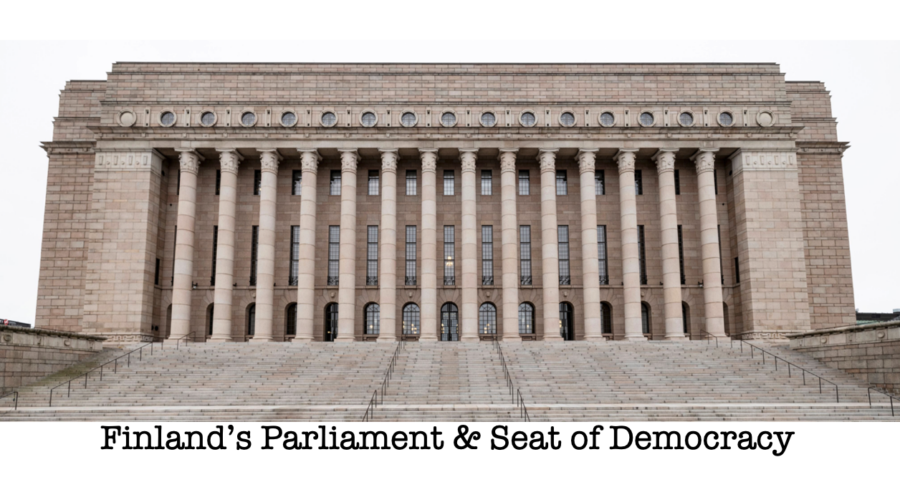
Finland likes to present itself as Europe’s transparent, well-governed success story. Yet a closer look at who occupies elected office reveals a political system increasingly dominated by the same people wearing multiple hats, serving multiple mandates, and building careers that can last decades. No constitutional revolution is required. Several straightforward reforms would dramatically improve accountability, transparency and democratic renewal.
One Person, One Mandate
In the 2023 parliamentary election, 177 of Finland’s 200 MPs were also municipal councillors. Of these, 111 simultaneously held seats on regional wellbeing councils. That means the overwhelming majority of MPs are not solely legislators. Many are also responsible for decisions at municipal and regional level while participating in national decisions that directly affect those same institutions. This concentration of offices would be difficult to justify even if parliamentary work were light. It is not.
Every year MPs are expected to review thousands of pages of legislative proposals, regulatory assessments, committee documents, policy analyses and consultation responses. Municipal and regional councils meanwhile oversee billions of euros of spending on infrastructure, education, transport, social services and healthcare. The question is not whether these elected representatives work hard. Many undoubtedly do. The question is whether any individual can realistically devote sufficient time and attention to performing all three roles at the standard citizens have a right to expect. Parliament should not be a part-time occupation. Neither should running a municipality or a wellbeing region.
The solution is simple: one elected individual, one elected mandate. If serving in Parliament is a full-time responsibility, MPs should not simultaneously hold seats in municipal councils or regional governments.
End Political Careers, Not Democracy
Politics was never meant to be a lifetime occupation. Yet incumbency has become one of the most powerful forces in Finnish democracy. In the 2023 election, 138 of the 200 MPs elected were returning members.
Experience matters. But so does renewal. A Parliament dominated by long-serving incumbents inevitably develops a political culture in which institutional survival becomes as important as public service. Networks deepen. Internal loyalties strengthen. Fresh voices struggle to gain visibility against candidates who already possess name recognition, party machinery and public funding. Even some of the family members get to be MPs and other public officials – names are easily recognized…
The result is not corruption. It is stagnation. No organisation remains innovative when leadership opportunities are effectively reserved for those already inside. The answer is term limits. MPs should be restricted to two consecutive parliamentary terms, with comparable limits for regional and municipal officeholders. Former representatives would remain free to return after spending a term outside office, but no elected position should become a permanent career. Public opinion is already moving in this direction. A survey by the Municipal Development Foundation found that a narrow majority of Finns support limiting MPs to two consecutive terms.
Democracy does not become weaker when power changes hands more often. It becomes stronger.
Close the Revolving Door
Finland deserves recognition for introducing the Nordic region’s first Transparency Register in 2024. It represents an important step towards making lobbying more visible. But transparency is valuable only when it is complete.
Reports have already emerged of lobbying contacts that were not declared as required. Rules that are not enforced quickly become optional. The same applies to the movement of politicians into industries they previously supervised.
A cooling-off period for ministers has been discussed for years – even in reports for the last 5 years publiched by GRECO, part of the Council of Europe (see Notes below). The legislation should be finalised without further delay and extended beyond ministers to MPs serving on committees with direct oversight of specific sectors. The principle is straightforward. Those who regulate an industry should not be negotiating employment with it while still exercising political influence over its future.
Trust in democratic institutions depends not only on integrity, but on the appearance of integrity. Citizens must be confident that public decisions are being made in the public interest.
Stop Paying Politicians for Losing
Former MPs who lose their seats can receive adjustment payments for up to three years, typically amounting to between roughly €2,100 and €3,800 per month. The original intention may have been to ease the transition back into working life. Yet millions of Finns change jobs, face unemployment or experience career disruption without access to a dedicated parliamentary safety net. Public office is public service, not a profession entitled to special protections unavailable to ordinary citizens. If elected representatives believe in the social security systems they create for everyone else, they should be willing to rely on those systems themselves.
The Burden of Proof Has Shifted
Defenders of the current system argue that term limits would remove expertise and increase the influence of civil servants, lobbyists and party officials. Perhaps. But the burden of proof no longer belongs to reformers.
When nearly nine out of ten MPs simultaneously hold municipal office, when more than half hold three political mandates at once, and when Parliament remains dominated by incumbents, it is legitimate to ask whether the system still serves democratic renewal as effectively as it serves established political careers. The 2027 election should not merely be a contest between parties. It should be a referendum on whether Finland’s political class is willing to reform itself. Because democracies are not weakened by limits on power. They are weakened when too much power remains in the same hands for too long. Notes
Who Guards the Constitution?
Finland possesses a constitution but lacks something many democracies regard as equally important: an independent Constitutional Court.
Instead, constitutional scrutiny is primarily carried out by Parliament’s Constitutional Law Committee, a body composed of MPs. However diligent its members may be, the arrangement creates an unavoidable question: should politicians ultimately be responsible for judging the constitutional validity of legislation proposed and supported by politicians?
In most legal systems, constitutional review is entrusted to independent judges with specialised constitutional expertise and security of tenure. Finland instead relies on elected representatives whose decisions inevitably operate within a political environment and political timetable.
The issue is not integrity. It is institutional design. Constitutional questions are often the most complex matters a democracy faces. They involve balancing fundamental rights, governmental powers, legal precedent and long-term constitutional principles. Such decisions should be guided by legal reasoning that is visibly independent of day-to-day political considerations.
An independent Constitutional Court would not weaken Parliament. It would strengthen public confidence that constitutional disputes are being resolved by constitutional experts rather than political actors. Finland rightly prides itself on the rule of law. Yet the ultimate guardians of that law should stand outside the political system, not sit within it.
Finland trusts judges to decide questions of liberty, property, contracts and criminal guilt. Why does it not trust an independent constitutional court to decide whether Parliament itself is acting within the Constitution.
Notes: GRECO stands for the Group of States against Corruption, an anti-corruption monitoring body established by the Council of Europe in 1999. Its role is to evaluate member states’ anti-corruption measures and issue recommendations for reform. Finland has been a GRECO member since 1 May 1999, and GRECO regularly assesses Finland’s performance on issues such as parliamentary ethics, conflicts of interest, lobbying transparency and post-public-employment restrictions.