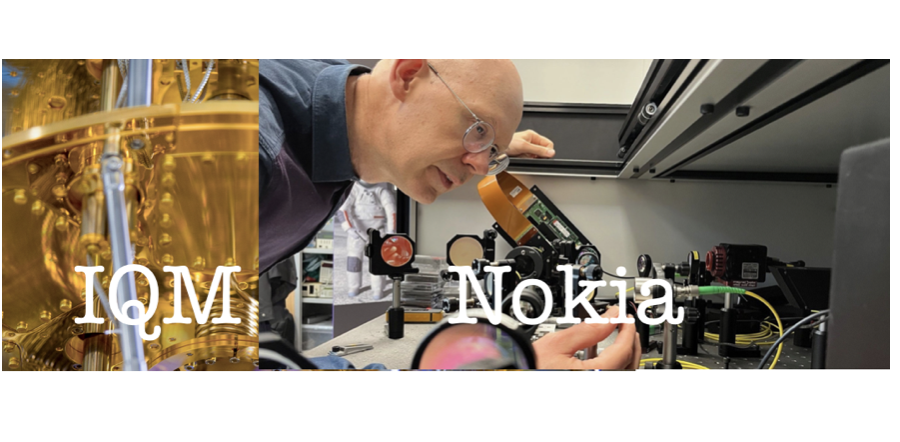
Finland’s reputation for hard engineering didn’t end when Nokia’s phone business did. Two very different companies — one a quantum computing upstart, the other a telecom giant reinventing itself — now anchor a Helsinki-Espoo computing cluster that recruiters and analysts increasingly rank alongside Cambridge as one of Europe’s most concentrated pools of deep-tech talent.
IQM: from Aalto spin-out to Nasdaq-listed quantum leader
Founded in 2018 as a spin-out from Aalto University and VTT, IQM Quantum Computers has grown into a global leader in superconducting quantum hardware, with over 400 employees and systems delivered to customers across Europe, Asia, and North America. In March, the company installed its fourth Finnish quantum computer, the 20-qubit Aalto Q20, giving the university’s own researchers and students direct, sovereign access to quantum infrastructure integrated with the LUMI supercomputer. IQM is also under contract with VTT to deliver a 150-qubit system this year and a 300-qubit machine — among the largest superconducting builds attempted anywhere — by 2027. In July, IQM became the first European quantum company to dual-list on Nasdaq Helsinki and Nasdaq in the US, a milestone only Nokia and Stora Enso had previously achieved.
Nokia: reinventing itself for the quantum-safe, AI-native era
While IQM builds quantum computers, Nokia is racing to defend networks against the threat those machines will eventually pose to encryption. Through Nokia Bell Labs, the company has tested quantum-safe key distribution links, including a 3,500-kilometre trial with Finland’s CSC and Dutch research organisation SURF, and demonstrated quantum-safe optical transport with partners in Japan and elsewhere. In June, Nokia integrated Quantropi’s key-distribution technology into its Security Management Server, adding another layer of quantum-resistant protection for telecom networks. Alongside this, Nokia is pushing into AI-native 6G networking, backed by a $1 billion Nvidia investment and a $4 billion US R&D and manufacturing commitment announced late last year.
A shared talent pipeline
Neither company operates in isolation. Both draw heavily on the same generation of Finnish engineers trained in the RF, microwave, and systems disciplines that Nokia’s mobile-era research built up over decades — the same technical culture now fueling IQM, Bluefors, and a wider Espoo-based quantum and telecom cluster that Finnish industry figures describe as second in Europe only to Cambridge.