From fire-resistant zinc-ion cells to sodium batteries tested at −40°C, Swedish innovators are developing alternatives to conventional lithium-ion technology. The challenge is turning promising science into competitive industrial production.
Sweden has become an important centre for battery research and development, supported by universities, industrial expertise and a largely fossil-free electricity supply. Yet the country’s battery story is more complicated than a straightforward transition from research to mass production.
Its emerging technologies range from entirely new battery chemistries to materials that could improve the performance of existing cells. Recent developments show both the potential of Swedish innovation and the difficulty of building a European battery industry capable of competing globally.
Lyten inherits Northvolt’s industrial ambition
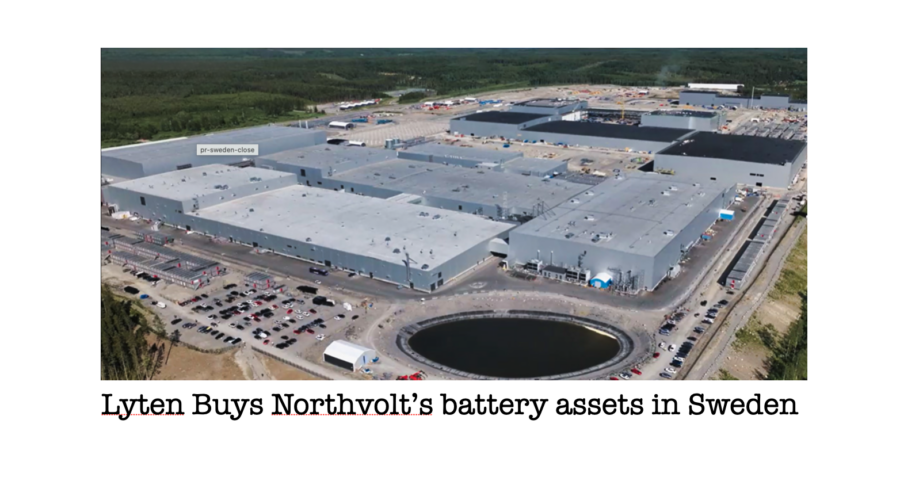
The most consequential development is the revival of Northvolt’s Swedish operations under American battery developer Lyten.
Lyten completed its acquisition of Northvolt Ett in Skellefteå and Northvolt Labs in Västerås in February 2026. The assets include substantial manufacturing infrastructure and a major battery research campus.
The company plans to continue developing conventional nickel-manganese-cobalt (NMC) batteries while industrialising its lithium-sulfur technology. However, commercial cell deliveries originally expected in the second half of 2026 have been pushed back to early 2027. Production-line restart work is under way.
The outcome matters well beyond one company. Sweden’s ability to retain battery manufacturing at gigafactory scale will help determine whether its research strengths translate into a lasting industrial advantage.
Zinc and sodium offer alternatives to lithium
Stockholm-based Enerpoly has developed rechargeable zinc-ion batteries using a water-based electrolyte. This chemistry offers an attractive safety proposition for stationary storage, where cost, longevity and fire risk can matter more than maximum energy density.
Its Rosersberg production facility was designed around an initial capacity target of 100 MWh annually. However, Enerpoly was acquired by MK Plus in 2025, and subsequent public reporting has focused on continued technology development and industrial scale-up. Its long-term commercial potential remains to be demonstrated.
In Uppsala, Altris is pursuing sodium-ion batteries using its patented Prussian White cathode material. Sodium is abundant and can reduce dependence on lithium and other critical battery materials.
A particularly encouraging 2026 milestone came in September, when Altris, Clarios and InoBat reported validation of sodium-ion technology for cold starts down to −40°C. This could be valuable for vehicles, industrial equipment and other applications operating in harsh climates.
The next challenge is industrialisation. Under an agreement announced in January 2026, Altris and Czech chemical company Draslovka plan to establish cathode-material production in Kolín, Czechia, with capacity of up to 350 tonnes annually.
Silicon and organic chemistry target different problems
Uppsala-based Granode Materials is developing silicon-composite anodes for lithium-ion batteries. Silicon can store more lithium than conventional graphite, offering the prospect of higher energy density and faster charging.
Swedish innovation agency Vinnova has awarded the company SEK 19.26 million for a project running from November 2025 to November 2028 to scale up pilot production. This is a development programme, not yet evidence of mass-market manufacturing.
Gothenburg-based Sinonus is exploring carbon-fibre structural batteries, materials designed to carry mechanical loads while also storing electrical energy. If successfully commercialised, the technology could reduce the combined weight of structures and batteries in vehicles and aircraft. Significant engineering and scale-up work remains.
Meanwhile, Rivus is developing metal-free organic flow-battery electrolytes for stationary energy storage. In July 2026, it announced a €2 million investment round alongside public funding to advance its chemistry and prepare customer pilot projects. Its objective is to offer an alternative to flow batteries dependent on scarce metals.
The real test is industrial scale
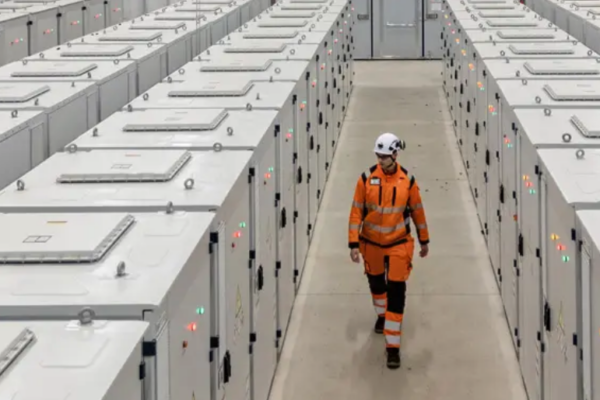
Sweden’s battery advantage lies in its research institutions, materials science, engineering talent and emerging industrial partnerships. The Ånge battery storage project demonstrates that large-scale storage infrastructure can be deployed rapidly: its 70 MW / 160 MWh system entered commercial operation in 2026, although it uses battery equipment supplied by China’s Sungrow.
The broader lesson is that battery innovation and battery manufacturing are different achievements.
Swedish companies are developing technologies that could improve safety, reduce dependence on critical raw materials, increase energy density and extend the range of operating conditions. Whether these advances generate lasting economic value will depend on reliable manufacturing, financing, industrial customers and competitive costs.
Sweden may be developing several important batteries of the future. Its next challenge is to ensure that the factories, supply chains and commercial value do not migrate elsewhere.