Norway’s SINTEF — one of Europe’s largest independent research organisations — is producing some of its most practical and wide-ranging results yet. Here are five breakthroughs published in 2026 that illustrate why.
1. Listening to Stressed Salmon — A New Tool for Fish Welfare
Salmon are not a talkative species. But SINTEF researcher Kristbjörg Edda Jónsdóttir has discovered that they do make sound when they are under stress — a mysterious clicking that scientists cannot yet explain anatomically. Conducting long-term passive acoustic monitoring in Atlantic salmon sea cages over several months, Jónsdóttir detected clear and consistent clicking sounds when fish were crowded and stressed, but not under normal conditions. The findings, published in Aquaculture International in 2026, are the first results from a sustained, multi-month listening study of salmon in live farm environments. If the acoustic signature can be developed into a reliable welfare indicator, it could allow farmers to detect crowding stress and poor conditions in real time — without physically disturbing the fish.
2. Crane-Free Installation for Offshore Wind Turbines
Installing the steel substructures that anchor fixed offshore wind turbines to the seabed requires immense lifting capacity. Globally, only around five vessels can handle loads of up to 2,500 tonnes. SINTEF researchers, working with Aker Solutions, the Belgian contractor Sarens, and maritime group BOA, have now successfully tested an alternative in SINTEF’s Ocean Basin in Trondheim. The concept — developed through the WindRise project — uses an unusually wide barge, 166 metres long and over 73 metres wide, that can carry two substructures simultaneously and submerge its own deck to more than 30 metres. This allows turbine foundations to be floated off and lowered into position without a large crane vessel, opening the installation process to smaller, cheaper, and far more available equipment. Published May 2026, the test results align with prior numerical modelling and the project continues toward full deployment readiness.
3. Turning Food Waste into Fish Feed — Via Insects
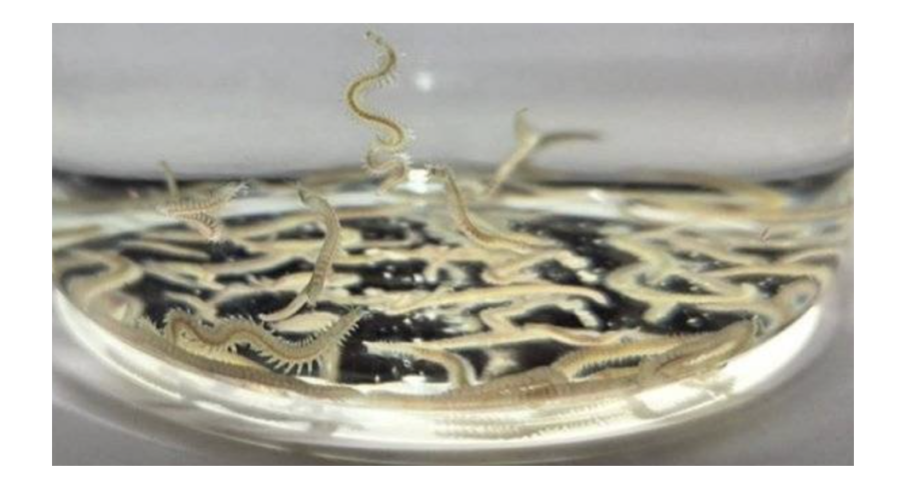
Norway produces more farmed salmon than any other country in the world, but a significant number of fish die before reaching slaughter weight. In the dFUSE project, published in May 2026, SINTEF researchers investigated whether salmon that die pre-slaughter could be processed into silage and used as feed for insects and bristle worms — which in turn become protein-rich feed for live fish. The research found that both the oil and protein derived from dead salmon have promising quality and composition for this purpose. Current EU regulations restrict insects to plant-based feed, but the study shows that, with correct and rapid handling, the circular feed chain is biologically sound and safe. Senior researcher Inger Beate Standal notes that evolving regulations may open the door to broader use of waste streams in insect farming, significantly improving the sustainability of aquaculture.
4. AI-Powered Sorting to Rescue Textile Recycling
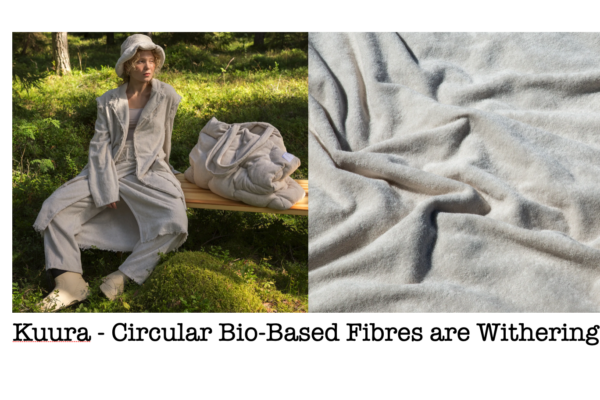
The clothing industry is responsible for eight to ten percent of global CO₂ emissions. In Norway alone, over 80,000 tonnes of textiles were discarded in 2022, with industrial recycling remaining almost non-existent. SINTEF has been working with Norway’s first textile recycling plant, Norsk Tekstilgjenvinning (NTG) in Sandefjord, to change that. Published in May 2026, the research uses sensors and artificial intelligence to sort mixed textile waste — one tonne can contain 2,000 garments in dozens of different fabric blends — with enough precision to enable genuine fibre-to-fibre recycling. The sorted fibres are sold to spinning mills and turned into new yarn. According to NTG, recycled fibre reduces CO₂ emissions by 91 to 97 percent compared to virgin fibre production. The technology applies to all fabric types, including polyester and blended fabrics that conventional sorting cannot handle.
5. Smart Detection to Stop Wildlife Collisions on Roads and Railways
Wildlife collisions are a significant challenge in Norway — costly, dangerous, and increasingly frequent as new road and rail infrastructure fragments animal habitats. Traditional solutions such as wildlife fences and underpasses are expensive and have inconsistent results. SINTEF researcher Gunnhild Svaboe, leading the WILDETECT project, published findings in May 2026 mapping the existing knowledge landscape and identifying what is needed to develop smarter, more flexible solutions. The project is focused on new detection and early-warning systems — using sensors and real-time data — to alert drivers and train operators when animals are on or approaching the track. Rather than restructuring infrastructure, the approach targets the moment of risk directly, with technology that can be deployed adaptively across existing networks.
All five innovations were published by SINTEF in May 2026. SINTEF is Scandinavia’s largest independent research organisation, headquartered in Trondheim, Norway.