A University of Copenhagen spinout wants to expose drinking water’s analytical blind spots. Its technology is promising, but detecting more chemicals is only the start of the regulatory problem.
Europe’s drinking water rules are designed to protect consumers from contamination. They establish minimum quality requirements, prescribed chemical parameters, monitoring duties and a risk-based approach covering water sources, supply systems and domestic distribution. Yet even an extensive regulatory system cannot routinely measure every synthetic compound that may enter the water cycle.
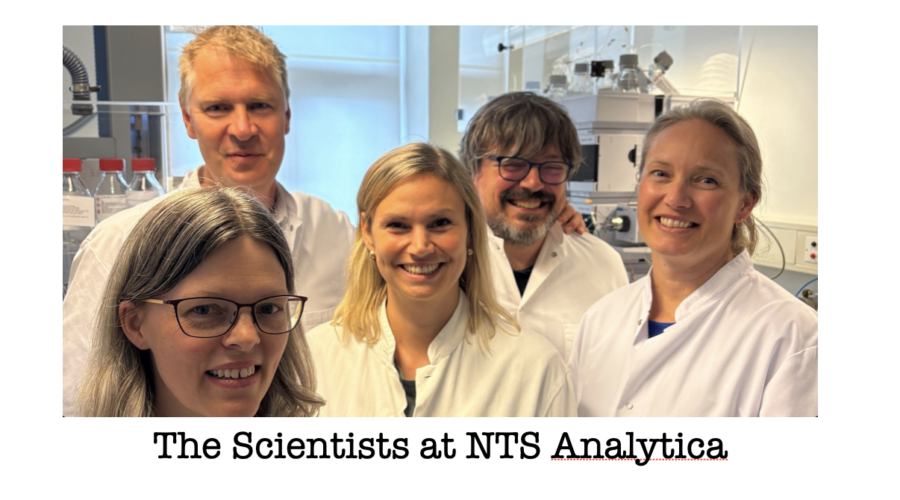
That gap is the commercial opportunity behind NTS Analytica, a spinout founded by five researchers from the University of Copenhagen: Jan H. Christensen, Nikoline J. Nielsen, Selina Tisler, Giorgio Tomasi and Majbrit Hansen Dela Cruz. The company offers broad screening of groundwater, wastewater and environmental samples, with drinking water among its principal applications.
Its proposition is deceptively simple. Conventional monitoring usually asks whether specified contaminants are present. NTS Analytica wants to ask what else is there.
Looking beyond the list
Routine targeted analysis is indispensable. Laboratories calibrate instruments for named substances, measure them against reference standards and determine whether concentrations exceed regulatory or operational thresholds. The method produces results that authorities can compare, reproduce and enforce.
Its limitation is equally clear: substances outside the analytical programme can remain unnoticed.
“Today, we test drinking water for only a small, selected group of substances, those we already fear,” Christensen said in the university’s announcement on 18 June 2026. He argued that this leaves many chemicals undetected and cited PFAS as a class that remained effectively “invisible” for years because monitoring programmes were not looking for it.
NTS Analytica uses non-target screening, high-resolution mass spectrometry and data-science methods to scan samples for thousands of chemical features simultaneously. The result is what the researchers call a “chemical fingerprint”, intended to provide a broader picture than a predetermined testing package.
The approach is not a regulatory novelty dreamed up for a press release. The European Commission’s Joint Research Centre reviewed mass-spectrometry methods for the non-targeted screening of organic compounds in drinking water more than a decade ago. A later JRC review examined targeted and non-targeted technologies for responding to unknown chemical or biological contamination events.
More recently, the EU-funded Partnership for the Assessment of Risks from Chemicals has argued that existing monitoring captures only a fraction of the chemicals circulating through the environment, food systems and human populations. Its 2026 policy brief presents non-target screening as sufficiently developed for policy uptake, while calling for coordinated laboratory capacity, standardised interpretation and common frameworks for turning analytical signals into usable evidence.
The promise, then, is credible. So are the complications.
Detection is not identification
A mass spectrometer can reveal a signal without establishing precisely which chemical produced it. It can tentatively identify a compound without demonstrating its concentration. It can estimate concentration without proving exposure. And exposure, of course, is not synonymous with harm.
The international NORMAN network’s technical guidance identifies continuing challenges across sampling, sample preparation, instrumentation, data processing, identification and reporting. It concludes that no single standard operating procedure can yet cover the varied purposes and methods used in non-target screening.
This matters because a chemical fingerprint is not a ready-made regulatory verdict. Suspected compounds may require confirmation with reference standards and targeted analysis. Apparent discoveries must also be distinguished from background contamination, analytical artefacts and signals that cannot be identified with sufficient confidence.
NTS Analytica says it will provide more than raw data. Its services include prioritised substance lists, concentration estimates, risk assessments, source identification and recommendations for further monitoring. Christensen does not present the company as a replacement for conventional laboratories, but as a possible specialist subcontractor that screens broadly before established laboratories conduct routine targeted tests.
That division of labour is scientifically sensible. It also exposes the difficult middle ground between discovery and enforcement. Someone must decide which signals deserve confirmation, who should pay for the additional work and what authorities should tell consumers while the health significance remains uncertain.
The machine can produce suspects. It cannot conduct the trial.
What the existing rules already do
Europe’s drinking-water regime is not limited to a frozen list of yesterday’s pollutants. Directive (EU) 2020/2184 requires a risk-based approach to water safety, including assessments of catchment areas, supply systems and domestic distribution. It also provides for a watch list covering substances or compounds of concern on public-health grounds.
The first EU drinking-water watch list includes 17-beta-estradiol and nonylphenol because of their endocrine-disrupting properties and potential risks to human health. The Commission decision specifies guidance values and analytical requirements for both substances.
Such mechanisms allow monitoring to evolve. They do not, however, remove the need to identify candidates for future attention. Non-target screening could contribute at this earlier stage by revealing recurring compounds, transformation products or pollution patterns that targeted programmes have missed. The EU chemicals-risk partnership specifically identifies this prioritisation function as one of the potential policy uses of the technology.
The regulatory question is therefore subtler than whether Europe tests only for known chemicals. Its legislation combines defined parameters with risk assessment and emerging-contaminant mechanisms. The more pertinent question is whether those mechanisms receive broad enough analytical intelligence, early enough, to detect problems before they become expensive national scandals.
Denmark’s landfill test
NTS Analytica’s first named customers include the Capital Region of Denmark and the water utilities Novafos and HOFOR. The company is helping investigate possible contamination from former landfill sites located near groundwater abstraction areas.
This is a practical test of the business model. Landfills can contain mixtures of known, poorly documented and transformed substances. Broad screening may help trace pollution sources and identify compounds that conventional testing packages do not include.
The University of Copenhagen announcement also refers to recent studies that found concerning substances in Danish drinking-water boreholes. It says these included industrial chemicals associated with insecticides, cleaning agents, firefighting foams and vehicle tyres, some of which may damage organs or may be carcinogenic.
Those claims require caution. The announcement does not provide a complete bibliography for the reported findings, nor does it identify a single peer-reviewed study as the formal scientific basis for the company’s launch. It also does not establish that every detected substance reached treated tap water, exceeded a health-based threshold or created a measurable risk to consumers.
The distinction is not pedantry. Finding a chemical in a borehole may be important for source protection without constituting evidence of immediate danger at the tap.
An innovation awaiting independent validation
NTS Analytica could help water authorities move from reactive testing towards earlier surveillance. Its method may also improve spending decisions by indicating which contaminants warrant targeted monitoring or treatment. That matters because advanced treatment infrastructure can be costly, while traditional analytical bills tend to increase as more individual substances are added.
For now, however, the evidence publicly available is largely institutional and promotional. The university release contains no independent comparison of NTS Analytica’s performance, no published figures for false-positive or identification rates, no cost comparison and no results from its first commercial assignments.
That does not undermine the underlying science of non-target screening, which has substantial European research support. It does mean that claims about this particular company’s effectiveness should remain provisional until methods, validation data and field results are available for scrutiny.
The most consequential question is not whether broad screening can generate more data. It plainly can. The question is whether laboratories and regulators can convert ambiguous chemical signals into reproducible identifications, defensible risk priorities and proportionate public-health action.
Europe does not merely need instruments capable of seeing further into the chemical darkness. It needs rules for deciding what to do when they find something there.
Questions that still need answers
For NTS Analytica:
- Which peer-reviewed studies support the claim that drinking-water wells frequently contain hundreds of anthropogenic substances?
- What percentage of detected features can be identified confidently, and at what confidence level?
- How are concentration estimates produced when certified reference standards are unavailable?
- Which quality-control procedures are used to exclude background contamination and analytical artefacts?
- Will the company publish validation data and anonymised findings from its first utility projects?
- How are commercial conflicts of interest managed while all five founders remain university employees?
For utilities and regulators:
- What evidential threshold should make an unidentified signal eligible for official investigation?
- Who pays for confirmation, toxicological assessment and repeated monitoring?
- Can non-target results be used in regulatory decisions, or are they restricted to investigative screening?
- How should uncertain findings be communicated without either alarming consumers or concealing legitimate concerns?
- Should periodic non-target screening become part of water-safety planning across the European Union?
References
European Commission, Joint Research Centre. (2013). State-of-the-art of screening methods for the rapid identification of chemicals in drinking water: Deliverable D1 (EUR 26155). Publications Office of the European Union. https://doi.org/10.2788/22645
European Commission, Joint Research Centre. (2020). Review of technologies for the rapid detection of chemical and biological contaminants in drinking water. Publications Office of the European Union. https://publications.jrc.ec.europa.eu/repository/handle/JRC119994
European Commission. (2022). Commission Implementing Decision (EU) 2022/679 of 19 January 2022 establishing a watch list of substances and compounds of concern for water intended for human consumption. Official Journal of the European Union, L 124, 41–43. https://eur-lex.europa.eu/eli/dec_impl/2022/679/oj/eng
European Parliament & Council of the European Union. (2020). Directive (EU) 2020/2184 of 16 December 2020 on the quality of water intended for human consumption. Official Journal of the European Union, L 435, 1–62. https://eur-lex.europa.eu/eli/dir/2020/2184/oj/eng
Hollender, J., Schymanski, E. L., Ahrens, L., et al. (2023). NORMAN guidance on suspect and non-target screening in environmental monitoring. Environmental Sciences Europe, 35, Article 75. https://doi.org/10.1186/s12302-023-00779-4
Partnership for the Assessment of Risks from Chemicals. (2026). Non-target screening: A new tool to improve our understanding of chemical pollution [Policy brief]. https://www.eu-parc.eu/sites/default/files/2026-04/Policy%20Brief_Non%20target%20screeening.pdf
University of Copenhagen. (2026, June 18). Researchers behind new spinout: Only a fraction of the chemicals in drinking water are tested for. https://news.ku.dk/all_news/2026/06/only-a-fraction-of-the-chemicals-in-drinking-water-are-tested-for/Københavns Universitet. (2026, June 18). Miljøforskere bag KU-spinout: Vores drikkevand indeholder hundredvis af kemikalier, i dag tester vi kun for en brøkdel. https://nyheder.ku.dk/alle_nyheder/2026/06/miljoeforskere-bag-ku-spinout-vores-drikkevand-indeholder-hundredvis-af-kemikalier–i-dag