Denmark’s “DNA vacuum” promises a small revolution in biodiversity monitoring. But before it becomes a policy instrument, researchers must answer harder questions about contamination, uncertainty and who controls the genetic map of nature.
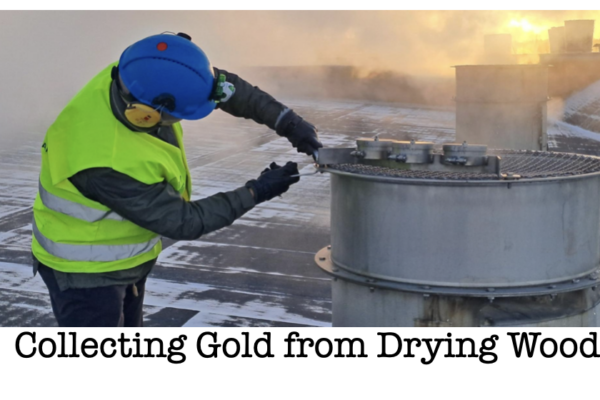
The first thing to understand about the DNA vacuum is that it does not look like a machine from the future. In its Danish field form, it is closer to a practical improvisation: a plastic box, a computer fan, a filter not unlike those used in vacuum cleaner bags, and a battery or power bank. Hung from trees in wetlands, forests and restoration landscapes, it draws air through a filter and catches what the eye cannot see: the genetic dust of animals passing through a place. Hair, feather fragments, skin cells and other biological traces become evidence. The animal may never appear before a human observer, camera trap or binocular lens, yet its DNA may already have moved through the air.
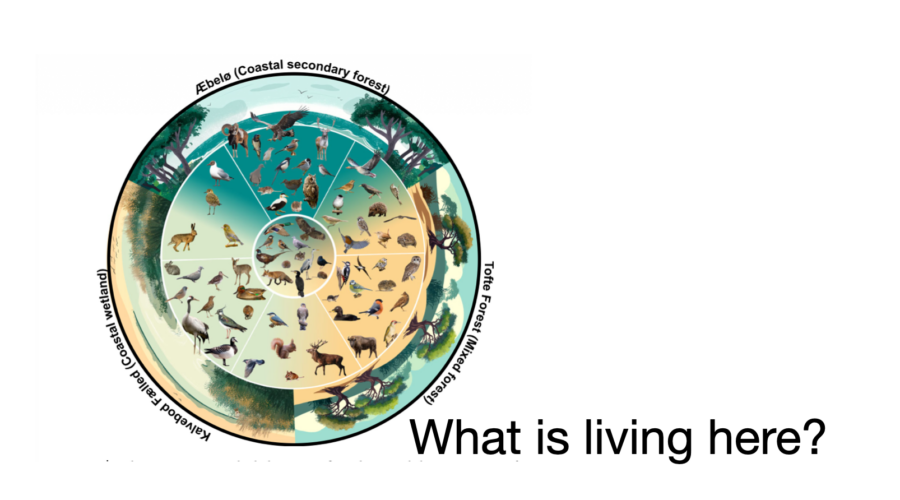
At the University of Copenhagen, researchers have now taken this idea from zoological proof of concept into Danish nature. In two 2026 studies, they sampled airborne environmental DNA, or eDNA, in three protected areas: Kalvebod Fælled near Copenhagen, the island of Æbelø north of Funen, and Tofte Forest in Lille Vildmose in North Jutland. The results are striking. Across active air samples in three nature areas, the Communications Biology study reported 90 wild vertebrate taxa (In biology, a taxon (plural: taxa) represents a named group of organisms classified together based on shared characteristics and inferred evolutionary relationships. It’s a fundamental unit in biological systematics, the scientific study of the diversity of life and its evolutionary history. The concept underpins our ability to organize, analyse, and computationally model the vast biological dataset that constitutes the biosphere. From phylogenetic analysis to biodiversity informatics, taxa provide the necessary scaffold for structuring and interpreting biological information.), including 52 bird species, 19 mammal species and one amphibian species. The detections were not random curiosities. Wetland birds turned up at Kalvebod Fælled, forest birds and bison at Lille Vildmose, and white-tailed eagle, long-eared owl and fallow deer at Æbelø.
For a public used to wildlife surveys as slow, seasonal work conducted by specialists, the promise is seductive. “Can you suck bison out of the air?” the University of Copenhagen news release asks, before answering through the data: in a sense, yes. Kasun Bodawatta, a postdoctoral researcher at the Globe Institute and lead author on the new studies, puts the advance more cautiously: “We do not see DNA from animals that should only be found many kilometres away. This indicates that the signals reflect the local wildlife and that the method has become more precise.”.
That caution matters. The DNA vacuum is not simply a clever gadget. It is a possible new instrument of environmental governance. Europe is entering an era in which claims about nature recovery must be monitored, reported and defended. The EU Nature Restoration Regulation, adopted in 2024, requires restoration measures covering at least 20 per cent of the EU’s land and sea areas by 2030 and all ecosystems in need of restoration by 2050. It also places new pressure on Member States to document changes in wetlands, forests, grasslands, rivers, pollinators, agricultural ecosystems and species habitats. In Denmark, the Biodiversity Council has argued for a national biodiversity law to set long-term targets and ensure that actions are monitored and evaluated.
The implication is clear. If Europe is to restore nature at scale, it needs better ways to know what is actually present. Traditional surveys remain indispensable, but they are expensive, labour-intensive and uneven across taxa. Camera traps are good for larger mammals. Acoustic recorders are powerful for birds, bats and some insects. Field botanists, ornithologists and mammal specialists bring ecological judgement that machines cannot replace. But many methods are species-specific, season-specific or observer-dependent. Airborne eDNA offers something different: a broad, non-invasive, repeatable signal from the environment itself.
The Danish team’s work is important because it moves the method from spectacle to protocol. Earlier Copenhagen research in 2022 showed that airborne eDNA could detect 49 vertebrate species in Copenhagen Zoo, including mammals, birds, fish, an amphibian and a reptile, with detection probability influenced by distance from the sampler and animal biomass. That was scientifically dramatic, but zoos are controlled and DNA-rich places. The new studies ask a harder question: can the air in open landscapes reveal real wildlife communities rather than a confusing cloud of genetic noise?
The answer is yes, but not yet in the simple way a policy official might wish. The Communications Biology paper is, at heart, a methods paper. It tests filter type, storage method, airflow and filter area. Coarser ISO ePM10 65 per cent filters performed better than finer filters, apparently because they allowed more efficient airflow while capturing the relevant particle range. Dry storage at minus 20 degrees Celsius outperformed storage in Longmire’s buffer. Active filtration mattered: passive samplers, without airflow, produced negligible vertebrate detections in the experimental setup. A 12 V fan with a larger filter produced the highest average number of wild vertebrate taxa per sample.
The companion study in Methods in Ecology and Evolution tested time. In a temperate Danish forest, the researchers filtered air for 24, 48 and 96 hours, and compared active air filtration with leaf swabs. Longer filtration increased the average number of wild vertebrate taxa per sample, with 96-hour samples detecting an average of 24 wild taxa compared with 15 for 24-hour samples. Yet the 24-hour design produced the highest total number of wild taxa, likely because more 24-hour samples were collected. Leaf swabs performed poorly by comparison, yielding an average of 1.5 vertebrate taxa per sample.
This is where the innovation becomes both powerful and politically delicate. The DNA vacuum does not give a census. It gives detections. It can suggest that a species has recently left genetic material in the sampled air, but it does not by itself tell us how many individuals were present, whether they were breeding, whether the population is viable or whether the habitat is improving. A white-tailed eagle signal is thrilling, but a conservation plan cannot be built on thrill. It must distinguish a resident pair from a passing bird, a stable population from a transient trace, a habitat success from atmospheric accident.
The two Danish papers are careful about this. The Communications Biology authors note familiar eDNA problems: analytical error, primer bias, incomplete reference databases, laboratory costs, co-amplification of non-target taxa and stochastic detections when DNA quantities are low. In the Danish samples, domesticated animal DNA was abundant. Chicken, pig, dog and cattle signals appeared frequently and had to be removed before analysis of wild communities. Negative controls did not retain wild vertebrate sequences after filtering decisions, which supports the authenticity of the findings, but the abundance of human-associated animal DNA is a reminder that landscapes are not sealed laboratories.
Contamination is not merely a technical nuisance. It is a story about how ecology now passes through industrial, agricultural and domestic systems. A wetland air sample can contain the molecular vapour of nearby farms, dogs, feed animals, researchers and the wider human economy. Good laboratory procedure can reduce false positives, but field interpretation still depends on judgement. Did the DNA come from a living animal in the area, from dung, carcass material, feed, clothing, airborne dust, or an agricultural plume? The Danish work strengthens the case that signals are local, especially because detected communities matched habitat and season, but it also shows why eDNA should be treated as evidence with context, not as an oracle.
There is also the question of absence. If a species is not detected, is it absent, rare, too far from the sampler, seasonally inactive, poorly represented in the reference database, missed by the primer set, or lost because the sampling time was too short? This matters for endangered species, invasive species and legal reporting. If authorities use airborne eDNA to verify restoration success, a false negative could understate progress or conceal failure. A false positive could redirect resources, trigger regulatory consequences or invite public backlash. The method is powerful precisely because it is sensitive, and sensitivity always creates governance problems.
Europe’s biodiversity policy framework makes those governance problems urgent. The Kunming-Montreal Global Biodiversity Framework is accompanied by a monitoring framework designed to track progress through agreed indicators, and the EU is building its own machinery for Nature Restoration Regulation reporting, including national restoration plans and technical reference portals. In this setting, airborne eDNA could help fill gaps between policy ambition and ecological measurement. It may be especially valuable for early detection of invasive species, checking whether restoration areas are attracting target fauna, or comparing biodiversity signals across management regimes.
But biodiversity data are not neutral just because they are molecular. As genetic traces become datasets, questions of access, ownership and benefit-sharing move from remote rainforests to ordinary European landscapes. The Convention on Biological Diversity has spent years wrestling with digital sequence information, or DSI, and in 2024 parties adopted modalities for a multilateral benefit-sharing mechanism, including the Cali Fund. That debate has usually focused on genetic resources used in biotechnology, agriculture and pharmaceuticals. Yet eDNA monitoring also produces digital biodiversity records from places, species and communities, and those records may acquire scientific, commercial, regulatory or conservation value.
Open data can accelerate science. The Danish airborne eDNA work is already connected to public biodiversity data infrastructures: GBIF records linked to the Methods in Ecology and Evolution study include occurrence datasets and metadata, while GBIF is developing a Metabarcoding Data Toolkit to standardise DNA metabarcoding datasets for publication through biodiversity infrastructures. This is a major step for transparency and reuse. Yet openness also raises questions. If eDNA reveals the location of rare, persecuted or commercially sensitive species, should all coordinates be public? If private companies conduct routine biodiversity monitoring for developers, who owns the sequences and derived ecological interpretations? If citizen groups sample air near contested infrastructure projects, will their data be admissible, ignored or litigated?
Denmark is a useful testing ground because it is small, scientifically well connected and politically embedded in European nature law. The three field sites also carry symbolic weight. Kalvebod Fælled sits near Copenhagen, where urban proximity and wetland conservation collide. Æbelø is a restoration landscape within a Ramsar wetland context. Lille Vildmose is Denmark’s largest land conservation area and includes reintroduced large mammals such as European bison and moose. If a low-cost DNA vacuum can distinguish these ecological signatures, it can become a bridge between laboratory genomics and practical conservation management.
The best future for the DNA vacuum is not as a replacement for ecologists, but as a force multiplier for them. Used well, it could help design smarter field surveys, flag unexpected species, compare restoration trajectories and monitor places too frequently or too cheaply to survey by conventional means alone. Used badly, it could become a biodiversity dashboard detached from the messy reality of habitats, behaviour, abundance and ecological function. “We hope that DNA vacuuming can become a method that functions as an additional tool in the toolbox,” says Kristine Bohmann of the Globe Institute. The phrase is modest, and exactly right.
The investigative question, then, is not whether the DNA vacuum works. It does, under defined conditions, and increasingly well. The harder question is what kind of institution will grow around it. Will airborne eDNA become a public scientific infrastructure, governed by transparent standards, ecological humility and careful data stewardship? Or will it become a black-box service sold into compliance markets, producing molecular certificates of nature recovery without enough scrutiny of uncertainty?
The air over Denmark now carries more than pollen, dust and weather. It carries evidence. The new science shows that this evidence can be captured. The next task is to decide how it should be trusted.
References
- Biodiversitetsrådet. (2023). Mod robuste økosystemer: Årsrapport 2023. https://www.biodiversitetsraadet.dk/viden/aarsrapport-2023
- Bodawatta, K. H., Madsen, A. L. M., Holman, L. E., Rasmussen, J. A., Johnson, M. S., Frøslev, T. G., Lynggaard, C., & Bohmann, K. (2026). Advancing airborne eDNA sampling methods for monitoring diverse terrestrial vertebrate communities. Communications Biology, 9, Article 727. https://doi.org/10.1038/s42003-026-09950-y
- Bodawatta, K. H., Bohmann, K., Madsen, A. I. M., & Lynggaard, C. (2026). Filtration of airborne eDNA outperforms leaf swabs for terrestrial vertebrate detection in a temperate mixed forest with longer filtration times performing the best. Methods in Ecology and Evolution. https://doi.org/10.1111/2041-210X.70323
- Convention on Biological Diversity. (2023). Monitoring framework for the Kunming-Montreal Global Biodiversity Framework. https://www.cbd.int/gbf/related/monitoring
- Convention on Biological Diversity. (2025). Digital sequence information on genetic resources. https://www.cbd.int/dsi-gr
- European Commission. (n.d.). Nature Restoration Regulation. https://environment.ec.europa.eu/topics/nature-and-biodiversity/nature-restoration-regulation_en
- European Environment Agency. (2026). Nature Restoration Regulation Reference Portal.https://biodiversity.europa.eu/europes-biodiversity/nature-restoration/reference-portal-for-nature-restoration-regulation
- GBIF. (n.d.). Metabarcoding Data Programme. https://www.gbif.org/metabarcoding
- GBIF. (n.d.). GBIF Metabarcoding Data Toolkit. https://mdt.gbif.org/
- Lynggaard, C., Bertelsen, M. F., Jensen, C. V., Johnson, M. S., Frøslev, T. G., Olsen, M. T., & Bohmann, K. (2022). Airborne environmental DNA for terrestrial vertebrate community monitoring. Current Biology, 32(3), 701–707.e5. https://doi.org/10.1016/j.cub.2021.12.014
- University of Copenhagen. (2026, July). DNA vacuum reveals local wildlife in Danish nature.https://news.ku.dk/all_news/2026/07/dna-vacuum-reveals-local-wildlife-in-danish-nature/