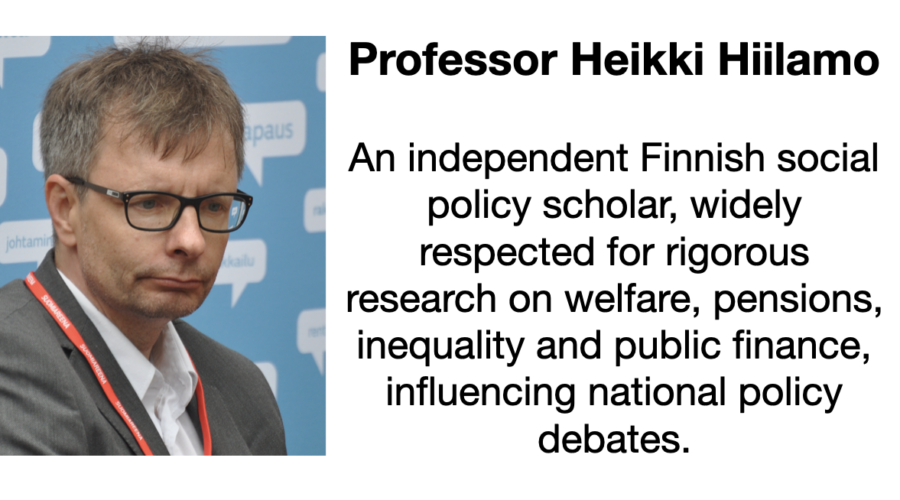
Finland is entering a decade that will define the future of its welfare state. In an article published in Helsingin Sanomat on 15 March 2026, research professor Heikki Hiilamo presents a compelling argument: the country’s fiscal challenges are not merely the result of weak economic cycles or unexpected crises, but the predictable outcome of a profound demographic shift. His analysis highlights both the scale of the challenge and the innovative solutions that could help Finland navigate the next 10–15 years.
Finland’s population history includes two exceptional periods. The post‑war baby boom produced nearly 98,000 births annually between 1944 and 1953. Since 2010, however, the country has experienced the opposite extreme: a dramatic collapse in birth rates, with fewer than 50,000 children born annually in the past decade. As Hiilamo notes, “syntyvyys on romahtanut” — fertility has fallen sharply. This combination of a large elderly population and a shrinking younger generation is now placing unprecedented pressure on public finances.
A government working group has estimated that the next administration must adjust the state budget by 8–11 billion euros, roughly double the scale of current fiscal measures. Yet the pension system and the state budget have responded very differently to demographic change. Since 1962, the pension system has been systematically prepared for aging: contributions have been raised, benefits adjusted, retirement ages increased, and large pension funds accumulated. Between 2008 and 2024, these funds grew by 167 billion euros.
The state budget, by contrast, has not built similar buffers. Over the same period, state debt increased by 115 billion euros. This creates a striking paradox: Finland has ample resources to pay pensions, but insufficient funding for the healthcare and long‑term care services that the same retirees urgently need. Hiilamo stresses that this pressure is temporary — lasting only 10 to 15 years until the baby‑boom generation passes. Yet the strain is peaking precisely when these citizens need care the most.
Hiilamo argues that the time has come to break a long‑standing political taboo: the size and role of Finland’s pension funds. He proposes several targeted, time‑limited reforms designed to stabilize public finances without undermining long‑term pension sustainability.
1. Temporarily reduce pension contributions
Hiilamo suggests using the excess returns of pension funds to lower workers’ pension contributions for two parliamentary terms. This would increase disposable income, expand the tax base, and ease pressure on the state budget — all without compromising the long‑term viability of the pension system.
2. Introduce a dedicated “sote‑tax”
Allowing wellbeing regions to levy their own tax would provide stable, predictable funding for healthcare and long‑term care. It would also create clearer incentives for efficient service delivery.
3. Merge pension companies
A single pension institution, modeled on Canada’s system, would reduce administrative costs and simplify governance. Hiilamo notes that resistance to this idea often assumes the pension system exists in isolation, even though it is deeply intertwined with the broader welfare state.
4. Reassess the target size of pension funds
Hiilamo emphasizes that the funds have already fulfilled their original purpose: preventing a spike in contributions when the baby boomers retired. The question now is whether continued aggressive fund growth is justified when essential care services are underfunded.
These proposals resonate far beyond Finland. Many advanced economies — from Germany to Japan — face similar demographic pressures. Finland, despite its high taxes, offers universal healthcare, accessible education, and a clean, safe environment. Preserving these strengths requires integrating pension policy with broader fiscal strategy and using national wealth more intelligently during this demographic transition.