Wetware represents a great opportunity for the Nordics when we see that living neurons can become the next computing revolution?
Singapore’s Living-Neuron Data Centre
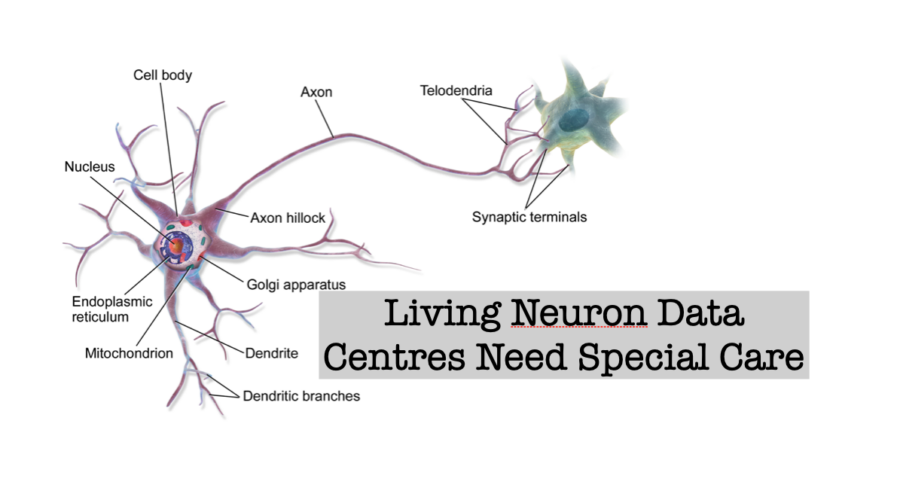
In August 2026, Singapore unveiled one of the world’s most unusual computing experiments: a biological data centre prototype built around living human neurons. Developed through a partnership between NUS Medicine, Australian biotechnology company Cortical Labs and data-centre operator DayOne, the project deploys a 20-unit rack of CL1 biological computing systems containing approximately 16 million living neurons derived from human stem cells. Unlike conventional computers, which process information through silicon transistors, these systems combine living neural tissue with electronics, allowing the neurons themselves to participate in computation.
The ambition is not to replace today’s GPU-based artificial intelligence infrastructure but to explore whether biological systems can excel in areas where conventional AI struggles, such as learning from small datasets, adapting rapidly to changing environments, and operating with dramatically lower energy requirements. The technology builds on the earlier “DishBrain” experiments in which neural cultures learned to play a simplified version of Pong. Supporters view biological computing as a possible route towards more energy-efficient AI at a time when global electricity consumption by data centres is rising rapidly. Critics note that the technology remains highly experimental, with major unresolved questions about scalability, reproducibility, reliability and the six-month lifespan of the neuron cultures.
While Singapore has become the first country to host a biologically integrated server rack within a data-centre framework, the underlying research themes are already attracting attention across the Nordic region.
Denmark and Sweden: Building Blocks of a Nordic Field
The strongest Nordic initiative can currently be found at the University of Southern Denmark (SDU), where researchers have established an explicit programme in Organoid Intelligence. The project investigates how laboratory-grown mini-brains and neural organoids could be combined with artificial intelligence and advanced computing systems. Researchers aim to understand cognition, neurological disease and bio-hybrid computing through biological neural networks rather than purely digital systems. Although SDU is not building a biological data centre, its work closely mirrors the scientific direction pursued by Cortical Labs.
Sweden also possesses several ingredients necessary for future participation in the field. Karolinska Institutet remains one of Europe’s leading centres for stem-cell biology and neuroscience, while Lund University conducts internationally recognised research on neural interfaces, brain-machine communication and computational neuroscience. These capabilities make Sweden well positioned to participate in future organoid-computing programmes should the field mature beyond its current experimental stage.
Finland’s Opportunity
Finland may be particularly well placed to contribute. Although no Finnish institution is currently operating a wetware computing platform comparable to the Singapore prototype, the country combines expertise in three areas that are central to the technology’s future: artificial intelligence, neurotechnology and data-centre infrastructure. Aalto University has established a strong reputation in machine learning and computational neuroscience, while the University of Helsinki hosts leading neuroscience and brain-research groups. Finland’s extensive data-centre capacity and access to renewable energy could also make it an attractive location for testing future low-energy computing architectures.
Strategic Questions for Nordic Policymakers
Beyond the scientific questions, the emergence of biological computing raises strategic issues for Nordic policymakers. The region has invested heavily in artificial intelligence, digital infrastructure and green technology. If living-neuron computing eventually proves commercially viable, Nordic countries already possess many of the capabilities needed to become research and development hubs in the field.
The Ethical Question: Computing or Creating New Moral Responsibilities?
Perhaps the most provocative aspect of biological computing is not technical but ethical. Projects such as the Singapore biological data centre rely on living human neurons derived from stem cells, raising questions that extend beyond ordinary debates about artificial intelligence. The neural cultures used today are tiny, highly simplified and widely regarded by neuroscientists as being far removed from consciousness. They do not possess memories, emotions, personal identity or any recognised form of self-awareness. For this reason, most researchers argue that current experiments are ethically acceptable and comparable to other forms of cell and tissue research.
Yet the technology forces society to confront an uncomfortable possibility. If future generations of biological computers become more complex, adaptive and capable of learning, where should ethical boundaries be drawn? At what point does a highly organised neural system deserve special protection or moral consideration? Some bioethicists already argue that questions once confined to philosophy may become practical policy issues within decades rather than centuries. The challenge is therefore not that today’s research is ethically derelict, but that responsible governance must develop alongside the science. The greatest ethical risk may be not conducting the research, but advancing it without clear safeguards, transparency and public debate.
For the Nordic countries, with their strong traditions of research ethics, public trust and democratic oversight, this is an opportunity as much as a responsibility. Rather than waiting for the technology to mature, the region could help define international standards for the use of human-derived neural tissue in computing, from consent for donor cells to limits on complexity and clear reporting duties. Engaging ethicists, regulators and the public early would allow innovation to proceed with legitimacy, and would turn ethical leadership into a competitive strength.
Conclusion
Whether wetware computing becomes a revolutionary technology or a scientific curiosity remains uncertain. Yet the Singapore project demonstrates that the concept has moved beyond theory, and that its ethical dimension must be addressed alongside its technical promise. For the Nordics, the question is no longer whether biological computing exists, but whether the region intends to help shape its future, and to do so with the transparency, public trust and responsible governance for which it is known.