A strategic handover
From 23–27 March 2026, the European Robotics Forum (ERF) lands in Stavanger, marking the first time Norway hosts Europe’s flagship robotics and AI gathering; the official site confirms the dates, venue and the scale, 1,000+ participants, workshops, exhibitions, lab tours, and awards, while co‑hosts NORCE and SINTEF position the event as a continental inflection point. The umbrella theme, “Robotics for the blue economy and growth in space”, explicitly links Norway’s subsea pedigree with Europe’s accelerating space ambitions, a framing echoed by euRobotics and the local organisers.
Behind the scenes, a quiet transition has unfolded over two years: after the 2025 edition passed the baton northward, Stavanger’s organising alliance secured program depth and hotel blocks early, anticipating heavy demand, again, a sign that ERF has become a magnet for deal‑making and cross‑border consortia.
Why Stavanger?
Stavanger’s story reads like a case study in regional technological reinvention. The city’s evolution from fisheries and canning to offshore oil & gas forged deep subsea engineering capabilities; those capabilities are now redeployed into autonomous systems for offshore wind, aquaculture, and subsea inspection, and, crucially for the ERF theme, toward orbital and cislunar operations where rugged mechatronics, perception, and teleoperation matter. Organisers and euRobotics position Stavanger as “a vibrant hub in Northern Europe” where smart industry, energy transformation and digital innovation converge, precisely the ingredients ERF wants to showcase.
Local hosts NORCE and SINTEF are not just venue partners; they are program architects with long track records in robotics, AI, perception, marine autonomy and industrial automation. Their public briefings emphasize that ERF is where “the research frontier is shaped” and where Norway aims to be put on the European map in robotics and AI, signals that the forum doubles as an industrial strategy moment for the country.
What ERF 2026 will deliver
Multi‑track workshops and lab immersion
The official programme spans five days including side events, with a core Tuesday–Thursday stretch dedicated to workshops and an exhibition; organisers highlight lab tours, industrial site visits, and demonstrator showcases as central differentiators from standard conferences. Early listings and partner pages suggest well over one hundred scientific/industrial sessions across application domains (construction, manufacturing, healthcare, agri‑food, logistics, energy, maritime, space), plus tracks on regulation, funding, and ethics, a breadth consistent with ERF’s remit as euRobotics’ annual tent‑pole.
Norwegian previews point to on‑site robotics ranging from quadrupeds and mobile manipulators to underwater vehicles and humanoids, a spectrum intended to attract researchers, students and industry buyers alike.
The awards, calls and community rituals
ERF’s Renaud Champion Entrepreneurship Award, Tech Transfer Award, and Georges Giralt PhD Award are annual focal points; the 2026 edition again features calls for late‑breaking results and a Sustainability Leadership Recognition in robotics, mechanisms designed to surface fresh startups, IP and societal‑impact cases into the European spotlight. The euRobotics events page underscores the blue‑economy/space motto and the forum’s role as a bridge between research excellence and industrial deployment, with ceremonies and networking baked into the mid‑week schedule.
Blue economy and space
Blue economy
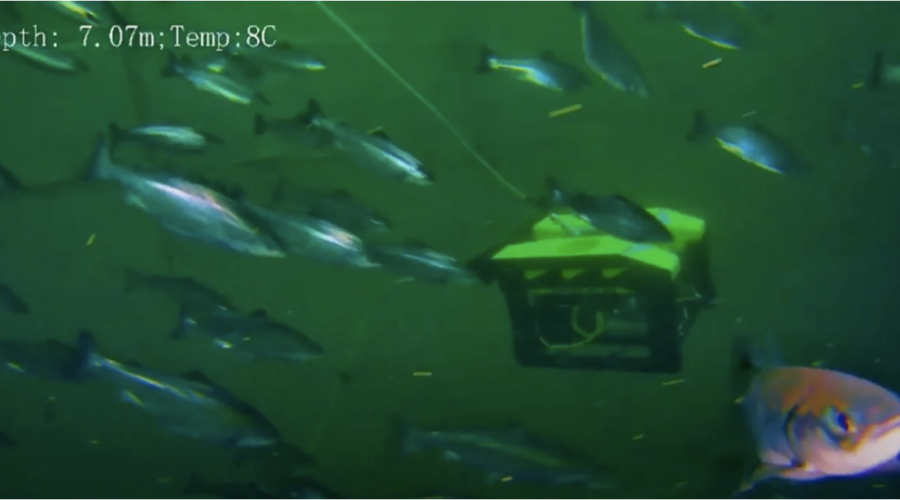
Europe’s blue economy transition demands inspection, maintenance and repair (IMR) at scale for offshore wind, aquaculture pens, undersea cables, and pipelines, work that is costly and hazardous for humans but natural for robots. The ERF theme taps the North Sea’s subsea engineering legacy to showcase new AUV/ROV platforms, force‑aware manipulators, and SLAM/perception stacks hardened for turbidity, currents and low‑light, domains where Norwegian institutes and suppliers are internationally competitive. Organisers explicitly cite Stavanger’s maritime tradition and subsea expertise as reasons for the 2026 host selection.
NORCE’s brief emphasises autonomous systems for monitoring, operations and maintenance based on sensor fusion, pattern analysis and machine learning, precisely the algorithms that unlock persistent subsea autonomy, while SINTEF points to industry‑facing labs and demonstrators that attract end‑users, not just academics.
Space growth
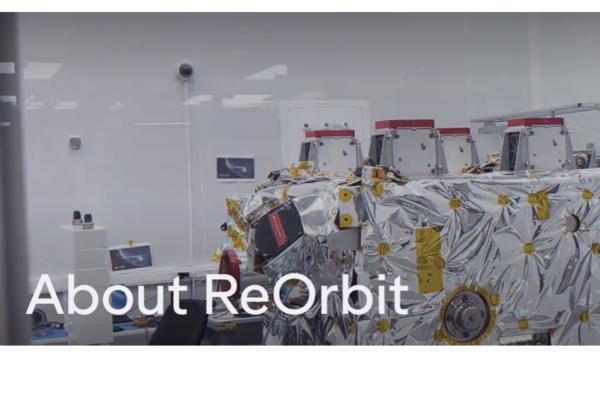
The “growth in space” half of the theme leans on a pragmatic thesis: the ruggedization, teleoperation, redundancy, and safety engineering honed offshore translate well to space robotics; for in‑orbit servicing, assembly, inspection, and lunar surface logistics. euRobotics’ event note frames the theme as a “significant intersection of advanced technology and sustainable development,” arguing that the same robotics that cut ocean risks and emissions can extend human reach beyond Earth.
Expect sessions tackling human‑robot collaboration across time‑delay links, radiation‑tolerant perception, model‑based autonomy, and verification & validation (V&V) under extreme constraints, topics increasingly prominent in European FP/Horizon projects and now given a Nordic industrial twist on ERF’s stage.
The business case
Organisers are explicit: ERF is engineered to bridge lab and market, not just celebrate prototypes. The official site spotlights sponsor/exhibitor opportunities and entrepreneurship awards; Norce/SINTEF amplify that ERF is where end‑users, integrators and policymakers collide, enabling pilots and procurements to crystallise.
For Norwegian SMEs, the timing is propitious. National engineering clusters face diversification pressure as the oil & gas sector decarbonizes; ERF offers direct access to EU buyers, Horizon Europe consortia, and regulatory conversations (NIS2/AI Act spillovers) that influence procurement criteria. Norwegian industry association NFEA has told members that ERF2026 in Stavanger is a unique opportunity to showcase domestic automation and secure international relationships, a clear signal that local ecosystems intend to use ERF as a business‑development accelerant.
What to watch in the programme
- Robotics for offshore wind O&M
Look for missions combining aerial and subsea assets, autonomous blade and foundation inspection, and predictive maintenance pipelines that integrate OT/IT data, areas where subsea competence and AI‑enabled perception converge. The blue‑economy framing and Stavanger’s subsea legacy virtually guarantee multiple sessions and demos here. - Docking, grasping and manipulation in unstructured environments
Whether underwater or in orbit, reliable manipulation under uncertainty remains the rate‑limiter to full autonomy. Expect workshops on force‑torque sensing, impedance control, learning‑based grasping, and benchmarks for harsh conditions. The hosts’ applied orientation suggests end‑user testbeds will be highlighted. - Human‑robot teaming for hazardous operations
From offshore platforms to nuclear or space contexts, the safety case is as important as the demo. Panels are likely to weigh teleoperation UX, shared autonomy, and fail‑safe architectures with regulators and insurers at the table. The ERF platform specialises in such cross‑disciplinary exchanges. - EU funding & policy clinics (euRobotics & partners)
ERF routinely convenes Horizon Europe insiders and euRobotics working groups; Stavanger should be no exception. With NORCE/SINTEF as co‑hosts, expect highly practical sessions on building cross‑border consortia, IP, and tech‑transfer pathways.
The experience layer
ERF’s site visits and lab tours are not filler; they are where prospective buyers evaluate TRL and integration risk in realistic settings. The 2026 programme emphasizes Stavanger Forum as the hub, with off‑site immersion to local research and industrial facilities to anchor collaboration in real pipelines, ports, and test tanks, a pattern flagged in the event pages from both the official site and hosting institutes.
The region’s business agency has cast ERF as a “Smart City Stavanger” milestone and secured political air cover; the Mayor’s public welcome underscores that the city wants ERF’s legacy impact (skills, startups, supplier relationships) to stick long after March 2026.
Risks and realities
- From demos to deployments
Success means signed MOUs, pilot sites agreed, and post‑ERF roadmaps published, especially in offshore wind O&M, aquaculture, and space‑adjacent service robotics. The forum’s structure (workshops + awards + site visits) is designed to catalyse exactly that. - Pan‑European participation beyond the usual suspects
The thesis of euRobotics is inclusivity across member states and SMEs; watch whether Central–Eastern European labs and Mediterranean blue‑economy actors show up in force, not just the Nordic/Western core. The organisers’ communications emphasise 1,000+ attendees and a broad constituency. - Program credibility in space robotics
To avoid hand‑waving, the space track must feature flight‑heritage projects, ESA/industry participation, and concrete V&V approaches. The euRobotics framing and co‑host capabilities suggest that’s achievable; look for award shortlists and keynotes to anchor it. - Local ecosystem aftercare
ERF is a week; cluster building is years. After March, track follow‑up events, spin‑out support, and Horizon bids led from the Stavanger region; NORCE and SINTEF have the convening power to keep momentum.
Practicalities for attendees
- Registration & accommodation: The organisers recommend early action; blocks have been secured, but demand is expected to be high. Check the ERF2026 site and the euRobotics events page for links and updates.
- Awards & calls: If you’re a startup, tech‑transfer team or PhD candidate, target the ERF awards calendar, deadlines and late‑breaking calls are central routes to visibility.
- Nordic business development: Norwegian automation members (via NFEA) are being nudged to leverage ERF to internationalise, if you sell OT/robotics into energy or maritime, this is a high‑return trip.
A Nordic stage for Europe’s next robotics chapter
ERF’s move to Stavanger is more than geography. It’s a strategic staging of Europe’s robotics agenda in a region where blue‑economy operations and industrial autonomy are daily realities, and where space robotics can borrow hard‑won lessons from the North Sea. With NORCE and SINTEF curating and euRobotics convening, expect a programme that privileges TRLeality over hype and turns workshops into procurement and consortium pathways. The city will supply the backdrop; the European robotics community will determine the outcome.
Sources & further reading
NFEA: “ERF2026 i Stavanger – en unik mulighet” (member guidance): nfea.no
Official ERF 2026 site (programme, dates, registration, calls, awards): erf2026.eu
SINTEF event brief (co‑host, venue & schedule overview): sintef.no – ERF 2026
NORCE event page (theme, co‑hosting with euRobotics): norceresearch.no – ERF
euRobotics events page (theme rationale, Stavanger context): events.eu-robotics.net
News release (host announcement, hotel blocks, dates): eu‑robotics.net PDF
Norce/SINTEF feature—“Putting Norway on the European map” (program & ecosystem framing): NORCE news
Regional business agency preview (city welcome, Smart City angle): regionstavanger / Edge of Norway