For much of modern molecular biology, proteins have lived in the shadow of nucleic acids. DNA, in particular, enjoys a peculiar privilege: it can be copied. Since the invention of the polymerase chain reaction in the nineteen‑eighties, biologists have been able to take vanishingly small amounts of genetic material and amplify them into legibility. PCR did not merely accelerate research; it reshaped what could be known. It allowed infection to be diagnosed before symptoms emerged, ancestry to be reconstructed from a speck of bone dust, and entire genomes to be read from minuscule samples. Proteins, by contrast, resisted such multiplication. They could be detected, labelled, inferred, but not truly amplified. Their scarcity imposed a hard epistemic boundary. Entire disease processes, it was long assumed, unfolded below the threshold of measurement.
Over the last decade, this asymmetry has begun to look less like a fact of nature than a technical impasse.
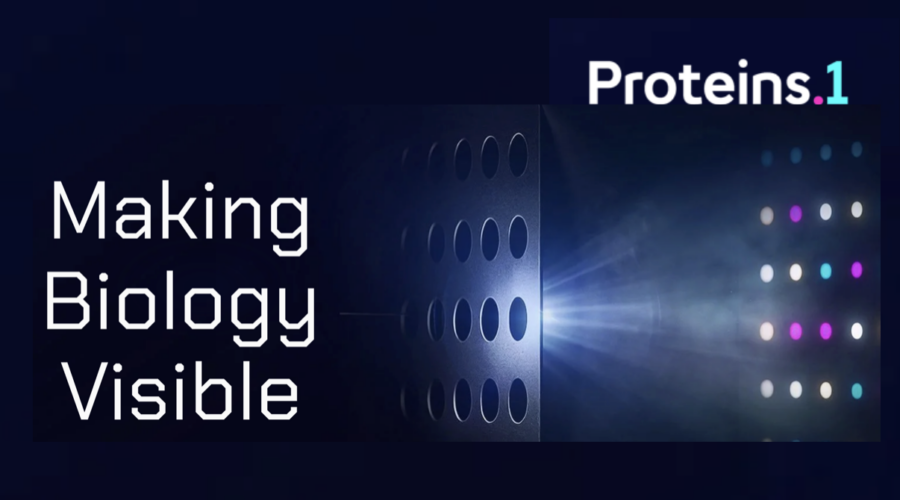
In a laboratory ecosystem shaped by Finland’s state‑backed research infrastructure and a particular Nordic tolerance for slow, difficult engineering, a small company called Proteins.1 has emerged with a proposition that would once have seemed almost immodest: that proteins, too, can be amplified. Not copied chemically, as DNA is, but rendered loud enough to be heard, molecule by molecule, against the noise of biological complexity. The term the company uses is single‑molecule protein amplification, and it is careful, almost deliberately so, not to frame the idea as revolutionary. What is being claimed is narrower and more exacting: that an individual protein molecule, once detected, can be read repeatedly without increasing background noise, thereby accumulating signal rather than obscurity.
This distinction matters. The history of protein detection is littered with clever approximations masquerading as breakthroughs. Immunoassays, western blots, mass spectrometry, proximity extension assays, digital ELISAs: each incrementally pushed sensitivity forward, and each encountered the same conceptual ceiling. Proteins cannot be amplified chemically without altering their identity. What they can do is bind, fluoresce, react. Each detection event is effectively terminal. The signal fades as the molecule is consumed or obscured. Noise accumulates faster than certainty.
Proteins.1 approaches the problem obliquely, by refusing the chemistry arms race altogether. Its platform replaces enzymatic amplification with a physics‑based cycle of repeated measurement. A single protein molecule is captured and held within a detection architecture that subjects it to controlled magnetic cycling. Instead of attempting to generate more protein, the system returns to the same molecule again and again, reading it multiple times and integrating those readings into a clearer signal. The molecule remains singular; the measurement compounds.
What emerges is not multiplication but persistence. The protein stays where it is, and the instrument learns to listen better.
The immediate implication is sensitivity. Signals that would ordinarily drown in statistical fluctuation become legible. Biomarkers previously detectable only in later stages of disease begin to appear earlier, in concentrations so low they were once dismissed as indistinguishable from error. It is this property that has drawn attention from oncology and neurology, fields where early molecular changes precede symptoms by years, sometimes decades.
The restraint shown by Proteins.1 in describing these implications is striking. Public communication avoids grand metaphors. No cures are promised. Timelines are hedged. The company positions its work, initially, as research‑use‑only, a phrase that carries both regulatory humility and epistemic caution. The emphasis is on measurement capability, not clinical destiny.
This careful posture distinguishes the current moment from earlier cycles of diagnostic exuberance. The last decade has seen a proliferation of ultra‑sensitive assays that promised to detect disease “before it begins”, only to confront the interpretive problem that sensitivity creates. A signal without context is not a diagnosis. Early detection can as easily expand uncertainty as resolve it. False positives scale with ambition.
Single‑molecule protein amplification does not solve this problem; it relocates it. By lowering the floor of detectability, it forces biology and medicine to reckon with processes once invisible. It raises questions that cannot be answered instrumentally. Which early signals matter? Which fluctuations presage disease, and which are merely the static of living systems maintaining themselves?
In this sense, the technology’s most consequential effect may be philosophical rather than clinical. PCR transformed biology by collapsing uncertainty about presence or absence. A sequence either was there or it was not. Proteins, by contrast, exist along gradients of expression that are deeply contextual, time‑dependent, and cell‑specific. Amplifying their detectability does not discretise biology; it deepens its continuity.
The Finnish research environment has quietly proven hospitable to this kind of work. Neither venture capital spectacle nor academic isolation dominates. Proteins.1 traces its intellectual origins to long‑running work at VTT, Finland’s state technical research centre, where long horizons and incremental validation remain institutionally possible. Funding structures allow early platforms to mature without immediate narrative payoff. Failure, if quiet, is tolerated.
Success, if slow, is not disqualifying.
Whether single‑molecule protein amplification will come to occupy a role analogous to PCR remains an open question. The analogy is tempting, and the company does not entirely discourage it, but the differences are instructive. PCR amplified something discrete and digital. Protein amplification amplifies measurement, not matter. It is closer, conceptually, to
improving a microscope than to inventing a copier.
Yet microscopes have histories of their own. When resolution improves, biology reorganises itself around what can be seen. Cells become organelles; organelles become complexes; complexes dissolve into interactions. Each gain in visibility rearranges explanatory priorities. The last decade has pushed measurement ever closer to the molecular margins of life. Single‑molecule protein amplification suggests that, for proteins at least, the margin is not yet fixed.
The technology arrives at a moment of wider scientific constraint. Drug development faces diminishing returns. Late‑stage failures dominate. Diseases characterised by long preclinical phases remain stubbornly resistant to intervention. There is a growing sense, among researchers and funders alike, that the bottleneck is not therapeutic imagination but biological resolution. One cannot intervene in what one cannot reliably observe.
Proteins.1 offers a tool for observation. It does not collapse complexity. It does not simplify biology into a yes or no. It sharpens the question. That may prove to be its most lasting contribution. If PCR taught biology how to copy, single‑molecule protein amplification is asking what it means to listen longer.
References
Alberts, B., Johnson, A., Lewis, J., Morgan, D., Raff, M., Roberts, K., & Walter, P. (2022). Molecular biology of the cell (7th ed.). Garland Science.
Baker, M. (2015). Reproducibility crisis: Blame it on the antibodies. Nature, 521(7552), 274–276. https://doi.org/10.1038/521274a
Chiu, D. T., & Zare, R. N. (2016). Separation science in the microscale. Annual Review of Analytical Chemistry, 9, 1–24. https://doi.org/10.1146/annurev-anchem-071015-041610
Ferrari, M., & Vitiello, L. (2023). Single‑molecule detection in protein diagnostics: Limits and prospects. Trends in Biotechnology, 41(8), 1054–1066. https://doi.org/10.1016/j.tibtech.2023.03.004
Mullis, K. B. (1990). The unusual origin of the polymerase chain reaction. Scientific American, 262(4), 56–65.
Nordic Life Science. (2026, April 21). New Finnish deep‑tech startup launched. https://nordiclifescience.org/new-finnish-deep-tech-startup-launched/
Rissin, D. M., Kan, C. W., Campbell, T. G., Howes, S. C., Fournier, D. R., Song, L., … Duffy, D. C. (2010). Single‑molecule enzyme‑linked immunosorbent assay detects serum proteins at subfemtomolar concentrations. Nature Biotechnology, 28(6), 595–599. https://doi.org/10.1038/nbt.1641