When people talk about innovation in Nordic industry, they usually point to batteries, telecoms or green steel. Yet a quieter transformation is taking place on the surfaces of things: on elevator buttons, ship components, defence systems, medical devices and industrial machinery. In that world of coatings and finishes, Finland’s Lainisalo has evolved from a one person paint shop into one of the most technologically ambitious surface treatment groups in the Nordic and Baltic region, with a portfolio that now includes patented antimicrobial and stealth materials.
For a publication like Forum Nordic, which follows the intersection of technology, society and markets, Lainisalo is an instructive case. It shows how a traditional subcontracting business in a mature sector can use in house research and development to create intellectual property, respond to global shocks such as the Covid 19 pandemic, and position itself at the crossroads of health security, defence, sustainability and advanced manufacturing.
This article examines the core innovations behind Lainisalo’s ViralSafe antimicrobial coating and its Piranha Stealth material, situates them within broader trends in surface engineering, and explores their potential implications for Nordic and European markets and for society at large.
From industrial painter to materials innovator
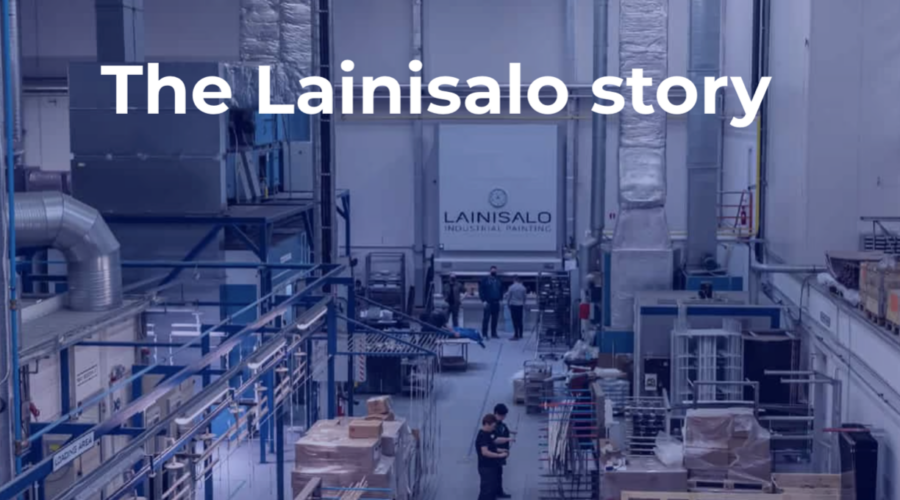
Lainisalo was founded in 1990 and has grown into a group with six locations, more than 120 employees and a turnover exceeding 9 million euros in 2021. It is now one of the largest industrial painters in the Nordic and Baltic region, specialising in demanding components and large scale surface coating.
The company’s core business spans powder coating, wet coating and other industrial surface treatments for sectors ranging from consumer products and construction to maritime, automotive, electronics, medical devices and defence. Its customers’ products operate on every continent and in all climates, which places stringent demands on corrosion resistance, mechanical durability, UV stability and aesthetic quality.
What differentiates Lainisalo from many subcontracting paint shops is the explicit role of in house research and product development. The company describes patents, innovations and problem solving as central to its competitive position. That R&D focus has produced at least two notable proprietary technologies: the ViralSafe antimicrobial coating and the Piranha Stealth material, both of which move the company from pure service provider into the realm of advanced materials.
ViralSafe: turning touch surfaces into active barriers
The Covid 19 pandemic exposed a vulnerability in modern societies: the sheer number of shared touch surfaces in public and professional environments. Lainisalo’s response was ViralSafe, a patented coating designed to eliminate viruses and bacteria on contact in a matter of seconds.
According to Lainisalo, ViralSafe was developed shortly after the coronavirus outbreak with the explicit goal of breaking infection chains after a single touch. The coating has been tested in multiple BSL 3 laboratories, with reported results showing rapid inactivation of a range of pathogens, including SARS CoV 2, respiratory syncytial virus (RSV) and murine norovirus. For example, tests cited by the company indicate a 95 to 96 per cent reduction of RSV within 30 to 60 seconds and a 97 per cent reduction of murine norovirus within ten minutes.
Although Lainisalo does not publicly disclose the full formulation, ViralSafe is described as a biocidal surface treatment that actively removes bacteria and viruses. A related product listing for ViralSafe, marketed by a partner, highlights efficacy against a broad spectrum of organisms, including SARS CoV 2, influenza A (H1N1), Staphylococcus, Escherichia coli, Listeria monocytogenes and Salmonella.
Likely technology basis
While the exact chemistry is proprietary, ViralSafe fits into a wider class of antimicrobial coatings that use active agents such as silver, copper, quaternary ammonium compounds, photocatalytic oxides or hybrid organic inorganic systems. These coatings are engineered so that the active species is either immobilised at the surface or slowly released, disrupting microbial membranes, denaturing proteins or damaging nucleic acids upon contact.
In practice, such coatings must balance several competing requirements. They need to be strongly adherent to the substrate, compatible with existing paint systems, mechanically robust under abrasion and cleaning, and compliant with biocidal product regulations in the European Union. They also need to maintain their antimicrobial performance over time without leaching excessive amounts of active substances into the environment.
Lainisalo’s positioning of ViralSafe as a new standard for touch surfaces suggests that the company has integrated the antimicrobial function into a coating system that can be applied using industrial processes already familiar to its plants and customers, such as spray application and curing within existing paint lines.
Integration into industrial surface treatment
The real innovation is not only in the chemistry but in the integration of ViralSafe into a broader industrial surface treatment ecosystem. Lainisalo operates large scale coating lines for break bulk goods, which means it can apply ViralSafe to a wide variety of components, from elevator panels and door handles to medical device housings and control cabinets, without requiring customers to redesign their products or invest in new equipment.
This integration is particularly important for sectors such as healthcare, public transport and building management, where retrofitting existing infrastructure with antimicrobial surfaces can be more feasible than replacing entire systems. It also aligns with Nordic and EU priorities around infection prevention, occupational safety and resilient public spaces.
Piranha Stealth: surface engineering for defence and sensing
If ViralSafe addresses biological threats, Piranha Stealth speaks to a different set of concerns: detection, signature management and survivability in defence and security applications. Lainisalo’s Piranha Stealth is described as a patented advanced material, developed in house and positioned alongside ViralSafe as part of the company’s innovation portfolio.
Public information on Piranha Stealth is limited, but the name and context suggest a surface treatment or coating system designed to reduce the detectability of platforms or components, potentially across optical, infrared or radar bands. In modern defence technology, stealth is no longer confined to airframes and hull shapes; it increasingly involves tailored coatings that absorb or scatter electromagnetic radiation, manage thermal signatures or reduce glint and reflection.
Lainisalo’s presence in defence painting, including a dedicated Lainisalo Defence Painting entity and strategic cooperation with Stera Technologies to build an industrial surface treatment plant in Kaarina, underlines the relevance of such materials.
The role of coatings in stealth
Stealth coatings typically incorporate functional fillers such as conductive polymers, carbon-based materials, ferrites or engineered dielectric particles into a binder matrix. By tuning the thickness, composition and microstructure, engineers can create surfaces that attenuate radar waves, reduce specular reflection or manage emissivity in the infrared range.
From a process perspective, applying such coatings at industrial scale is non trivial. It requires precise control of layer thickness, homogeneity and curing, as well as compatibility with primers and topcoats that provide corrosion protection and mechanical durability. A company like Lainisalo, with decades of experience in demanding industrial painting and a footprint across Finland and Estonia, is well placed to translate laboratory stealth formulations into repeatable production processes for defence customers.
While the details of Piranha Stealth remain confidential, its existence signals that Nordic subcontractors are not merely applying paints specified by others but are actively developing proprietary materials that can influence system level performance in defence and security.
Deepening the technology stack: from powder coating to functional surfaces
Beyond these headline innovations, Lainisalo’s core technologies in powder and wet coating form the platform on which advanced functions are built.
Powder coating, one of the company’s main services, involves electrostatically applying a dry powder to a component and then curing it to form a continuous film. This method offers high material utilisation, low volatile organic compound emissions and excellent mechanical properties. It is widely used for outdoor structures, machinery, appliances and automotive parts.
Wet coating, by contrast, uses liquid paints and is often chosen for complex geometries, specific aesthetic requirements or multi layer systems where primers, intermediate coats and topcoats must work together to provide corrosion resistance, UV stability and desired appearance.
Lainisalo’s innovation lies in embedding new functionalities such as antimicrobial activity or stealth properties into these established processes. Rather than treating coatings as a final cosmetic step, the company treats them as an engineered interface between the product and its environment, capable of influencing hygiene, detectability, durability and even regulatory compliance.
This approach mirrors a broader trend in surface engineering, where coatings are increasingly multifunctional. In Europe, research programmes and industrial initiatives are exploring self healing coatings, low friction surfaces, icephobic layers and smart coatings that can sense or respond to environmental changes. Lainisalo’s work shows how such concepts can be translated into commercial offerings within a mid sized Nordic industrial group.
Market implications: Nordic and European perspectives
The innovations embodied in ViralSafe and Piranha Stealth have implications that extend beyond Lainisalo’s own order book.
In the Nordic region, there is a strong emphasis on public health, high quality built environments and technologically advanced defence capabilities. Antimicrobial coatings for touch surfaces align with hospital infection control strategies, safer public transport and healthier workplaces. Stealth and advanced defence coatings support national and regional security objectives, particularly as Nordic countries deepen their defence cooperation and integration with NATO frameworks.
At the EU level, regulatory frameworks such as the Biocidal Products Regulation and REACH shape the development and deployment of antimicrobial and functional coatings. Companies that can design products compliant with these regulations while delivering high performance gain a competitive advantage. Lainisalo’s positioning as a research driven, patent holding innovator suggests that it is aiming to navigate this regulatory landscape proactively rather than reactively.
From a market structure perspective, Lainisalo illustrates how value can shift within industrial supply chains. Traditionally, OEMs and system integrators have captured most of the value associated with performance and functionality, while subcontractors have competed on cost and reliability. By owning proprietary materials such as ViralSafe and Piranha Stealth, a surface treatment company can move up the value chain, influencing product specifications and potentially licensing technology beyond its own plants.
The strategic cooperation with Stera Technologies, which involves building an industrial surface treatment plant within Stera’s Kaarina factory, points to another trend: closer integration between metal manufacturing and advanced surface treatment. This integration can shorten lead times, improve quality control and enable co development of components and coatings for demanding applications.
Societal implications: hygiene, trust and security
The societal implications of Lainisalo’s innovations are subtle but significant.
First, there is the question of hygiene and public trust. During and after the Covid 19 pandemic, public awareness of surface hygiene increased sharply. While airborne transmission has been recognised as the dominant route for SARS CoV 2, contaminated surfaces remain a concern for many pathogens, particularly in healthcare and food environments. Antimicrobial coatings like ViralSafe cannot replace cleaning and disinfection, but they can add a passive layer of protection that operates continuously between cleaning cycles.
If deployed transparently and responsibly, such coatings can contribute to a sense of safety in shared spaces. However, they also raise questions about risk communication and realistic expectations. Overstating their capabilities could lead to complacency, while under communicating them could limit their societal benefit. Here, factual, evidence based reporting and clear labelling are essential.
Second, there is the defence and security dimension. Stealth materials like Piranha Stealth are part of a broader technological competition in which signature management, sensing and countermeasures are constantly evolving. For Nordic societies that place a high value on openness and peace, the development of advanced defence technologies can be politically sensitive. Yet the security environment in Northern Europe has changed markedly in recent years, and there is growing recognition that technological competence in areas such as coatings, materials and electronics is a component of strategic autonomy.
Lainisalo’s work in defence painting and stealth materials shows how dual use technologies can emerge from civilian industrial capabilities. The same expertise that produces durable, aesthetically pleasing coatings for consumer products can be applied to reduce the detectability of military platforms or protect critical infrastructure.
Sustainability and regulation: coatings in a low carbon, low toxicity future
Any discussion of surface treatment in Europe must address sustainability. Coatings have historically been associated with solvents, heavy metals and other environmentally problematic substances. Over the past decades, the industry has shifted towards powder coatings, waterborne systems and low VOC formulations, driven by regulation and customer demand.
Lainisalo’s emphasis on powder coating as an environmentally friendly and cost effective method reflects this shift. Powder coatings typically have near zero solvent emissions and high material utilisation, which reduces waste.
The challenge for companies developing antimicrobial or stealth coatings is to ensure that added functionalities do not undermine environmental progress. Biocidal agents must be carefully assessed for toxicity and environmental persistence. Functional fillers for stealth applications must be managed to avoid harmful substances. Compliance with EU regulations is not only a legal requirement but also a market expectation, particularly in Nordic countries where environmental standards are high.
In this context, in house research and development becomes a strategic asset. It allows companies like Lainisalo to design formulations with regulatory constraints in mind, to generate data for approvals and to adapt quickly as rules evolve.
The future: surfaces as strategic infrastructure
Looking ahead, the innovations emerging from Lainisalo point towards a future in which surfaces are treated as strategic infrastructure rather than passive boundaries.
In healthcare and public buildings, antimicrobial coatings could be integrated into design standards for high touch areas, complementing ventilation, cleaning and digital monitoring. In transport and logistics, durable, low maintenance coatings could reduce lifecycle costs and environmental impact. In defence and security, stealth and signature management coatings will continue to evolve as part of multi domain systems.
For Nordic industry, the lesson is that even apparently mature sectors such as industrial painting can become sites of high value innovation when companies invest in research, intellectual property and close collaboration with customers. Lainisalo’s trajectory from subcontracting paint shop to patent holding materials developer illustrates how this can be done within a family owned, regionally rooted enterprise.
For society, the question is how to harness these technologies in ways that enhance health, safety and sustainability without creating new dependencies or unintended risks. That will require transparent communication, robust regulation and ongoing dialogue between industry, regulators and the public.
In the meantime, every time someone presses a lift button, grips a handrail or walks past a military vehicle, there is a growing chance that the surface they touch or see has been engineered not just to look good and resist corrosion, but to actively shape the interaction between humans, pathogens, sensors and the environment. In that quiet transformation, companies like Lainisalo are playing a central role.