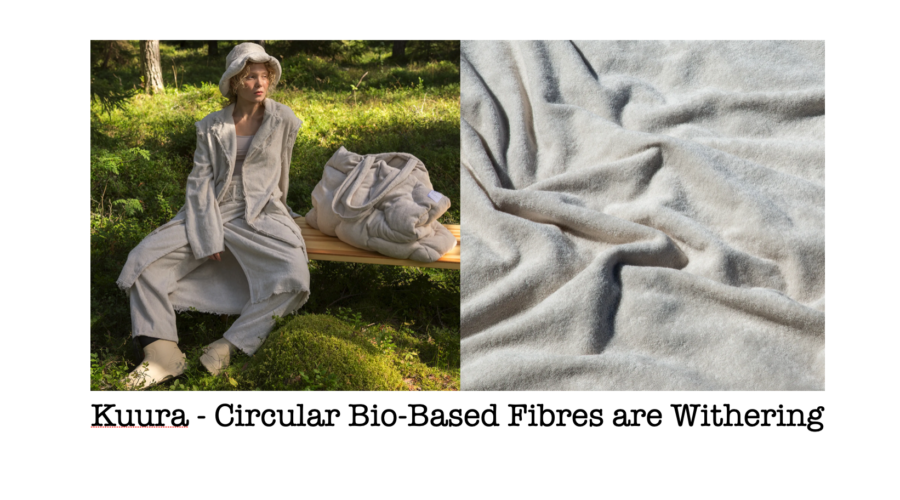
Finland has proved that wood can become textile fibre. The harder problem is finding someone to fund the factory.
Metsä Group has scrapped its planned Kuura mill in Kemi, a 100,000-tonne plant that would have employed about 250 people. About €45 million went into the Äänekoski demonstration plant by 2024, plus more than €5 million in running costs. The cause was not technical failure. Cheap Asian capacity flooded the market, and too few clothing brands would pay extra for European, low-carbon fibre. Metsä is now putting €25 million into moulded fibre packaging, where EU plastic rules guarantee demand.
All eyes turn to Spinnova. The Jyväskylä company has deep roots in Finnish research: co-founder and CTO Juha Salmela spent years at VTT as researcher and principal investigator before joining. Its mechanical process uses no dissolving chemicals and, the company claims, 99% less water than cotton.
The money tells a harsher story. Spinnova’s 2025 revenue was €344,000, against an operating loss of €23.8 million and a net loss of €40.7 million. That included an €18.4 million write-down of the Woodspin joint venture. When Suzano walked away, Spinnova bought its stake for €2. Now it is courting US investors, targeting at least $15 million (about €13 million) through a Nasdaq listing that may or may not go ahead.
The missing line on the invoice
Investors are asking the obvious question: what does a tonne cost, and can it beat the commodity price? Spinnova itself concedes that price parity with cotton is a long-term goal, and its prospectus warns that customers will benchmark against commodity cotton.
That benchmark is the problem. Cotton’s price is an incomplete number. The prospectus notes that global cotton output has plateaued because cultivable land and water are running short. Third-party life-cycle assessments cited there put Spinnova’s fibre well below cotton on water, emissions and land use. None of that appears on the cotton invoice, yet all of it is paid by someone. Demanding that a new fibre beat cotton’s sticker price, while ignoring what cotton actually costs, means judging the challenger against a rigged scoreboard.
Meanwhile the world makes 139 million tonnes of textile fibre a year, and most of the growth is fossil-based plastic.
Two valleys, not one
Niklas von Weymarn, who ran the Kuura effort, argues that Europe’s bio-based innovators face two funding gaps. The first is the demonstration phase. The second is the first full-scale plant and the sales build-up that follows. The 2026 call from the EU’s Circular Bio-based Europe Joint Undertaking drew about €1.7 billion in requests, nearly ten times the money available. He estimates the shortfall at roughly €500 million a year for the first valley and €2 billion a year for the second.
Finland has the forests, the pulp mills and the engineers. What it lacks is patient capital and brands that pay what responsible fibre costs. Without both, the next breakthrough will be proved in Jyväskylä and built somewhere else.
Photo: Metsä Group