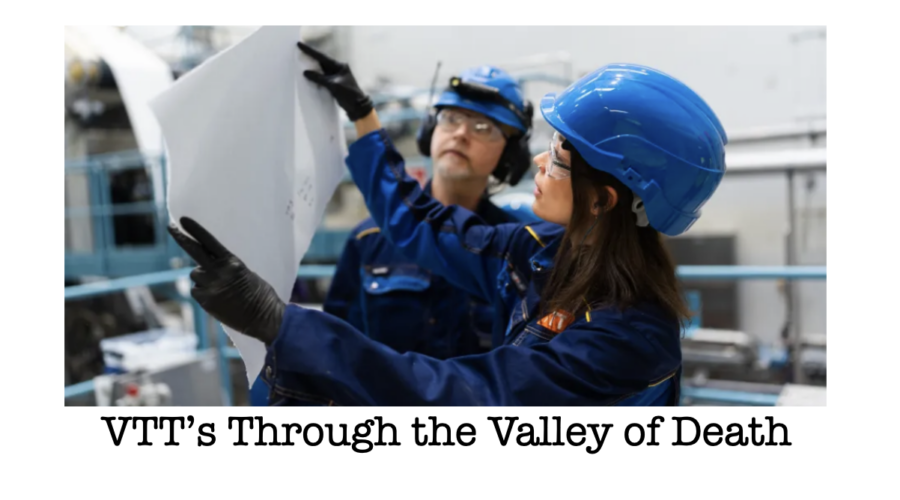
Finland has world-class research, strong technological expertise and a growing group of deep-tech companies. But turning scientific breakthroughs into large international businesses remains difficult. VTT Technical Research Centre of Finland calls this critical stage the “Valley of Death”.
Its report, Through the Valley of Death – How Can Finland Grow?, argues that crossing this gap will be important if Finland is to renew its economy and return to stronger growth. The report notes that the Finnish economy has not grown in 17 years, while productivity and export competitiveness have remained weak. VTT identifies technology-based business renewal, research and new growth companies as important parts of the solution.
The challenge is particularly significant for deep-tech companies. Their products are based on advanced scientific and technological knowledge and can take many years to develop and commercialise. VTT estimates that the journey from a scientific breakthrough to a growth company can take 10–30 years. During this period, companies may need substantial capital, specialised equipment, testing facilities and industrial partners before they can generate significant revenues.
According to figures from Tesi cited by VTT, Finland has around 270 deep-tech companies. Their combined turnover recently exceeded €1 billion, while they attracted approximately €360 million in venture capital in 2024. VTT identifies ICEYE, Oura, Bluefors and IQM among Finland’s emerging or established deep-tech market leaders.
Two areas illustrate the potential particularly well:
In semiconductors and microelectronics, Finnish industry turnover is projected to increase from €1.6 billion to €5–6 billion by 2035, with employment potentially rising from 7,000 to 20,000. VTT highlights Kvanttinova in Espoo, a joint R&D hub involving VTT, Aalto University, the City of Espoo and companies. Its planned cleanroom infrastructure is intended to help companies develop and pilot technologies before moving towards industrial production.
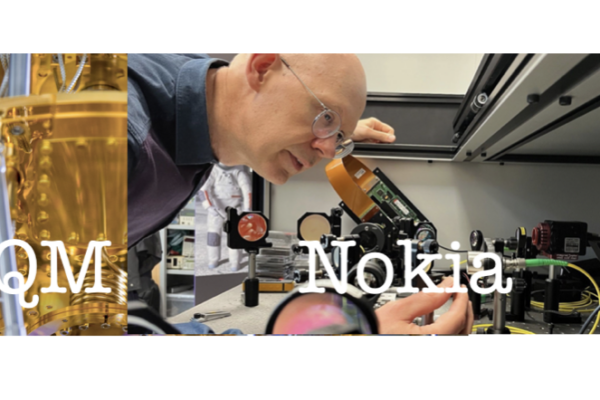
Quantum technology offers another potential growth area. Finnish quantum-sector turnover was €130 million in 2023, with a national target of €3 billion by 2035. Finland is also one of the countries capable of producing complete quantum computers, and Europe’s first hybrid system combining a quantum computer and a supercomputer is located in Finland.
But technology alone does not bridge the Valley of Death. VTT stresses the importance of customer commitment, pilot projects, shared infrastructure and financing. For hardware companies in particular, demonstrating that a major customer is prepared to use the technology can be essential to attracting further investment. Shared research and pilot facilities can reduce the need for startups to make large early investments in their own equipment.
This is where the Finnish experience has wider Nordic relevance. The report argues for stronger links between research organisations, companies and investors, alongside long-term R&D investment and international cooperation. Finland has committed to raising R&D spending to 4% of GDP by 2030.
For Finland, and potentially for the Nordic region more broadly, the central question is therefore not whether promising research exists. It is whether the surrounding ecosystem can provide the capital, infrastructure, customers and industrial partnerships needed to turn that research into globally competitive businesses.