Medical diagnostics has a long-standing asymmetry. DNA can be detected from vanishingly small samples because PCR amplifies it into a readable signal. Proteins have had no equivalent. As a result, cancers, neurodegenerative conditions and cardiovascular diseases often go unnoticed until biomarker concentrations are high enough for conventional methods to catch them. The earliest molecular warning signs stay invisible.
A Finnish team now claims a different route, and it began on a plane.
Notes from the return leg
In 2017, VTT Research Professor Jussi Hiltunen was working on a cancer diagnostics project and flew from Oulu to Paris. On the way he wondered whether the problem could be solved on a different principle. On the way back he wrote his thoughts down.
His idea was physical rather than chemical amplification: a mechanism that reads a single protein molecule repeatedly, without the enzymes and the noise and variability they introduce. It was ambitious and entirely unproven.
Hiltunen took it to Prateek Singh at the University of Oulu, who had the biochemistry expertise and access to VTT’s laboratories through an existing research project. Hiltunen’s background was in photonics and electrical engineering. Combining the two fields with a physical approach was, he says, the key advance. A joint invention disclosure followed, filed with the University of Oulu and VTT, and patents were granted in both the United States and Europe.
Funding was harder. The concept was new, and funders would have had to take it on trust.
Persistence pays off
In spring 2021, with Hiltunen and Singh short on time, VTT Senior Scientist Sanna Aikio took over the application to the European Innovation Council’s EIC Pathfinder Open programme, which backs high-risk, unproven concepts. It was funded with €800,000. The VerSiLiB project launched in April 2022 and ran until March 2026.
How it works
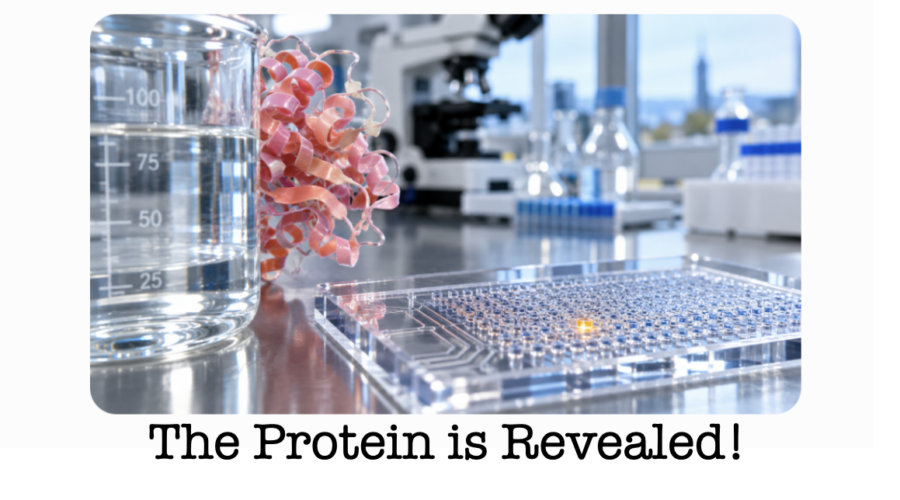
The core is a digital chip that divides a blood sample into thousands of tiny reaction chambers. Each chamber gives a binary result: a reaction occurs or it doesn’t. The ratio of positive to negative chambers gives a precise reading of how much target is present.
Conventional methods amplify chemically, and the chemistry generates background noise. Here the same molecule is read repeatedly, so the signal grows without added interference. According to Aikio, this yields a new level of sensitivity, and the method works for both proteins and DNA.
The first clinical target is minimal residual disease in melanoma: after a tumour is surgically removed, are cancer cells still in the body? Building the chip required a manufacturing approach that didn’t previously exist, plus new methods for handling microscopic fluid flows. The project produced multiple invention disclosures and patents.
From project to company
Proteins.1 was founded in summer 2025 and joined VerSiLiB as a partner that autumn. VTT’s intellectual property was invested in the company as an in-kind contribution. Transferring IP out of a running EU project proved possible, but it demanded careful planning and strict adherence to the funding and consortium agreements.
In spring 2026, the company announced a €4.7 million pre-seed round led by Lifeline Ventures and Cloudberry VC. It plans to grow its Finnish team in 2026–2027 and will first commercialise the technology for research use in oncology, neurology and immunology, before moving into clinical diagnostics.
VTT sees further potential in environmental diagnostics and food safety.
The caveat
Clinical diagnostics are still ahead, and the technology’s promise rests on the team’s own assessment. Aikio says there is good reason to believe it could transform how diseases are treated. That remains to be proven. Still, an idea funders once hesitated to back on faith is now patented, funded and spun out within a decade of a flight to Paris.
Source: VTT, 25 August 2026.