Across the Karolinska ecosystem, researchers are pushing towards a future in which blood samples, archived tissues, immune-cell profiles and genomic infrastructure reveal more about disease than conventional diagnostics alone. The direction is clear, but the maturity of the evidence is uneven. Liquid biopsy is the strongest signal. Broader claims about less-invasive precision medicine still need careful testing.
In August 2026, Karolinska Institutet published a seemingly modest announcement about a review article in Genome Medicine. The headline was carefully framed: a blood test “can provide more information about cancer”. Behind that understated wording sits a larger question now facing cancer medicine across the Nordic region: can healthcare systems move from invasive, episodic sampling towards a more dynamic, data-rich reading of disease biology?
The short answer is that the direction of travel is real. Across the wider Karolinska ecosystem, including Karolinska Institutet, Karolinska University Hospital and SciLifeLab-linked initiatives, recent developments point towards methods that extract richer biological information from clinically accessible samples and datasets. The clearest evidence lies in multifeatured liquid biopsy, cancer monitoring, genomic medicine infrastructure and precision immunotherapy innovation. The more cautious answer is that these developments are not all equally mature, not all are less invasive, and not all are cancer-specific.
That distinction is crucial, because precision medicine has become unusually vulnerable to rhetorical inflation. A phrase such as “less-invasive diagnostics” can cover everything from a validated blood test in clinical use to a promising research method tested in small cohorts. In Karolinska’s case, the evidence supports a plausible trend rather than a completed transformation. The institution and its partners are building the scientific, technical and organisational machinery for more granular disease monitoring, but the clinical proof is still arriving unevenly.
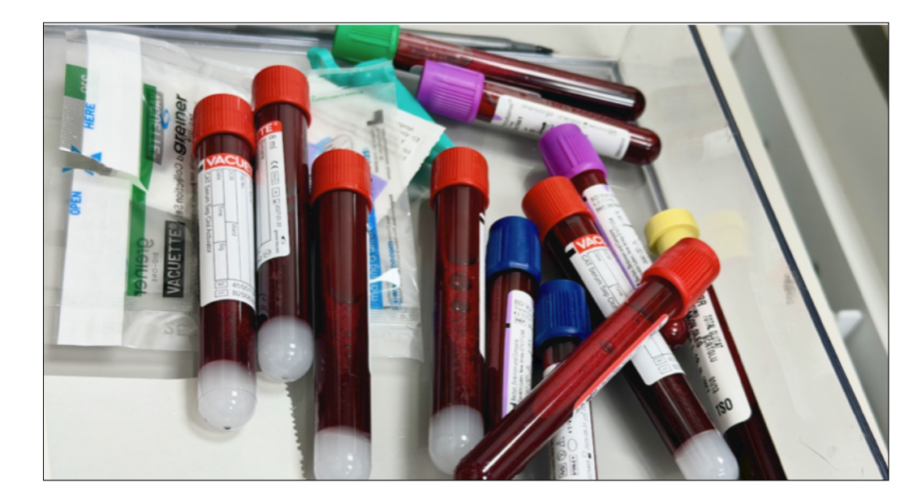
The most direct example is the Genome Medicine review on multifeatured sequencing-based liquid biopsy, authored by researchers affiliated with Karolinska Institutet, Karolinska University Hospital and international collaborators. Liquid biopsy uses tumour-derived material in blood, making it less invasive than traditional tissue sampling and potentially useful for repeated monitoring over time. The review argues for moving beyond single-signal testing towards a richer model, in which DNA methylation, copy number changes, fragment size, RNA and other molecular signals can be interpreted together from the same blood sample.
The concept is powerful because cancer is not a single molecular event. Tumours shed fragments, alter methylation patterns, evolve under treatment pressure and interact with immune and microenvironmental systems. A multifeatured liquid biopsy seeks to read several of these traces at once. The PubMed abstract describes the approach as the extraction of “multiple biological signals from a single sequencing dataset”, with possible insights into tumour, immune and microenvironment states.
The scientific attraction is obvious. A conventional biopsy can be invasive, anatomically limited and difficult to repeat. A blood sample, by contrast, can in principle be taken repeatedly, allowing clinicians to follow disease dynamics, treatment response, recurrence risk and emerging resistance. The KI news article notes that the first likely clinical applications would be monitoring cancer patients, assessing treatment effects and situations where repeated tissue samples are difficult to obtain.
But this is where the investigative caution begins. The same Karolinska article explicitly acknowledges that many studies have been conducted in limited patient groups, that the methods remain technically complex and that common standards for quality assurance across healthcare centres are still lacking. Daniel Hagey of KI is quoted as saying that “standardised workflows, independent validation and studies demonstrating the benefits of the analyses for patients are needed”.
In other words, the technology may be promising precisely because it is not yet simple. More biological signals can mean more information, but also more noise, more analytical complexity and more potential for overfitting. A blood test that integrates methylation, fragmentation, copy number and RNA signals does not automatically become a clinical decision tool. It must prove that it improves outcomes, not merely that it generates deeper data.
The wider Nordic context makes the Karolinska signal more interesting. In November 2026, Uppsala will host the Nordic Liquid Biopsy Conference, organised by the Genomic Medicine Sweden Liquid Biopsy Working Group for Solid Tumours and linked to the European Liquid Biopsy Society. The programme is explicitly clinical in focus and includes figures from SciLifeLab, Lund University, Karolinska Institutet, Aarhus University, the University of Helsinki and Stavanger University.
That planned gathering suggests that liquid biopsy is not merely a Karolinska research theme, but part of a Nordic effort to coordinate clinical translation across national healthcare systems. The scientific committee includes expertise from Sweden, Denmark, Finland and Norway, including Emma Tham of Karolinska Institutet and Karolinska University Hospital, Lars Dyrskjøt of Aarhus University, Sampsa Hautaniemi of the University of Helsinki and Oddmund Nordgård of Stavanger University.
The Nordic policy question is therefore not whether liquid biopsy has momentum. It clearly does. The more important question is whether Nordic systems can turn a technologically sophisticated diagnostic field into equitable clinical practice. Public healthcare systems are well placed to build national standards, registries and longitudinal cohorts, but they must also decide which tests are worth paying for, how to validate them and how to prevent high-resolution diagnostics from widening regional inequalities.
Karolinska’s institutional infrastructure is central to that question. Precision Medicine Center Karolinska is described by Karolinska University Hospital as a joint initiative between the hospital and Karolinska Institutet, with a mission to enable broad clinical implementation of precision medicine. The same source identifies Genomic Medicine Center Karolinska as a collaboration involving Karolinska Institutet, SciLifeLab and Karolinska University Hospital, developing and delivering genetic diagnostics including whole-genome sequencing.
This is important because less-invasive diagnostics do not become useful in isolation. They require sequencing capacity, clinical interpretation, biobanks, data infrastructure, reimbursement routes and clinicians who can act on ambiguous molecular signals. Cancer Research KI’s strategic goals for 2025 to 2026 include strengthening data infrastructure and biobank usage for clinical and translational research. The Department of Oncology-Pathology also describes responsibility for key infrastructures in precision medicine and proteomics, as well as Sweden’s national biobank for childhood cancer research.
The innovation pipeline is also visible. In July 2026, KI reported that Gonçalo Castelo-Branco and Janne Lehtiö had received support through the Knut and Alice Wallenberg Foundation and SciLifeLab Proof-of-Concept Program. The programme is designed to help academic discoveries move towards innovation and commercial application, with SciLifeLab and the Wallenberg Foundation positioning it as a bridge between discovery and implementation.
The two KI projects are revealing. Castelo-Branco’s project concerns Transposome-based Ligase for clinical epigenomics, while Lehtiö’s NEO-SCOPE project concerns neoantigen discovery at full genomic scope for precision immunotherapy. Neither should be confused with a clinically available liquid biopsy product, but both fit the larger pattern: extracting more actionable molecular information to guide diagnosis, stratification or treatment.
This is the point at which the original claim needs careful editing. It is fair to say that recent Karolinska-linked developments point towards richer biological information extraction. It is less safe to say that all these developments are based on less-invasive samples. Some are. Some are not. Multifeatured liquid biopsy and blood-based immune-cell analysis clearly fit the less-invasive sampling narrative. Tumour microenvironment profiling, by contrast, often depends on tumour tissue, while inherited cancer surveillance may involve repeated imaging, clinical examinations and urine tests rather than a single molecular blood assay.
The immune-cell example is especially instructive. In August 2026, KI reported work by Karolinska Institutet and SciLifeLab researchers on spectral biophysical cytometry, a method that reads multiple physical properties in individual immune cells from blood. The study tested samples from patients with atherosclerosis and healthy controls, and KI quoted Erdinc Sezgin as saying that the method provides “an integrated picture of the health status of the immune cells”.
That is relevant to the wider diagnostic trend, but it is not direct proof of cancer monitoring. The study was conducted in atherosclerosis, and the KI article itself frames further work as necessary in larger cohorts and other diseases. In a feature article, it can be used as evidence that Karolinska and SciLifeLab researchers are interested in extracting deeper immune information from blood, but not as evidence that immune-cell state analysis is already part of Karolinska’s cancer diagnostics toolkit.
Cancer monitoring, meanwhile, is supported by more than one kind of evidence, but again with caveats. The multifeatured liquid biopsy review directly addresses cancer diagnosis and monitoring. A separate KI-reported study on children with inherited TP53-associated cancer risk describes high adherence to repeated surveillance in Sweden, including clinical examinations, abdominal ultrasound and urine testing every three months. That study supports the broader shift towards structured monitoring of cancer risk, but it also shows the burden and complexity of surveillance, including benign findings that led to further investigation.
Another recent KI-reported study analysed tumour microenvironment features in breast cancer and tamoxifen benefit. Researchers examined tumour samples from 513 postmenopausal women in the Stockholm Tamoxifen trial and found that cell types in and around tumours, including immune cells, connective tissue cells and blood vessel-related cells, were associated with long-term treatment benefit. This is precision oncology in a biological sense, but it is not a less-invasive diagnostic route.
For a journalist, the story is therefore not a simple celebration of a new blood-test era. It is a story about convergence. Liquid biopsy, immune-cell state analysis, tumour microenvironment profiling, cancer-risk surveillance and precision medicine infrastructure are all part of an expanding attempt to turn biological complexity into clinical information. Yet they sit at different points on the path from discovery to patient benefit.
The hype risk lies in collapsing those stages into one narrative. A review article is not a clinical guideline. A proof-of-concept grant is not a product launch. A blood-based immune assay in vascular disease is not yet an oncology platform. A precision medicine centre is not the same as proof that every patient is receiving precision-guided care. The Karolinska ecosystem appears to be building towards a more integrated diagnostic future, but that future still depends on validation, standardisation and implementation.
The promise, however, is substantial. If multifeatured liquid biopsy works as hoped, clinicians may be able to monitor cancer not as a static diagnosis but as a changing biological system. If immune-cell state analysis matures, inflammation and immune dysfunction could become more measurable in real time. If genomic medicine infrastructure becomes more integrated with routine care, Nordic hospitals may be able to match patients to treatments more efficiently and learn continuously from the data they generate.
The Nordic advantage may lie less in any single technology than in system design. Countries such as Sweden, Denmark, Finland and Norway have public healthcare systems, high-quality registries, biobank traditions and strong university hospitals. The Nordic Liquid Biopsy Conference’s cross-border structure suggests that the region is already treating liquid biopsy as a coordinated clinical and scientific challenge rather than a collection of isolated laboratory projects.
Still, the unresolved questions are practical and political. Who decides when a multifeatured assay is good enough for clinical use? How should false positives, incidental findings and uncertain molecular signals be communicated to patients? Will smaller hospitals have access to the same diagnostic sophistication as university centres? Can public systems afford to adopt high-complexity monitoring without diverting resources from proven care?
For now, the most accurate conclusion is neither hype nor dismissal. Karolinska’s recent developments do point towards a broader trend: extracting more biological information from accessible samples, tissue archives and clinical data to support diagnosis, monitoring and treatment selection. But the “less-invasive” claim is strongest for liquid biopsy and blood-based immune-cell analysis, weaker for tumour tissue studies, and dependent on future validation for routine cancer care.
The story is not that a single blood test has solved cancer monitoring. The story is that Nordic precision medicine is trying to make disease more legible, one sample, one dataset and one validation study at a time. Karolinska’s role is significant, but the evidence still asks for patience. The next test is not whether the science sounds transformative, but whether it can improve decisions for patients in real clinics.
APA references
- Abreu, R. da S., Ferreira, D. D. P., Araujo, N. S. de, Horita, S., Tilli, T. M., Degrave, W., Moreira, A. dos S., & Waghabi, M. C. (2026). Liquid biopsy in cancer diagnosis and prognosis: A paradigm shift in precision oncology. Frontiers in Molecular Biosciences, 12. https://doi.org/10.3389/fmolb.2025.1708518
- European Association for Cancer Research. (2026). Liquid biopsies 2026: Introduction. https://www.eacr.org/conference/liquidbiopsies2026/index
- Genomic Medicine Sweden. (2026). Nordic Liquid Biopsy Conference 10-11 November 2026, Uppsala, Sweden. https://genomicmedicine.se/kalendarium/sweden-nordic-liquid-biopsy-conference-10-11-november-2026-uppsala-sweden/
- Karolinska Institutet. (2026, August 11). A blood test can provide more information about cancer. https://news.ki.se/a-blood-test-can-provide-more-information-about-cancer
- Karolinska Institutet. (2026, August 6). New method reveals immune cell health in blood samples. https://news.ki.se/
- Karolinska Institutet. (2026, August 7). Cells in tumour microenvironment may affect hormone treatment. https://news.ki.se/
- Karolinska Institutet. (2026, August 5). High adherence despite frequent surveillance of children with inherited cancer risk. https://news.ki.se/
- Karolinska Institutet. (2026, July 24). Two KI researchers receive innovation funding from Knut and Alice Wallenberg Foundation. https://news.ki.se/two-ki-researchers-receive-innovation-funding-from-knut-and-alice-wallenberg-foundation
- Karolinska Institutet. (2026). Cancer Research KI: Strategy. https://ki.se/en/cancer-research-ki/about-cancer-research-ki/cancer-research-ki-strategy
- Karolinska Institutet. (2026). Department of Oncology-Pathology. https://ki.se/en/onkpat
- Karolinska University Hospital. (2026). Precision Medicine Center Karolinska. https://www.karolinskahospital.com/care-at-karolinska/centers/precision-medicin-center/
- Molina, M. A., De Simoni, M., Moldovan, N., Mouliere, F., & Hagey, D. W. (2026). Multifeature sequencing-based liquid biopsy for cancer diagnosis and monitoring. Genome Medicine, 18, Article 116. https://doi.org/10.1186/s13073-026-01739-2
- Nordic Liquid Biopsy Conference. (2026). Nordic Liquid Biopsy Conference 2026. https://www.nordicliquidbiopsy.se/
- SciLifeLab. (2026, June 29). Ten life science innovation projects receive funding from Knut and Alice Wallenberg Foundation and SciLifeLab’s Proof-of-Concept program. https://www.scilifelab.se/news/ten-life-science-innovation-projects-receive-funding-from-knut-and-alice-wallenberg-foundation-and-scilifelabs-proof-of-concept-program/
Photo: CC: Wikipedia by Oleg Yunakov