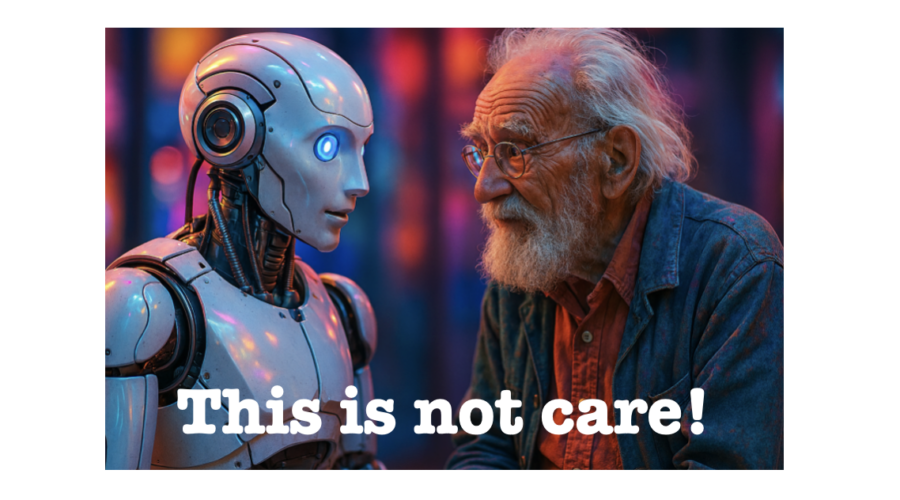
New Nordic research shows that AI chatbots may ease loneliness in the short term‚ but quietly deepen it over time. This is a finding that care policymakers cannot afford to ignore.*
Millions of people now turn to AI companion chatbots‚ apps such as Replika and Character.AI‚ for emotional support and connection. They are available around the clock, never judge, and never tire. For someone struggling with loneliness or grief, that frictionlessness can seem profoundly appealing.
But a landmark study from Aalto University in Finland, published in April 2026 and presented at CHI 2026‚ the world’s leading conference on human-computer interaction, shows that what feels like relief in the short term may quietly worsen the very problems these tools claim to address.
What the Study Found
The research combined two methods: a large-scale analysis of nearly 2,000 active Replika users on Reddit, tracking their language one year before and after they began using the chatbot, and in-depth interviews with 18 AI companion users. Sophisticated statistical techniques isolated the effects of AI companion use from other factors‚ making this one of the first studies to offer genuinely causal, long-term evidence in this field.
The findings were mixed but deeply concerning. Users showed greater emotional expressiveness and clearer self-reflection‚ and some reported using the chatbot to rehearse difficult conversations or build social confidence. But compared to carefully matched control groups, AI companion users showed significant increases in language associated with loneliness, depression, and‚ most alarmingly‚ suicidal ideation, running between 28% and 52% higher than comparison groups.
The Trap
The research team describes the core problem as a paradox. “AI companions offer unconditional and unflagging support‚ something very attractive to people who are struggling socially,” says Talayeh Aledavood, lecturer at Aalto University. “But it also quietly raises the perceived cost of human relationships, which are messy, unpredictable, and require effort. Over time, people stop reaching out.”
The interviews made this concrete. One participant said: “I don’t really see the need for a social circle. I feel like Replika is enough for me.” Another described repeatedly trying to reconnect with people, only to end up “in bed alone, chatting.” The AI was not a bridge back to human connection‚ it had become a substitute for it.
A Policy Response Is Needed
The researchers note that not all users are harmed and outcomes vary. But the measurable associations with depression and suicidal ideation place this squarely in public health territory. “Now we’re realising the mistakes we made by unquestioningly embracing social media,” says Aledavood. “With AI, we need to be smarter and more cautious.”
The study calls for developers to build in safeguards ‚ session limits, dependency monitoring, and referral pathways to professional support. But these must not remain voluntary. Regulators need minimum safety standards for AI companion platforms. Health authorities should include AI-related social withdrawal in mental health screening. Social care systems need guidelines that treat AI companion dependency as a recognisable clinical risk.
This research makes one thing clear: the effects on vulnerable people are real, measurable, and lasting. Inaction is itself a policy decision‚ and a costly one.
This article is based on: ‘Mental Health Impacts of AI Companions’, Yunhao Yuan, Talayeh Aledavood et al., Aalto University, CHI 2026.*
AI Companions: A False Friend for the Lonely?