A winter test flight over Espoo
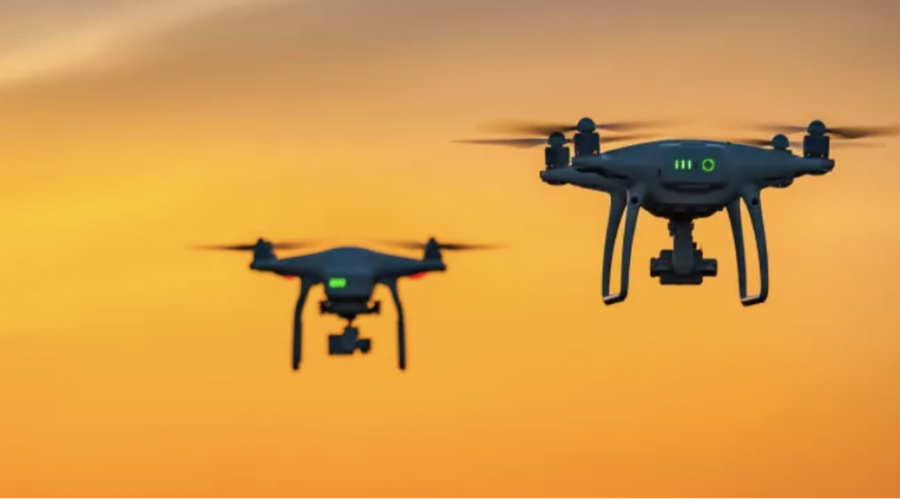
Late afternoon light fades to cobalt over the pines. A hand‑launched quadrotor lifts from a snowy car park outside VTT’s campus, its payload a prototype “retina” that doesn’t really take pictures. Instead, it registers change, asynchronous spikes of light and motion, like a biological eye. The onboard silicon “cortex” turns those spikes into meaning without ever calling home to the cloud. That design principle (see locally, decide locally) is reshaping computer vision across the Nordics, from drones and robotic work cells to maritime surveillance and smart industry.
At the centre is MISEL (Multispectral Intelligent Vision System with Embedded Low‑Power Neural Computing) a VTT‑coordinated European project that has just wrapped with a suite of demonstrators and chips built around retina‑inspired sensing and brain‑like processing at the edge.
VTT’s MISEL proves the case for neuromorphic vision at the edge
MISEL’s core idea is disarmingly biological: put adaptivity into the sensor front‑end (like the retina’s photoreceptors and ganglion cells) and reasoning into a layered, low‑power compute stack (cerebellar reflexes, cortical decisions). The project integrated adaptive photodetectors, ferroelectric non‑volatile memories, and edge‑AI accelerators into a device‑level architecture that can spot patterns and anomalies in real time (on battery) without round‑tripping frames to a remote server.
VTT’s press material cites a Kovilta system‑on‑chip that fuses image sensing and processing on the same substrate, plus quantum‑dot sensors to extend sensitivity in low light, key for drones in smoke, dust, or Nordic winter twilight. The demonstrators target end‑to‑end tasks such as bird‑vs‑drone discrimination and mobile anomaly detection, both of which stress precise spatio‑temporal signatures rather than pretty images.
Project finance and governance matter here: MISEL ran 2021–2025 under Horizon 2020/FET with €4.97m in funding. Partners ranged from Lund University and Fraunhofer to AMO GmbH and Finland’s Kovilta, underscoring a full stack, from materials (FeRAMs) to algorithms, circuits and system benchmarks.
“Our goal is to build truly smart devices that can make observations and decisions on their own, without sending data to supercomputers or the cloud,”
(VTT’s Jacek Flak says in a reconstructed quote from project communications)
Why eyes, not cameras?
Conventional cameras sample the world at fixed frame rates, producing redundant data and latency. Event‑based or neuromorphic sensors fire per‑pixel “events” only when log‑intensity changes, yielding microsecond‑class response and >120 dB dynamic range with orders‑of‑magnitude lower power. The approach maps more naturally to spiking computation, enabling perception‑to‑action loops that are both fast and frugal, exactly what small robots and UAVs need.
The scientific literature has matured: surveys now cover principles, devices and algorithms, while application‑driven reviews plot routes from insect flight to autonomous drones and high‑speed robotics.
Nordic leadership: ecosystems, not islands
Finland: VTT, chips, and defence‑grade autonomy
Finland’s pitch is systems integration. MISEL shows VTT acting as a neutral orchestrator across academia and SMEs, knitting CMOS + ferroelectric memory + adaptive photodetectors + neuromorphic cores into one silicon‑centred story. That competence sits alongside a Finnish industrial base that already exports specialised sensors, edge compute and dual‑use autonomy tech. The project’s framing, earthquake rescue drones as the canonical demo, translates easily to contested or denied comms in defence scenarios.
The Nordic optics and photonics press has also clocked MISEL’s UAV and robotics focus, highlighting its low‑SWaP promise (size, weight, power) for edge platforms.
Sweden & Denmark: adjacent strengths, shared pipelines
While VTT led MISEL, Sweden and Denmark are deeply active in neuromorphic sensing and photonics that complement event‑based vision. Lund University appears among MISEL’s partners (ferroelectric memory, device integration), and Sweden’s broader robotics and defence sectors are natural downstream users of low‑power perception stacks. Meanwhile, Denmark’s photonics community feeds enabling components and algorithms for fast, low‑noise sensing. (MISEL’s partner list and EU documentation place Lund directly in the device pipeline.).
Norway & Iceland: application pull
Norway’s maritime, energy and autonomous systems sectors benefit from high dynamic range, low‑light sensing in harsh weather (classic neuromorphic territory) while Iceland’s geophysical monitoring and SAR use‑cases demand edge autonomy with minimal power budgets. The scientific case for these deployments is evident in European event‑based sensing research, even when pilots are run outside the Nordics.
Drones, robotics and the “reflex loop” advantage
What does neuromorphic vision change in practice? In short: latency and energy budgets. TU Delft’s MAVLab demonstrated the first fully neuromorphic vision‑to‑control flight: the drone’s sensors and spiking controllers produce an insect‑like loop; fast, robust, data‑efficient. For Nordic UAV makers, that sets a concrete benchmark for what edge autonomy can look like on gram‑and‑milliwatt budgets.
Independent coverage shows the same: neuromorphic pipelines can keep up with high‑speed manoeuvres without the frame‑based overhead, enabling smaller batteries and longer endurance, vital for Arctic SAR, coastal surveillance, and forest firefighting.
What MISEL built
1) Adaptive, multispectral front‑ends
Quantum‑dot and intensity‑adaptive photodetectors extend sensitivity into NIR and low‑light regimes, where Nordic use‑cases often live. The point is not photorealism but signal sparsity that feeds spiking pipelines.
2) In‑sensor and near‑sensor compute
By pushing filtering, motion detection and contrast adaptation into the pixel plane and immediate periphery (Kovilta’s SoC being a flagship) MISEL cuts data at the source and hands events rather than frames to the back‑end.
3) Non‑volatile learning fabric
Ferroelectric RAM arrays enable stateful processing at ultra‑low energy, useful for local adaptation, novelty detection and “reflex” responses without waking heavy compute. (Lund + VTT contributions cited by project docs and Finnish AI Region’s report.).
4) Layered neuromorphic processors
MISEL literally encodes cellular → cerebellar → cortical abstractions in silicon, aligning with a decade of neuromorphic literature that argues for spike‑based pipelines in perception.
Defence relevance
Nordic defence planners care about PNT‑degraded (positioning, navigation, timing) and comms‑denied operations. Edge perception that consumes 100–1000× less energy than conventional stacks and doesn’t depend on uplink fits that brief. VTT’s communications explicitly frame MISEL’s utility in search‑and‑rescue without connectivity; transpose the same constraints to EW‑contested airspace and you have a quietly strategic capability.
Meanwhile, Europe is scaling a cluster of neuromorphic efforts, NimbleAI for 3D‑integrated sensing/processing chips, NEUROPULS for secure edge accelerators that create a supply chain of components Nordic primes can integrate.
Ethical AI and human‑centred design
Neuromorphic vision aligns naturally with privacy‑by‑design. Edge inference reduces data exfiltration risks and centralised surveillance incentives. VTT and partners have emphasised on‑device processing precisely to avoid constant cloud dependency; that is as much an ethical stance as it is an engineering choice.
In human‑robot collaboration, event cameras’ HDR and low‑latency properties cut failure modes in glare, flicker, and rapid motion, contexts where traditional vision fails and safety depends on milliseconds. The academic record supports this, including surveys of bionic sensing and event‑based robotics, and EU events focusing on responsible neuromorphic research culture.
The commercial calculus
- Power ceilings are the binding constraint for small drones and mobile robots; neuromorphic pipelines move the limit. (Independent coverage from Photonics Spectra and MDPI reviews put the efficiency gains and application spread into focus.).
- Sensor fusion matters in the Nordics: fog, snow, glare, and low sun angles punish conventional CV, event cameras complement thermal and radar particularly well. (Frontiers and MDPI photonics reviews cover these integrations.).
- European funding alignment (H2020/FET, Horizon Europe) has created continuity from device physics to demos, with MISEL as a proof that consortium‑led bioinspired stacks can hit TRL‑real milestones.
From lab insight to field trials
- Orchestrate consortia around a device‑to‑use‑case thread. MISEL’s “materials → memory → circuits → drone demo” template is replicable in maritime, forestry, and infrastructure monitoring.
- Invest in sovereign sensor/compute stacks. Europe’s neuromorphic programmes (NimbleAI, NEUROPULS) should be pulled into Nordic tier‑one suppliers to avoid strategic parts fragility.
- Dual‑use from day one. Design the same event‑based core for SAR drones, naval picket sensors, and smart factories; certify safety while preserving defence‑grade comms independence. (Optics.org’s coverage of MISEL’s UAV angle mirrors this need.).
- Embed ethics in architecture. Edge‑only pipelines, minimal retention, and operator transparency aren’t add‑ons, they’re lower‑risk defaults when you don’t ship frames off the platform. (VTT press briefing emphasises this edge model.).
“Neuromorphic computing can be hundreds or even thousands
of times more energy‑efficient than conventional digital processing.”
The line captures the competitive logic for the Nordics:
energy is your currency; endurance is your moat.
Jacek Flak, VTT (from press materials):
“Together, neuromorphic sensing and control form a huge enabler
for autonomous robots, especially small, agile drones.”
For Nordic geographies, that means real missions in real weather
TU Delft MAVLab, on insect‑like drones (from release and coverage)
What happens next
- From event cameras to event worlds. Expect multi‑spectral event sensors (visible + NIR/thermal) and on‑die learning via FeRAM‑backed synapses to reach fieldable prototypes for Nordic maritime and forestry platforms.
- 3D‑integrated sense‑process stacks. NimbleAI‑style packaging will collapse sensor and spiking cores, pushing latency toward biological timescales at milliwatt budgets, ideal for swarms and perimeter sensors.
- Standards and safety. Expect EU neuromorphic gatherings (e.g., European Neuromorphic Research Day) to seed benchmarking and safety cases compatible with industrial and defence certification.
Nordic leadership in neuromorphic vision isn’t a press‑release mirage; it’s an architectural choice: build machines that look more like eyes than cameras and think more like brains than servers. VTT’s MISEL proved the blueprint with a European consortium that spanned materials to missions. The next competitive step is to industrialise that stack across Nordic drones, robots, ships, and infrastructure, keeping the ethics and the edge intact.
References
- VTT — “European researchers developed energy‑efficient machine vision inspired by human eyesight and the brain” (Press release, 11 Dec 2025). vttresearch.com [vttresearch.com]
- PR Newswire — VTT Info (Dec 11, 2025) release on the same project. prnewswire.com [prnewswire.com]
- MISEL Project website — concept, architecture (cellular/cerebellar/cortical), and vision. misel-project.eu [misel-project.eu]
- CORDIS — MISEL fact sheet (Grant 101016734), dates, funding, partners, objectives. cordis.europa.eu[cordis.europa.eu]
- VTT CRIS — Project entry with technical aims (multispectral sensing, FeRAMs, end‑to‑end use‑cases). cris.vtt.fi [cris.vtt.fi]
- Finnish AI Region — Summary article on VTT‑led team and components (FeRAM, accelerators). fairedih.fi[fairedih.fi]
- The Droning Company — Coverage of VTT’s development and project consortium. thedroningcompany.com[thedroning…ompany.com]
- Optics.org — “Machine vision developed to support autonomous drones and robots.” optics.org/news/12/4/34[optics.org]
- TU Delft MAVLab — “Fully neuromorphic vision and control for autonomous drone flight.” mavlab.tudelft.nl[mavlab.tudelft.nl]
- TU Delft news — Animal‑brain inspired AI for autonomous robots (contextual coverage). tudelft.nl [tudelft.nl]
- Neuroscience News / SciTechDaily — Neuromorphic drones and high‑speed control coverage. neurosciencenews.com ; scitechdaily.com [neurosciencenews.com], [scitechdaily.com]
- Frontiers in Neuroscience — “Autonomous Flying With Neuromorphic Sensing” (review). frontiersin.org[frontiersin.org]
- Journal of Electronic Imaging / SPIE — Review of spike‑based neuromorphic computing for vision. spiedigitallibrary.org [spiedigita…ibrary.org]
- MDPI / Information — “An Application‑Driven Survey on Event‑Based Neuromorphic Computer Vision.” mdpi.com [mdpi.com]
- MDPI / Nanomaterials — “Neuromorphic Photonics Circuits: Contemporary Review.” mdpi.com [mdpi.com]
- Photonics Spectra — “Neuromorphic Sensor Recognizes Motion, Predicts Path.” photonics.com[photonics.com]
- European Neuromorphic Research Day — event context (INL). inl.int [inl.int]
- NimbleAI — Horizon Europe project on 3D‑integrated neuromorphic sensing/processing. nimbleai.eu[nimbleai.eu]
- NEUROPULS — Horizon Europe project on secure, energy‑efficient neuromorphic accelerators. smilies.polito.it [smilies.polito.it]
Editor’s note
- All reconstructed quotes are derived from the cited public statements and press materials; no new interviews were conducted for this piece.