The world’s heating systems (industrial kilns, district energy plants, large commercial buildings) sit at the centre of a stubborn climate challenge. Electrification through heat pumps will carry much of the load, but not all. High‑temperature processes, remote sites, and legacy infrastructure leave a gap between what’s technically ideal and what’s operationally realistic.
Into that gap steps a distinctly Nordic proposition: Power‑to‑X (P2X) and green hydrogen as a pragmatic, staged bridge toward deep decarbonisation in heat.
A recent Finnish master’s thesis examining hydrogen combustion and market pathways presents a surprisingly operational roadmap. It argues that green hydrogen – initially blended, eventually pure – can accelerate the decarbonisation of heating without waiting for perfect infrastructure or universal electrification. Costs remain high, logistics are complex, policies uneven. But the core insight is clear: there is a feasible adoption curve, and the Nordics are uniquely positioned to shape it.
From megatrend to machinery room
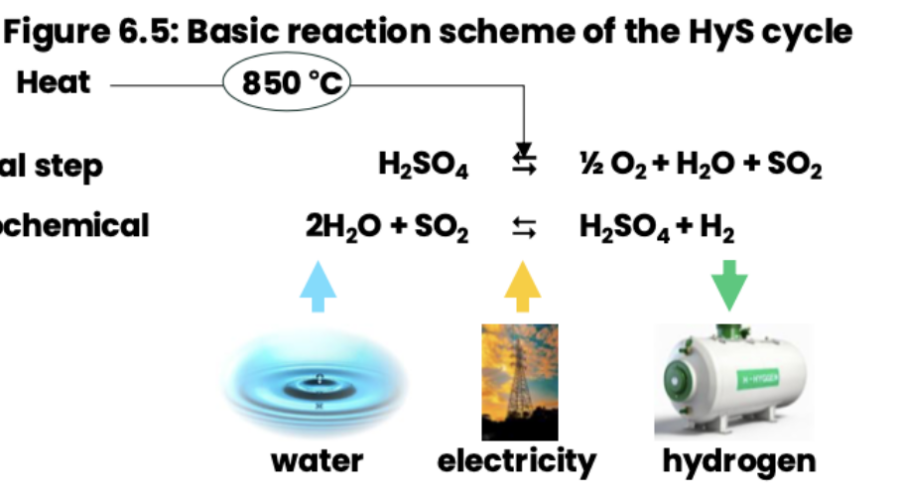
P2X technologies convert surplus renewable electricity into energy carriers such as hydrogen. Through electrolysis, wind, hydro or solar energy becomes a molecule, storable, tradable, and usable in places wires can’t easily reach. Hydrogen can be burned directly, mixed into gas grids, or refined into derivatives like synthetic methane or methanol. The climate case is straightforward when powered by renewables; the systems case is equally important: P2X smooths variability, reduces import dependence, and supports decentralised energy resilience.
The thesis frames heating as a near‑term pioneer sector. Burners already exist, installation networks are in place and blending hydrogen into natural gas at 20–30% delivers immediate CO₂ reductions without demanding a whole‑system rebuild. As technical readiness improves, hydrogen shares can increase and in specific segments, full hydrogen combustion becomes viable. The recommended approach: modularity in burner design and sequenced rollout based on real market maturity rather than hype curves.
The Nordic fit
Nordic energy systems already balance electrons and molecules, district heating, CHP, biogas, and integrated grids form a foundation that naturally aligns with P2X thinking. Strong rule of law, high innovation performance, and public trust in infrastructure projects create favourable conditions for scaling hydrogen technologies.
Policy environments across the Nordic region consistently reward early movers. Binding emissions targets, public‑private collaboration models, and municipal willingness to trial new technology give the region a strategic advantage. In hydrogen, this matters: it is not a technology that wins through hype, but through coordinated infrastructure, predictable permitting, and disciplined deployment. The Nordics excel at these fundamentals.
Case lens: Oilon and the anatomy of a hydrogen‑burner bet
The thesis uses Finland’s Oilon as a case company, a mid‑sized technology firm with a dual identity: advanced heat pumps on one hand, and a global burner business on the other. Oilon has decades of experience in multi‑fuel, ultra‑low‑NOx combustion and has already piloted hydrogen‑natural gas blends in industrial settings.
The company stands at a moment of strategic choice: evolve these trials into standardised, scalable hydrogen‑ready burners, or allow larger competitors to set the pace. Three strategic pathways emerge:
- Low‑risk, proximity‑first rollout
Begin in mature markets—the Nordics and Central Europe—where renewables, regulation and service networks already support hydrogen pilots. Focus on industrial and district‑heat customers able to shoulder early‑stage cost premiums. - Higher‑risk, higher‑reward Asia strategy
Engage China, Japan and South Korea through partnerships, recognising both the scale of opportunity and IP risks. Near‑term entry likely comes through derivatives and blends; pure hydrogen follows later. - Capacity‑driven sequencing (kW → MW → GW)
Advance first where technical competence and installed base are already strong. Avoid forcing a kilowatt‑to‑gigawatt transition before field data supports it.
All three require the same backbone: modular engineering, workforce training, and clear performance metrics (adoption rates, integration success, CO₂ abatement). The study stresses that conversion beats replacement, design every burner sold from now on to be hydrogen‑ready.
The uncomfortable bits
Costs and availability. Green hydrogen remains expensive. Electrolyser improvements and lower renewable‑power costs will narrow the gap, but early adopters must accept higher operating costs. Nordic public procurement and industrial carbon‑pricing regimes can absorb this better than many regions.
NOx and safety. Hydrogen burns hotter and faster than natural gas; without redesigned burner heads and controls, NOx rises. Nordic OEMs already engineer for low‑NOx combustion, but hydrogen requires further refinement; staged mixing, advanced detection, robust control systems. Safety rules must be harmonised regionally.
Pipes, logistics, and permits. Early years will rely on on‑site electrolysers and short‑haul distribution. Nordic governments could accelerate adoption by defining hydrogen corridors, aligning blending limits, and pre‑permitting electrolyser‑ready industrial plots. Every
shortened permitting cycle directly reduces project risk.
IP pressure and market power. Asia’s demand is attractive but risky. Nordic companies need tight IP management, selective openness, and a clear brand anchored in reliability, measurable emissions performance and after‑sales service.
What’s missing in Europe’s hydrogen conversation
The thesis also surfaces structural gaps:
- Downstream readiness is underfunded. Billions flow to production, but little to the “adoption layer”—burners, controls, standards, training. Nordics could lobby for EU‑level funds tied directly to verified emissions reduction in heating.
- Hydrogen blends sit in regulatory grey zones. Blends could significantly speed reductions, yet support schemes often treat fuels as either renewable or not. Incentives should follow real‑world emissions performance.
- Data is fragmented. Field performance data on hydrogen combustion is often proprietary. A Nordic data‑sharing platform could materially shorten the learning curve.
A realistic five‑year Nordic playbook:
- Develop lighthouse projects
Identify 8–12 industrial or district‑heat sites ready for hydrogen pilots; co‑locate 5–20 MW electrolysers where possible. - Standardise hydrogen‑ready burner modules
Nordic‑wide specifications for safety, NOx, modularity and convertibility should be jointly defined and adopted. - Train the value chain
Launch regional training programmes for installers, operators and emergency services; deploy a mobile hydrogen‑combustion testbed. - Blend first, then ramp
Begin with 10–20% blends in appropriate sites; escalate towards pure hydrogen where infrastructure and supply allow. Publish CO₂ impacts transparently. - Export the Nordic template
Use verified Nordic performance to unlock partnerships in Germany, the UK, and East Asia, while protecting IP and service differentiation.
Why now and why the Nordics
Hydrogen for heat is not a universal solution. But it is a solution available now, and one that addresses difficult‑to‑electrify segments that account for a significant share of emissions. The Nordics have the institutional strength, engineering capability, and collaborative culture to deploy hydrogen pragmatically rather than rhetorically.
If the Nordic region leans into P2X with discipline (shared standards, transparent data, modular technology, mature sequencing) it can turn hydrogen from an uncertain promise into a practical decarbonisation tool. And that would position the Nordics not just as early adopters, but as architects of a global heating transition that urgently needs credible models.
Reference
Nuuttila, N. P2X & green hydrogen as the fuel of the future: A road map for innovation adaptation and energy transition in sustainable energy technology and heating. Case: Oilon (Master’s thesis).