Over the past 3 months there has been a huge amount of activity in this sector which many of you may have missed because of the holiday season – here is a quick summary off the top 15 announcements.
1. VTT–Millog Defence Innovation Transfer Partnership 🇫🇮
Finland’s state research centre VTT and defence‑readiness company Millog 🇫🇮 have launched a new cooperation framework aimed at accelerating the transfer of defence‑relevant technologies from laboratory research into deployable systems for the Finnish Defence Forces. The partnership focuses on lifecycle support, advanced sensing, digital maintenance technologies and secure systems engineering, all of which have dual‑use potential in civilian infrastructure and industrial operations. Announced in late 2025, the agreement formalises a multi‑year roadmap to shorten the time between prototype development and field adoption, supporting Finland’s broader push to strengthen readiness and NATO interoperability. The initiative also aligns with the government’s strategy to deepen collaboration between state research bodies and defence industry suppliers. Sources: Defence Industry Europe; VTT; Millog; forumNordic (20 Nov 2025).
2. Patria & Finnish Defence Forces Strategic Technology Partnership 🇫🇮
Patria and the Finnish Defence Forces 🇫🇮 have renewed their long‑term strategic partnership, expanding cooperation in aviation, naval systems, and command‑and‑control technologies. The agreement, announced in late 2025, embeds continuous innovation into Finland’s core defence platforms, ensuring operational readiness “in all security situations” while supporting sovereign capability development. Patria’s role includes advanced maintenance, digital systems integration and technology upgrades across multiple domains, many of which have dual‑use applications in civil aviation, maritime safety and national infrastructure. The renewed framework also strengthens Finland’s export‑oriented defence industry by providing a stable foundation for iterative R&D. The partnership is directly tied to the Finnish government’s defence‑readiness strategy and NATO integration efforts. Sources: Patria; Finnish Defence Forces; Defence Industry Europe; forumNordic (20 Nov 2025).
3. Finland–Sweden–Bittium Secure C4I Framework 🇫🇮🇸🇪
Finland 🇫🇮 and Sweden 🇸🇪 have signed a new framework agreement with Finnish communications specialist Bittium to develop secure mobile C4I solutions for joint Nordic operations. The arrangement, concluded in late 2025 between the Finnish Defence Forces Logistics Command and Sweden’s FMV, establishes a long‑term roadmap for interoperable tactical radios, software‑defined communication systems and resilient command‑and‑control networks. The initiative strengthens cross‑border defence integration and supports both countries’ NATO‑aligned communications architecture. Bittium’s technologies, which include secure hybrid networks and advanced encryption, also have dual‑use relevance for civil‑protection agencies and critical‑infrastructure operators. The agreement marks a significant step in harmonising Nordic C4I capabilities and builds on Finland’s long research tradition in secure communications. Sources: Bittium; FDF Logistics Command; FMV; TCCA; forumNordic (20 Nov 2025).
4. Bittium Communications for EU iMUGS2 Unmanned‑Ground Systems 🇫🇮🇪🇺
Finnish secure‑communications specialist Bittium 🇫🇮 has confirmed its role in the EU‑funded iMUGS2 programme 🇪🇺, providing resilient communications and data‑link technologies for the next generation of unmanned ground vehicles. The project focuses on interoperable hybrid networks, autonomous mission‑management links and secure multi‑vehicle coordination, all essential for future European robotic‑ground operations. Announced in late 2025, Bittium’s contribution strengthens the consortium’s ability to integrate UGVs into complex battlefield environments while maintaining robust encryption and situational‑awareness flows. The technologies also have clear dual‑use potential in logistics robotics, emergency‑response systems and industrial automation. iMUGS2 is one of the EU’s flagship defence‑innovation efforts, bringing together multiple member states and industry partners. Sources: Bittium; Milrem Robotics; EU defence‑innovation releases; forumNordic (20 Nov 2025).
5. DECOI 2025 Defence‑Innovation Ecosystem in Helsinki 🇫🇮
Finland 🇫🇮 is preparing for DECOI 2025, a major defence‑innovation ecosystem event backed by Patria and supported by a wide network of Nordic defence companies, SMEs and research institutions. Highlighted in November 2025, the initiative aims to accelerate the identification, testing and scaling of new military technologies aligned with NATO capability requirements. Rather than focusing on a single product, DECOI functions as a platform for cross‑sector collaboration, linking state research bodies, industry and operational end‑users. Many of the showcased technologies—digital systems, cyber tools, sensing platforms and maintenance innovations—carry significant dual‑use value for civilian infrastructure and industrial operations. The event is positioned as a key driver of Finland’s defence‑innovation strategy and a catalyst for broader Nordic cooperation. Sources: Patria; Finnish defence‑innovation communications; forumNordic (20 Nov 2025).
6. NATO Arctic Space Forum Highlights Nordic Dual‑Use Space Technologies 🇫🇮🇳🇴🇸🇪🇩🇰
The NATO Arctic Space Forum, hosted in Helsinki 🇫🇮 with participation from Norway 🇳🇴, Sweden 🇸🇪 and Denmark 🇩🇰, brought renewed attention to the role of dual‑use space technologies in Arctic security. The event, held in late 2025, focused on satellite‑communications resilience, remote‑sensing capabilities and space‑based situational awareness for operations in the High North. Nordic companies and research bodies engaged directly with NATO planners to discuss future requirements for secure Arctic space services. Many of the technologies showcased—communications constellations, surveillance payloads and data‑processing systems—serve both civilian and defence users, reflecting the region’s strong dual‑use innovation culture. The forum underscored the strategic importance of space infrastructure for Arctic deterrence, crisis response and critical‑infrastructure protection. Sources: Finnish Ministry of Defence; High North News; NATO communications; forumNordic (20 Nov 2025).
7. Saab Invests in Pythom for Responsive Space‑Launch Capability 🇸🇪
Swedish defence prime Saab 🇸🇪 has made a strategic USD 10 million investment in Pythom, a Swedish‑rooted space‑launch startup developing lightweight, rapidly deployable rockets. Announced in late 2025, the investment strengthens Sweden’s ability to support responsive national‑security space launches, a capability increasingly valued for satellite resilience and redundancy. Pythom’s technology emphasises mobility, small‑team operations and flexible launch sites, offering an alternative to traditional heavy‑infrastructure launch systems. Saab’s entry into the venture signals a broader strategic move into space as an emerging defence domain, complementing its existing aerospace and surveillance portfolio. The launch systems also have commercial applications for small‑satellite operators, reinforcing the dual‑use nature of the technology. Sources: Saab; Swedish media; forumNordic (20 Nov 2025).
8. Saab AREXIS AI‑Enabled Electronic‑Warfare Suite for German Eurofighter 🇸🇪🇩🇪
Saab 🇸🇪 has secured a second major order from Airbus for its AREXIS electronic‑warfare suite, which will equip German Eurofighter aircraft 🇩🇪 with advanced AI‑enabled detection and jamming capabilities. Announced in late 2025, the upgrade integrates high‑speed sensors and machine‑learning algorithms to improve survivability in contested electromagnetic environments. Saab is working closely with European AI specialist Helsing to enhance real‑time threat prioritisation and adaptive jamming. The system strengthens Germany’s air‑combat capabilities while expanding Sweden’s role in Europe’s high‑end EW supply chain. Underlying AI and signal‑processing technologies also have potential civilian applications in spectrum management and advanced communications. Sources: Saab; Helsing; Airbus; forumNordic (20 Nov 2025).
9. Gripen E/F Fighter Contract with Colombia 🇸🇪🇨🇴
Sweden’s Saab 🇸🇪 has finalised a €3.1 billion agreement with Colombia 🇨🇴 for the delivery of 17 Gripen E/F multirole fighters, marking one of the most significant Nordic defence‑export deals of 2025. The contract, announced in late 2025, includes advanced sensors, electronic‑warfare systems and secure networking capabilities that position the Gripen as a next‑generation air‑combat platform. Deliveries are scheduled to begin in 2026, supporting continuous production at Saab’s Swedish facilities and strengthening Sweden’s global aerospace footprint. Several avionics and communications technologies integrated into the aircraft have dual‑use relevance for civil aviation and air‑traffic management. The deal reinforces Sweden’s reputation as a supplier of high‑technology defence systems to emerging international partners. Sources: Saab; international defence media; forumNordic (20 Nov 2025).
10. Avioniq and BAE Systems Advance AI Pilot‑Support Tools 🇸🇪🇬🇧
Swedish SME Avioniq 🇸🇪 has secured a breakthrough collaboration with BAE Systems 🇬🇧 to develop AI‑driven pilot decision‑support tools designed to enhance situational awareness and threat prioritisation in modern air combat. Reported in late 2025, the partnership integrates advanced algorithms capable of processing complex sensor data and assisting pilots in high‑tempo environments. The technology supports human–machine teaming concepts central to next‑generation fighter programmes. Avioniq’s work draws on Sweden’s strong AI research ecosystem, including academic and defence‑innovation networks. Beyond military aviation, the underlying decision‑support models have potential applications in civil aviation, emergency‑response coordination and other complex control‑room environments. Sources: Svenska Dagbladet; BAE Systems; forumNordic (20 Nov 2025).
11. Swedish Defence University Launches AI‑Focused PhD Track 🇸🇪
The Swedish Defence University 🇸🇪 has introduced a new AI‑focused PhD track in war studies, expanding Sweden’s academic capacity to integrate artificial intelligence into defence strategy, doctrine and operational analysis. Announced in late 2025, the programme is closely linked to the national WASP‑HS AI ecosystem and aims to train specialists capable of bridging military requirements with cutting‑edge research. The initiative reflects Sweden’s broader defence‑innovation strategy, which emphasises the responsible adoption of AI across multiple domains. Research outputs are expected to inform both military planning and civilian AI‑policy development, highlighting the dual‑use nature of the field. The programme strengthens Sweden’s position as a Nordic hub for security‑focused AI research. Sources: Swedish Defence University; Swedish government defence‑innovation materials; forumNordic (20 Nov 2025).
12. Kongsberg Upgrades Norway’s NASAMS Air‑Defence Network 🇳🇴
Kongsberg Defence & Aerospace 🇳🇴 has received a major contract worth approximately NOK 1 billion to upgrade Norway’s national NASAMS air‑defence network. Announced in the October–November 2025 period, the upgrade includes new command posts, modernised communications nodes and THOR secure radios, significantly enhancing the system’s command‑and‑control resilience. The improvements support Norway’s long‑term defence‑spending plan and strengthen its ability to counter advanced aerial threats. Many of the communications technologies involved have dual‑use relevance for civil‑protection agencies and critical‑infrastructure operators. The contract also reinforces Kongsberg’s position as a leading European supplier of air‑defence solutions. Sources: Kongsberg; Reuters; Evertiq; Defence Innovation Review; forumNordic (20 Nov 2025).
13. Six Robotics Delivers “Valkyrie” Drone‑Swarm System to Norway 🇳🇴
Norwegian company Six Robotics 🇳🇴, supported by the Norwegian Defence Research Establishment (FFI), has delivered the country’s first operational drone‑swarm system, known as “Valkyrie.” The system, fielded in late 2025, enables coordinated multi‑drone missions for base protection, surveillance and autonomous defence tasks. Valkyrie represents a major step forward in Norway’s unmanned‑systems capability and reflects growing Nordic expertise in autonomous technologies. The swarm‑control concepts developed for the system also have potential applications in search‑and‑rescue operations, infrastructure inspection and environmental monitoring. The project highlights the value of close collaboration between Norwegian SMEs and state research institutions. Sources: The Defense Post; FFI; Norwegian defence communications; forumNordic (20 Nov 2025).
14. Denmark’s Arctic Undersea‑Cable and Defence‑Tech Initiative 🇩🇰🇬🇱
Denmark 🇩🇰 has advanced plans for a new undersea communications cable linking Greenland 🇬🇱 to the North Atlantic, a project highlighted in late 2025 as part of a broader defence‑technology spending increase. The cable is designed to provide resilient, secure communications essential for Arctic military operations, surveillance and civil‑infrastructure protection. The initiative reflects Denmark’s growing focus on Arctic security and the need for robust digital links in remote regions. While primarily a civilian connectivity project, the system has clear dual‑use relevance for defence and emergency‑response agencies. The investment aligns with Denmark’s strategy to strengthen its technological posture in the High North. Sources: Euronews Next; Yahoo News; Danish government communications; forumNordic (20 Nov 2025).
15. Nordic Joint Unmanned‑Aircraft Systems Procurement Arrangement 🇫🇮🇸🇪🇳🇴🇩🇰
Finland 🇫🇮, Sweden 🇸🇪, Norway 🇳🇴 and Denmark 🇩🇰 have signed a Technical Arrangement to jointly procure and develop unmanned‑aircraft systems, marking a major step in Nordic defence cooperation. Signed in Helsinki on 22 October 2025, the agreement creates a harmonised framework for shared UAS concepts, interoperable systems and coordinated procurement. The initiative supports multinational operations in the Nordic region and strengthens collective support for Ukraine by streamlining drone‑technology development. Many of the UAS technologies under consideration have dual‑use applications in border security, environmental monitoring and critical‑infrastructure surveillance. The arrangement enhances the attractiveness of the Nordic region for both domestic and international UAS suppliers. Sources: Defence Industry Europe; Nordic defence‑ministry releases.
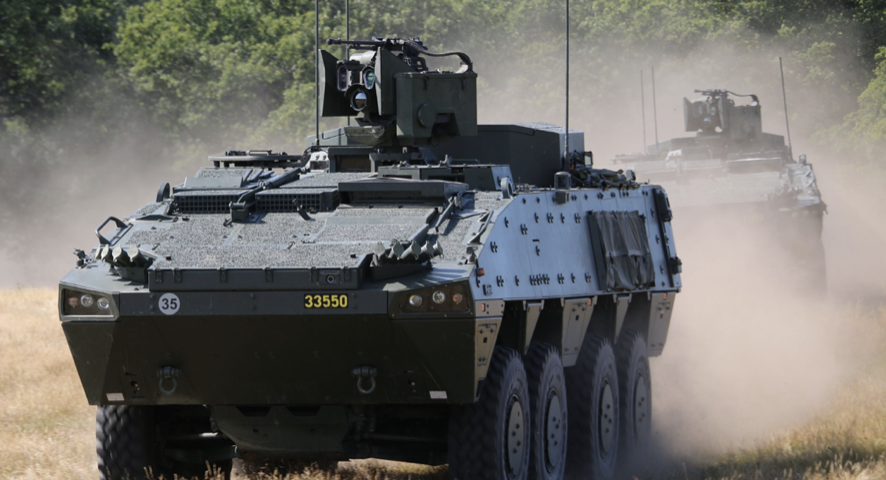
Photo: Patria’s Pansarterrängbil 360 Revinge 2015