Opinion | ForumNordic
The pitch for artificial intelligence is by now familiar. Innovation will arrive faster than anyone imagined a few years ago, productivity will jump, new jobs will appear, and the whole planet will share in the harvest. It is a lovely story. The trouble is that it must be told in the world where we actually live.
So let us test it against that world.
A promise made to a world that is not ready
Start with the most basic precondition: access. Billions of people still have no internet or only a limited connection. Some are too poor, some too old, and some live where networks do not reach, whether for geographical or political reasons. A technology that runs on connectivity cannot lift people who are not connected. “Global benefit” is a slogan until the cables; the electricity and the skills are in place.
Now add the climate. Floods, drought and lethal summer heat are already killing people in large numbers. Arable land is turning to desert and squeezing food supplies. Melting ice caps are raising sea levels and pushing millions toward the move. Thawing permafrost across Alaska, Canada and Siberia is releasing methane, a greenhouse gas far more potent than carbon dioxide over the short term. These are not forecasts for a distant century. They are current events, and they set the real limit on how much any technology can improve human welfare.
AI does not escape this equation. It sits inside it. Data centres are among the fastest-growing consumers of electricity, and the International Energy Agency has projected that their demand will roughly double by 2030.
Fresh numbers show how large the appetite already is. A Harvard-led study in Nature Sustainability, published on 16 November 2026 and summarised by the Harvard Chan School, examined 403 US hyperscale data centres between May 2024 and April 2025. Depending on the assumptions, they used 68–99 TWh of electricity, about 82 TWh in the central case and roughly 1.8% of all US electricity and were linked to 37–54 million tons of CO2. About 54% of that power came from fossil fuels, and the average carbon intensity of roughly 545 grams per kWh ran about 48% above the national grid average. The authors describe it as a floor estimate: it covers only the largest facilities, not the roughly 5,000 data centres in the US, and demand has almost certainly grown since. These are American figures, but the same build-out pressure is now reaching the Nordics. Whether that growth worsens the climate problem or helps solve it depends entirely on policy choices that are being made, or avoided, right now.
The infrastructure is already cracking
Then there is the fragility of the digital systems we are about to hand more responsibility to criminal groups and hostile states, among them North Korea, Russia, China and Iran, are attacking IT systems at rising rates, going after money, industrial secrets and critical infrastructure. Hospitals, ports, power grids and water utilities are all on the target list.
The systems also fail on their own, without any help from adversaries. Railway networks, air traffic control, shipping, national health services and energy infrastructure have all suffered outages caused by plain imperfection. Software is hard, and legacy systems are harder. Layering AI on top of brittle foundations does not make them robust. It makes the consequences of failure larger, and the causes harder to trace.
The political vacuum
The third problem is Trump who understands very little about the above facts. The world’s richest and most powerful democracy is currently led by a president who disparages long-standing allies and warms to autocrats, treating the courtship of strongmen as statecraft. When Washington embraces a ruler who is the subject of an International Criminal Court warrant and calls him a friend, it tells us something about whose interests are being served, and it is not the interest of a transparent, rules-based order for new technology.
This matters for AI because regulation is a political act. Rules do not write themselves, and they will not be written by the companies that profit from the absence of rules. If the largest economy retreats from serious oversight, someone else must set the standard, or it will be set by default by whoever builds the fastest and spends the most.
The likely outcome, if we do nothing
Put these pieces together and the honest forecast is sobering. Without deliberate policy, AI is unlikely to deliver broad gains for the global population. It is far more likely to concentrate wealth and power in a very small group of firms, investors and states, while the costs (energy use, job disruption, security risk, climate pressure) are spread across everyone else. Productivity statistics may well rise. Whether ordinary people feel it is another matter.
That outcome is not inevitable. It is a choice, and at the moment it is being made by default.
Why the Nordics, and why now
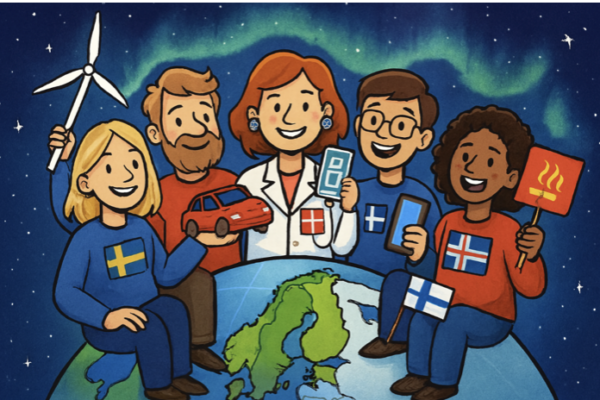
The Nordic countries are small, but they are not marginal. They have a rare combination of assets: high public trust, strong institutions, world-class research bodies such as VTT, SINTEF and DTU, innovation funders like Business Finland, Sitra and Vinnova, a track record of ambitious climate policy, and electricity systems with a high share of clean energy. They also have a cultural habit that the AI debate badly needs, which is a willingness to ask whether something works for everyone before declaring it a triumph.
Three contributions are within reach.
First, write AI rules that are built for innovation and accountability at the same time. The EU’s AI Act has set a global reference point, but its implementation is where the real fight is happening, with industry pressing for delays and dilution. The Nordic states should use their seats at the table to defend enforceable, risk-based rules while making compliance workable for startups and public-sector users, not just for the giants who can afford armies of lawyers.
Second, treat AI and climate policy as one problem. Nordic data centres benefit from a cool climate and abundant clean power, which is an advantage worth turning into a standard: transparent reporting of energy and water use, requirements to run on additional clean capacity, and waste heat that actually warms homes.
The rules we have today are nowhere near that. The EU requires operators of data centres above 500 kW to report their energy performance into a European database, and the Commission only proposed a common rating scheme in September 2026, with minimum performance standards still at the preparatory stage. Sweden’s version, the law on reporting data centres’ energy performance, is in practice a report sent to a database. Nothing in it obliges a facility to be efficient, to run on clean power or to spare local water, and a poor result carries no stringent consequence for the operator. Sweden is meanwhile arguing over more data centres, higher electricity costs for consumers and emissions, a debate that sounds very familiar in Finland. Companies that have spent years treating soft law as a suggestion will treat this one the same way. Disclosure without consequences is theatre, and the Nordics should press for binding minimum standards, backed by penalties that hurt.
AI should also be pointed where it demonstrably helps, in grid management, materials research, climate modelling and efficiency, rather than at whatever is most profitable to advertise.
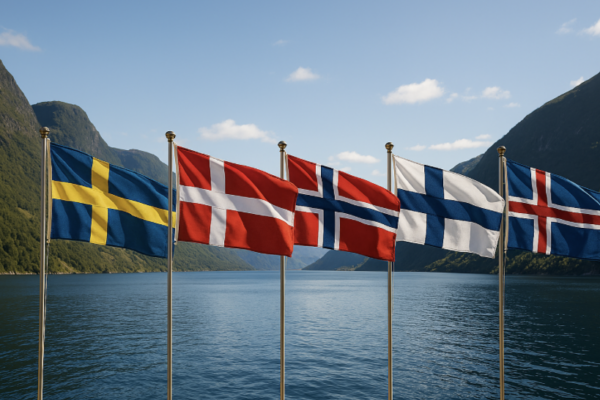
Third, put security and resilience before speed. Finland, Sweden, Norway and Denmark have long experience with comprehensive security thinking and crisis preparedness. That mindset should be applied to digital infrastructure and to the AI systems that increasingly run it, including mandatory testing, incident reporting and serious investment in the unglamorous work of making critical systems reliable.
No time to wait
The window for shaping these rules is open now, and it will not stay open. Once business models, infrastructure and political habits harden around an unregulated model, changing them becomes exponentially more expensive. Climate policy faces the same clock, with the added cruelty that the atmosphere does not negotiate.
The Nordic region cannot fix the world alone, and nobody should pretend otherwise. But it can do something more useful than watching it can show that a technologically advanced society can govern a powerful technology in the public interest and then insist that others follow. That is how small countries have punched above their weight before. It is time to do it again.
The promise of AI is real. So is the risk that its benefits will flow to a tiny few while the rest of us pay the bill. Which of those futures we get is not a matter of technology. It is a matter of policy, and the Nordic countries should be in the room, loudly, before the decisions are made without them.