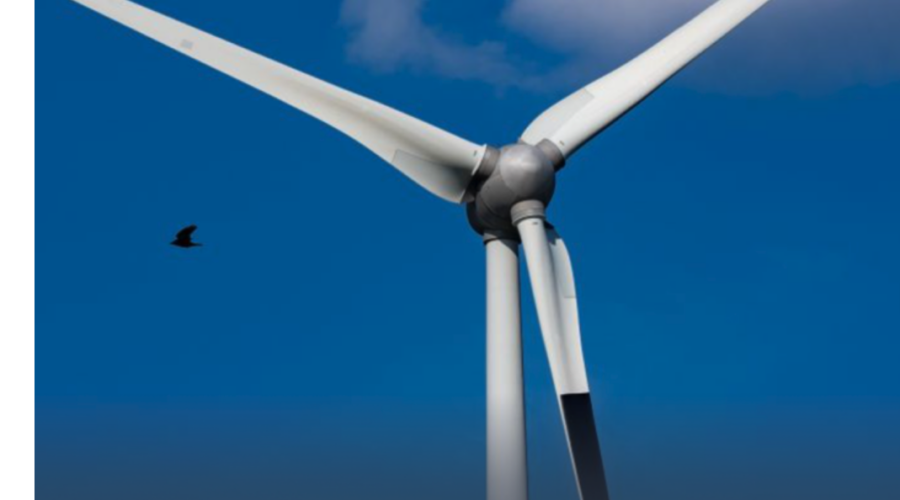
Norway’s SKARV research project is testing whether wind turbines can alter their rotor speed fast enough to avoid approaching birds, without imposing excessive mechanical wear or sacrificing substantial power production.
Seconds to make a decision
A wind turbine may have only a few seconds to respond when a bird approaches its rotor, according to the latest results from the ongoing SKARV project. Radar data analysed by the Norwegian Institute for Nature Research show that flight paths can be predicted only briefly with sufficient accuracy for collision avoidance. After about ten seconds, the difference between the forecast and the bird’s actual position becomes too large for the prediction to remain useful.
The figures are therefore not contradictory. “Ten seconds” describes the approximate outer limit of useful prediction, while “a few seconds” refers to the practical period available for detection, calculation and turbine response. Earlier work suggested that a bird should be detected at least five seconds, or roughly 100 to 200 metres, before a potential collision.
Moving the blades, not stopping them
SKARV is developing a control system that predicts where a bird will cross the rotor plane and adjusts the turbine’s rotational speed. Previous simulations indicated that moving the blades by about 20 degrees at the critical moment could prevent a collision. The adjustment takes four seconds longer on a 22-megawatt turbine than on a 3.4-megawatt machine because of the larger rotor’s inertia.
The system would operate as an additional layer above existing turbine controls. A supervisory program would combine the probability of the bird entering the rotor plane with its predicted distance from a blade, triggering action when a predetermined risk threshold is exceeded.
Researchers are now using Monte Carlo simulations to test different birds, winds, turbulence and sensor errors. They must also quantify mechanical costs: sudden load changes can contribute disproportionately to fatigue damage, meaning that collision avoidance must protect wildlife without shortening the turbine’s working life. The project, partly financed by the Research Council of Norway, runs from 2024 to 2027.