The first six months of 2026 confirmed a pattern that has been building across the region for several years: Nordic innovation is increasingly defined by hard tech — energy, materials, defence, and industrial systems — rather than software alone, and it is being driven jointly by public research institutes and the companies that spin out of them.
Research institutes deepen cross-border ties
The clearest structural shift came on June 9, when VTT (Finland), SINTEF (Norway), RISE (Sweden), the Danish Technological Institute, and Estonia’s Metrosert launched RTO4DEF in Brussels — a formal alliance of Nordic-Baltic research and technology organisations focused on total defence and resilience. Combined, the five institutes represent more than 10,000 researchers and engineers, and the alliance is designed to speed the path from laboratory prototypes to deployable dual-use technology for national governments, NORDEFCO, the EU, and NATO.
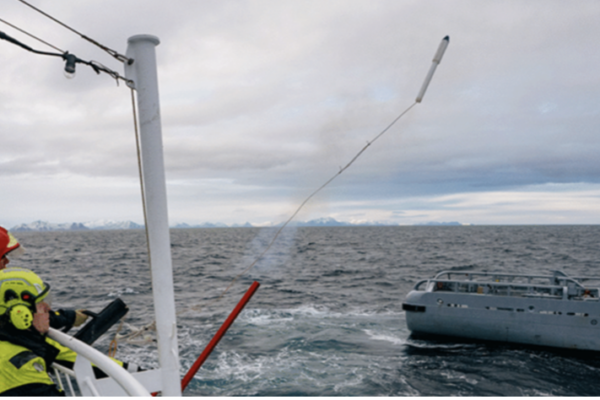
VTT’s own output through the winter and spring spanned microelectronics, sustainable fuels, medical technology, food systems, machine vision, wireless communications, water purification, printed electronics, and defence applications — a breadth that reflects its role converting applied research into industrial products rather than any single flagship breakthrough. SINTEF’s parallel focus areas centred on maritime decarbonisation, digital tools for the fashion industry, and next-generation heating systems, alongside continued work on sustainable data centre operation and hybrid solar-thermal cells.
Denmark’s DTU had a similarly institutional first half: it was named lead on four national research infrastructure projects under Denmark’s 2025 Research Infrastructure Roadmap, including fusion-related work, and saw its “Innovation DNA” spinout model adopted as a national framework intended to boost startup formation across Danish universities.
Company-level activity: funding and quantum
On the commercial side, Finnish deep-tech financing remained active. Antenna technology company Metaktik, founded in March, closed a €1 million pre-seed round in early April. Aalto University’s ESA-backed innovation programme selected its third and fourth funded projects in April, evaluated jointly by the European Space Agency, Aalto, the University of Vaasa, and Finland’s meteorological and geospatial research institutes. Sweden-based deep tech firm N-ink won a Voima Ventures science challenge, securing a €1 million convertible note.
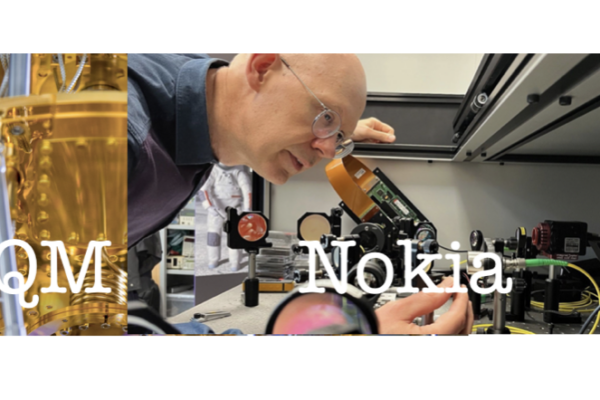
Quantum communications also drew sustained attention, with researchers from VTT, KTH, DTU, and Oslo Metropolitan University converging at IQT Nordics in June to discuss cryptography and national quantum communication infrastructure — an area several governments are now treating as strategic rather than purely academic.
Policy scaffolding
Sweden’s IVA launched “Swedish Futures,” an attempt to map the country’s technology and innovation strategy through 2035, while the Swedish government’s “Made with Sweden” initiative pushed to raise the international profile of Swedish trade and industry. Vinnova, meanwhile, reported continued system-level investment in electrified heavy transport and defence technology.
The first half of 2026 shows a Nordic innovation system leaning harder into strategic and dual-use technology — defence, energy, quantum, and infrastructure — with public research institutes acting less as academic bystanders and more as direct partners to industry and government.