If you’ve ever felt that a robot seemed “more alive” just because it had eyes, you’re not imagining it. A new Finnish-led study from Tampere University, published in 2026, digs into this odd but powerful human instinct — and the results are surprisingly clear. The team, Jari K. Hietanen, Sanni Linnunsalo, and Dirk Küster, wanted to test a simple question: If you put eyes on a humanoid robot, do people treat it more like a being with a mind? The answer, backed by rigorous experiments, is a resounding yes. Eyes on the Machine – Finland TU
What makes this work noteworthy is that Finland, not usually seen as the global centre for robotics psychology, is now pushing forward some of the most careful behavioural science behind robot–human interaction. And the research is timely: as service robots begin to appear in hospitals, schools, and public spaces, designers are wrestling with whether robots should look more human — or deliberately less so. Tampere University’s findings provide one of the clearest data points yet.
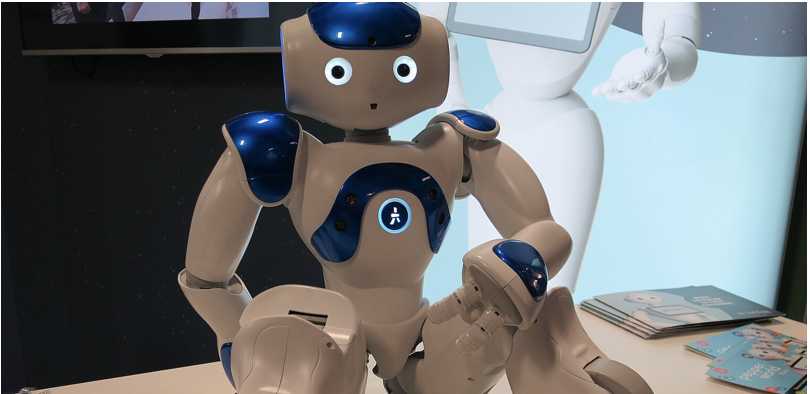
The researchers ran two studies. In the first, 200 people viewed AI-generated robot images that varied in age, orientation, and face style. Each robot appeared in two versions: one with eyes, one without. Participants then rated how much agency (ability to think or act) and experience (ability to feel sensations or emotions) they believed the robot had. The pattern was unmistakable: robots with eyes scored higher on both dimensions, even though nothing else about the robot had changed.
It didn’t matter whether the robot looked childlike or adult, screen-faced or humanoid. Eyes were the deciding factor. The effect was even stronger when the robot faced viewers directly, suggesting that simple cues of possible eye contact trigger primitive social responses that humans normally reserve for each other.
The second study added an clever twist: an Implicit Association Test (IAT), which measures unconscious associations rather than deliberate opinions. Here too, people automatically paired “eyes” with “highly capable” or “highly sentient” words. The effect sizes were large — meaning these are not just light biases but deep-seated cognitive shortcuts. Eyes on the Machine – Finland TU
This is where the Finnish angle becomes interesting. Much HRI (human–robot interaction) research focuses on robot hardware or AI performance. Tampere University instead attacks a softer but equally crucial dimension: people’s automatic social judgments, which can shape trust, compliance, care, and even ethical debates about how robots should behave. The team’s work shows that a design choice as small as adding eyes can dramatically shift how humans treat a machine — for better or worse.
The takeaway is not that all robots need big cute eyes. It’s that robot design is psychological design. As Finland continues to develop human-aware technologies, studies like this remind us that the boundary between “machine” and “social partner” can hinge on two small dots placed on a face.
If Nordic engineers want robots to be accepted — or understood — these findings will be hard to ignore.
Interested in the source – here it is for your eyes!