Tampere University researchers are developing fast, interpretable AI models that read financial markets at microsecond speed—offering new tools for safer, smarter trading in an era dominated by high-frequency algorithms.
High-frequency trading (HFT) refers to automated strategies that buy and sell financial instruments within microseconds. These traders rely on ultra-fast computers, direct exchange connections and detailed market-data feeds to spot tiny price changes before others can react. Because they see and act on information earlier, HFT firms often hold a major speed advantage. This advantage creates asymmetric information—a situation where one group knows something important before the rest of the market. When this happens, slower traders may consistently trade at worse prices or become exposed to “adverse selection,” meaning they buy just before the price falls or sell just before it rises. Such imbalances can amplify volatility, increase costs for pension funds and long-term investors, and raise fairness concerns about equal access to markets. Regulators, meanwhile, increasingly monitor these issues to ensure that fast traders don’t exploit structural weaknesses or distort market quality.
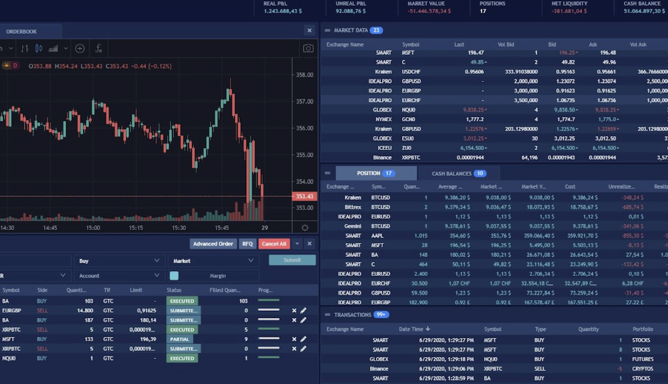
The paper From Microseconds to Markets describes how a Tampere University research group led by Professor Juho Kanniainen is developing new machine-learning models to better understand and forecast price movements in modern electronic markets. Their work focuses on the limit order book (LOB)—the real-time list of buy and sell orders that reveals supply and demand at different price levels. Because the order book updates thousands of times per second, it contains subtle patterns that can indicate where prices may move in the next few milliseconds or seconds. Traditional models struggle with LOB data because it is high-dimensional and constantly shifting. The Tampere team addresses this by using bilinear deep-learning architectures with temporal attention, known as TABL models. These models look at the order book as a two-dimensional structure—features by time—and learn how different parts of the book interact. Temporal attention helps the model focus on the most informative time slices rather than treating all data equally. This makes the system faster, more stable and more suitable for environments where decisions must be made in microseconds.
The researchers combine this modelling approach with enhanced stationary features, which help remove noise and make the data more predictable. They also compare their work with leading systems such as DeepLOB and transformer-based models, showing how bilinear attention can be both more efficient and easier to deploy in real-world, low-latency settings. Overall, the study bridges academic research and practical trading technology—aiming for models that are not only accurate but also interpretable, fast and ready for industrial-scale implementation.
Here is a link to the summary of the technical study