Your correspondent has just spent 7 days in Kenya and Zambia looking at many innovations in agriculture, farming & forestry that are supported by Nordic investors.
In general, without development finance the general situation is grim. Smallholders in these sectors rely on small farms and garden plots where water, power and fertilizers are in short supply. Rain is intermittent and unpredictable, and fertilizers expensive.
The results were grim in most places, but exceptions were discovered. The main conclusions are that much needs to be done and this is not the case with the big cutbacks by aid from the USA and Europe. The Chinese are there but they are investing that provide them with their own strategic interests an seem to impose rather harsh terms on these projects with the host countries.
International aid for projects is best provided to private companies in the host countries through equity investments or loans with certain benefits – these are competitive pricing Two examples of and good and continued mentoring an advice when needed for projects that have a positive impact on key impacts like equality, human rights, environmental protection, education and healthcare. Investors must exercise due diligence when selecting and monitoring projects by ensuring that there is no corruption or abuses of power at inception or later as the projects develop.
One of the most noticeable features of both countries was the collection of charcoal from the felling trees from which this black insidious cooking material is prepared. It is a huge “black market” business employing thousands of people cutting down trees in public lands and forests, cooking the charcoal in small brick or mud ovens and then transporting them by thousands of bicycles carrying three of four huge parcels of charcoal to homes, cafes and markets. With no reliable cheap sources of power this is the best alternative for millions that results deforestation, as seen in Europe and Iceland a couple of centuries ago, and death and ailments from inhaling fumes from the smoke of open fires at home and in cafes.
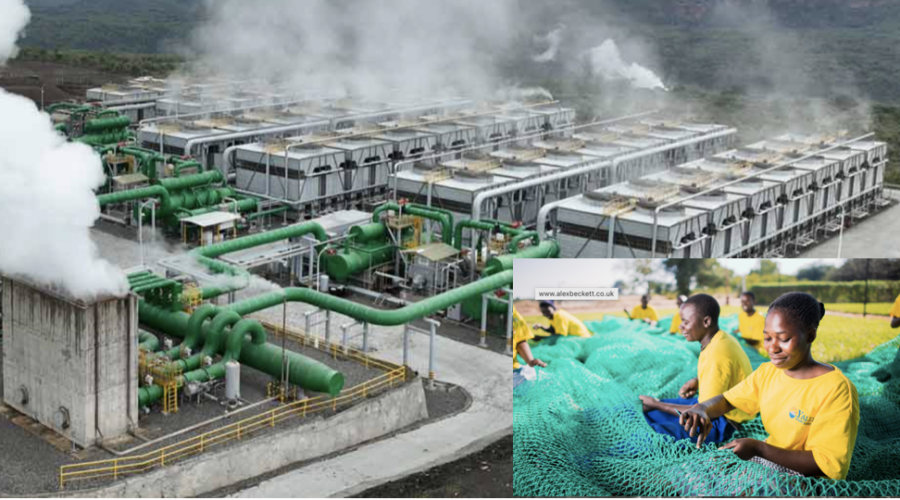
In Kenya, there are now privately owned geothermal plants which are supported by the Nordics. The Menengai project is backed by a $198.4 million investment from international partners, including the African Development Bank Group, which provided $120 million in financing through its concessional lending window. The Bank Group also mobilized additional funding from partners such as the Strategic Climate Fund, the Eastern and Southern African Trade & Development Bank, and the FinnFund.
Fish are a traditional and important source of food for millions in these two countries. Over-fishing has decimated natural fishing stocks as has pollution and a lack of fish stock management.
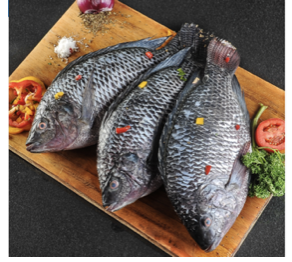
Fish supply chains are also challenging o manage since fish need to be kept cool when they are delivered to consumers, and without developed supply chains waste is rife. A company in Zambia is now developed a major fish farm in Zambia – Yalelo, also supported by the Nordics, grows bream in the clear open waters of Lake Kariba in Zambia. Their cages are among the largest in Africa, providing an open environment for our fish to swim far and deep against natural lake currents. This environment produces a fish that is healthier and stronger that consumers can buy directly from their 50 shops around Zambia.
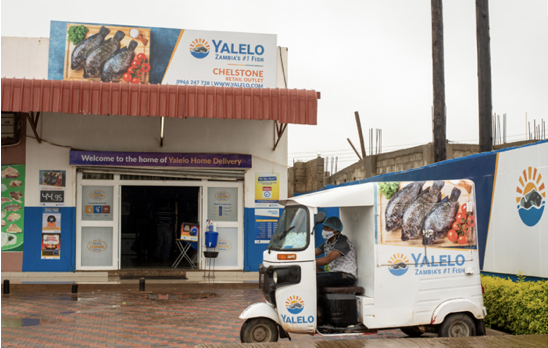
Yalelo’s efficient, scalable, and sustainable aquaculture practices ease the pressure from decades of over-fishing. They have been working with local authorities and the government to set commitments that address environmental sustainability, social responsibility, and traceability. By doing so, they can preserve their waters and fish for future generations.