Mattia Thibault and the Future of Mediated Worlds
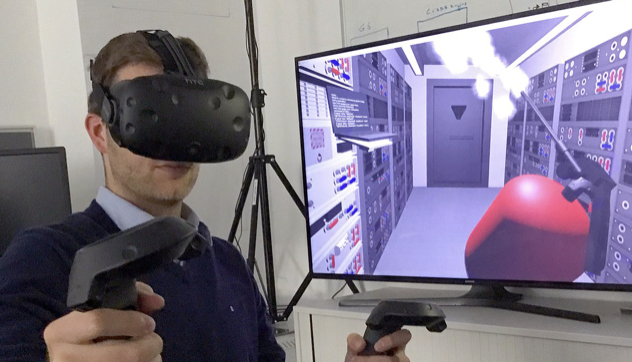
The evolution of digital technologies has blurred the boundaries between physical and virtual spaces, creating what scholars increasingly describe as a “media multiverse.” At the forefront of this discourse is Professor Mattia Thibault of Tampere University, whose research explores the semiotic and translational mechanisms that enable objects, identities, and meanings to migrate across realities. His work challenges conventional notions of translation, positioning it not merely as linguistic transfer but as a complex process of meaning-making in environments shaped by extended reality (XR) technologies.
From Metaverse to Multiverse
Thibault critiques the dominant narrative of a singular “metaverse,” largely propagated by tech giants such as Meta and Apple. Instead, he envisions a multiverse of mediated realities, where multiple virtual spaces coexist and interact with physical environments. This perspective aligns with broader academic frameworks on deep mediatization, which emphasize the pervasive role of media technologies in shaping social life (Couldry & Hepp, 2020). Rather than abrupt technological revolutions, Thibault argues for incremental transformations—echoing historical patterns where innovations gradually permeate everyday practices.
Interreal Translation: A New Semiotic Frontier
Central to Thibault’s research is the concept of interreal translation, defined as the semiotic transfer of objects, spaces, and identities across different layers of reality—physical, virtual, and augmented (Thibault, 2024). This process is not merely technical but cultural, involving shifts in meaning that affect how individuals perceive and inhabit mediated environments. For example, the recreation of heritage sites in VR or the emergence of “digital twins” in industrial design exemplifies how translation operates beyond language, influencing design, interaction, and identity formation.
Implications for Society and Design
The implications of Thibault’s work extend to ethics, design, and governance. As XR technologies become embedded in urban spaces and social platforms, questions arise about data privacy, identity construction, and cultural continuity. Scholars such as Mann et al. (2018) have proposed taxonomies of realities—virtual, augmented, mixed, and mediated—underscoring the need for interdisciplinary approaches to manage these transitions responsibly. Thibault’s speculative methodology, combining analytical and forward-looking perspectives, offers a roadmap for navigating these challenges while fostering inclusive and meaningful mediated futures.
Thibault’s vision situates translation at the heart of technological evolution, reframing it as a dynamic interplay between semiotics, media, and human experience. As we move toward a multiverse of realities, his research invites us to rethink not only how we communicate but how we construct the very fabric of our mediated lives.
References
- Couldry, N., & Hepp, A. (2020). Media and the Social Construction of Reality. Oxford University Press.
- Mann, S., Furness, T., Yuan, Y., Iorio, J., & Wang, Z. (2018). All Reality: Virtual, Augmented, Mixed, Mediated, and Multimediated Reality. arXiv.
- Thibault, M. (2024). Exploring Interreal Translation. Tampere University.
- Eskelinen, H. (2024). Mattia Thibault envisions the future of extended realities. Tampere University.
—