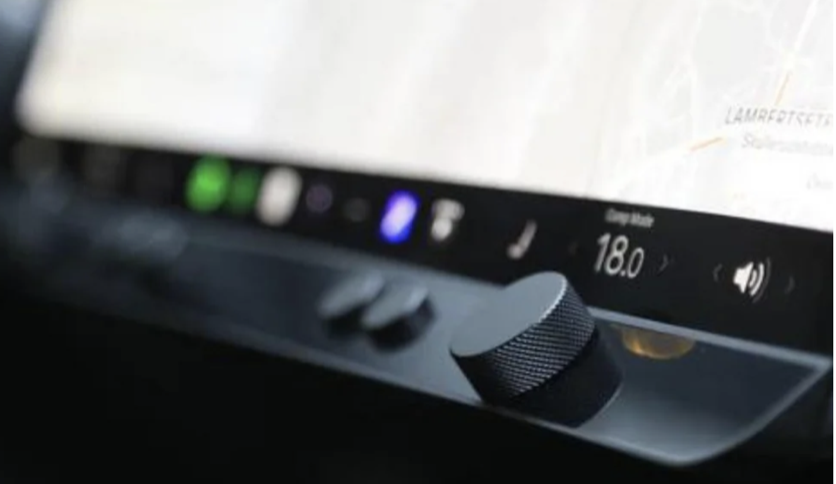
In a world where cars increasingly ask drivers to dive through screens and submenus, a Norwegian student decided to put real buttons back within reach. The idea became Ctrl Platform, centred on Ctrl‑Bar 2, a sleek module that mounts beneath a Tesla’s centre display and adds tactile controls for everyday functions; climate, wipers, doors, and lighting, without looking away from the road. The product is a follow‑on to the original Ctrl‑Bar, which brought physical buttons to Tesla Model 3/Y and drew early traction in the community and crowdfunding, setting the stage for a more ambitious, integrated second generation.
The journey behind Ctrl Platform is as compelling as the hardware. Greenmission AS, founded by 21‑year‑old Vetle Husby in Oslo (Norway), orchestrated a distributed build across three continents: circuit boards in the United States, firmware and software engineered in Lviv (Ukraine) and production partners in Asia, while launching globally via Kickstarter.
NUCC (the Norwegian–Ukrainian Chamber of Commerce) framed the initiative as a tangible example of Norwegian–Ukrainian tech cooperation, underscoring how cross‑border teams can ship complex products under pressure.
The product pitch hits a nerve: touchscreens may be elegant, but they can impair reaction times. Press materials cite research showing that screen distraction contributes to 10–30% of traffic accidents, and that interacting with a touchscreen while driving can be more dangerous than driving with a 0.8‰ blood‑alcohol level, a stark data point that has fuelled debate over automotive UX and safety.
Whatever readers think about exact thresholds, the broader safety conversation is timely: even Tesla’s fervent fans have long argued for better tactile feedback, and reviewers previewing Ctrl‑Bar 2 highlight deeper vehicle integration via an optional OBD module for functions like wipers and glovebox, alongside customizable LEDs and app‑based personalization.
Market context favours nimble accessories that solve specific pain points. Tesla has leaned into minimalism for years, and while the company pursues bleeding‑edge innovations (and files thousands of patents across autonomy, AI, and hardware), third‑party ecosystems thrive by addressing the everyday realities of drivers.
A design protected under the Hague System and a successful first crowdfunding run (356% funded) suggest Ctrl‑Bar’s team understands both IP strategy and community‑driven product development, key ingredients for scaling a niche into a platform.
The human story ultimately binds the narrative. NUCC’s coverage emphasizes how a wartime tech workforce in Ukraine kept the code shipping amid blackouts and air‑raid sirens, proof of resilience that also hints at a future talent pipeline linking Nordic founders with Eastern European engineering hubs. If the Kickstarter meets expectations, Greenmission plans to expand its Ukrainian team and continue iterating the platform. For EV owners, the immediate outlook is pragmatic: a tactile, modular control bar that restores muscle memory to the cockpit; for the industry, it’s a reminder that safety and usability aren’t just features, they’re foundations.
Whether you see Ctrl‑Bar 2 as a small rebellion against screen‑first cars or a bridge between enthusiasts and everyday drivers, its global build and safety‑minded design make it a notable Nordic export. If buttons are back, it’s because real‑world driving still rewards eyes‑on‑the‑road, hands‑on‑controls, and a team from Lviv and Oslo just shipped a way to do both.
For more: Ctrl-Bar