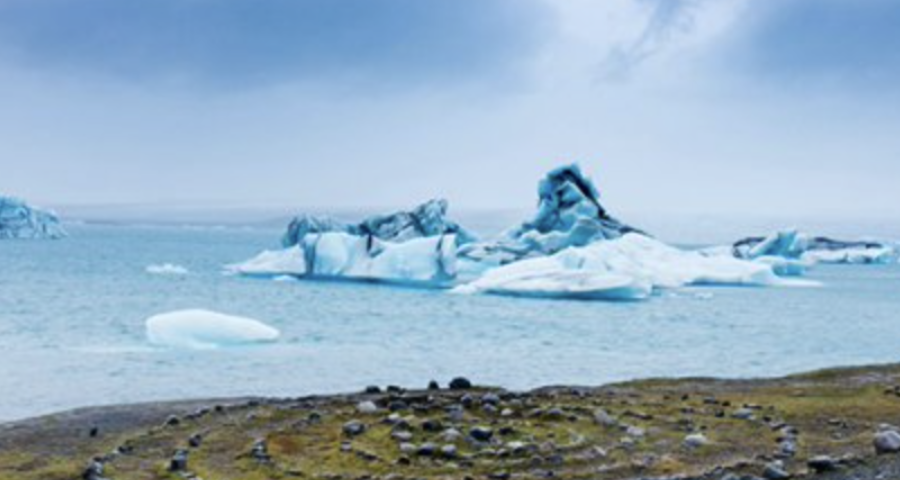
At the edge of the North Atlantic, far from the world’s biggest capitals, a nation of 380,000 is assembling a brain trust for the most complex problem of our time: how to live and thrive in a fast‑warming Arctic. While superpowers jostle over shipping routes and resources, Iceland is stitching together universities, institutes, and policy levers into a coordinated Arctic research engine. If it works, this small state will punch far above its weight; steering climate adaptation, marine governance, and energy transitions for a region heating four times faster than the rest of the planet.
Build Networks, Not Monuments
Unlike megaproject states that bankroll single “centres of excellence,” Iceland’s approach is quietly networked. The University of Akureyri’s multi‑year initiative, Stronger Arctic Research in Iceland, choreographs a series of thematic workshops; climate adaptation, ocean issues and international scientific cooperation, environmental protection and sustainable resource use, and energy transitions and their social impacts, to hard‑wire collaboration across domestic universities and prime Icelandic teams for international funding calls. The aim isn’t just knowledge sharing; it’s to make Icelandic proposals more competitive in EU and Nordic programs by aligning researchers around shared agendas and timelines.
The Centre for Arctic Studies (University of Iceland) is running a parallel track: a coordination effort to knit together Iceland’s Arctic research with pan‑Arctic bodies such as the University of the Arctic and the International Arctic Science Committee. The pitch is simple and strategic, elevate Iceland as a convening platform and connective tissue in an era when cross‑border science is the only way to decode cascading Arctic risks.
Together, these programs form a low‑cost, high‑leverage architecture: an expandable spine that can absorb new grants, researchers, and topics as Arctic priorities shift. For editors and policymakers, the significance is structural, coordination beats fragmentation, and Iceland is codifying that lesson in real time.
“Iceland is codifying a lesson larger countries keep forgetting: coordination beats fragmentation in climate science.”
A Government That Treats Research as Infrastructure
The networked model rests on a supportive policy frame. The Government of Iceland’s publications portal shows a drumbeat of documents from late 2025 to early 2026 that position research and innovation as public goods. The Policy on Science, Technological Development, and Innovation to 2035 sets long‑horizon goals for R&D capacity, university–industry linkages, and technology transfer, key scaffolding for Arctic science with real‑world impact.
In parallel, the AI Action Plan 2025–2027 commits to a legal and ethical framework for AI and signals investments in data infrastructure and public‑private collaborations. Both are prerequisites for the type of cross‑disciplinary Arctic work, data‑heavy, stakeholder‑dense, that Iceland is now scaling.
A second policy lever runs through Rannís, the Icelandic Centre for Research. Beyond grant administration, Rannís centralizes information on Arctic research and studies, creating a transparent gateway for domestic teams to enter international consortia. As Arctic calls proliferate, that clarity matters; countries with navigable funding systems often outperform richer rivals.
The Institute Making the Ocean Personal
If networks and policies are the skeleton, places like the Stefansson Arctic Institute (SAI) are the heart, translating grand strategy into lived research. SAI’s portfolio is a blueprint for integrated Arctic governance:
- MARINE SABRES links biodiversity resilience to a “blue economy” that doesn’t eat its seed corn, i.e., marine ecosystems must be healthy to deliver sustainable value.
- ICEBERG grapples with pollution governance as climate change scrambles baselines and power relations along Arctic coasts.
- NACEMAP focuses on emergency management and preparedness in Northern communities, filling a practical gap between science and civil protection.
- SustainME co‑produces knowledge with stakeholders to ensure that marine resource use remains sustainable under climate stress.
- ICEWHALE reaches into history, asking how stranded whales once buffered Icelanders from famine, a stark reminder that human‑nature interdependence is not new, merely accelerated.
For a small institute, the reach is broad: ecology, governance, social science, and historical memory. The throughline is resilience: building the legal, ecological, and cultural capacity to absorb shocks and to do so with communities, not just for them.
Field Labs on the Fjords
Climate adaptation is never purely academic. In Iceland’s Westfjords, the University Centre of the Westfjords (UW) functions as a field lab for Arctic realities: a place where theory meets logistics, weather, and human behaviour. Recent activities include student‑led research in Hornstrandir, one of the most remote nature reserves in the North, on tourist behaviour and safety in fragile ecosystems, plus modular courses on Coastal Arctic Scenarios and Data Analysis and Interpretation that train students to blend foresight with statistical rigor. The result is a pipeline of practitioners who can design fieldwork, gather evidence under harsh conditions, and translate it into policy‑relevant insight.
This is a vital complement to Reykjavik‑based coordination; Arctic science must operate on the coastlines it seeks to protect.
Climate AI Comes to the Arctic
The Arctic is a data problem as much as a physical one. Enter Climate AI Nordics, a regional network that brings Nordic researchers together to deploy machine learning on biodiversity monitoring, hydrological extremes, and forest‑structure analysis. Featured works over the last few months include Open‑Insect (open‑set recognition for biodiversity), a machine‑learning reconstruction of global particle concentrations, and ForestFormer3D for LiDAR point‑cloud segmentation, methods tailor‑made for sparse, noisy Arctic data streams. Iceland’s participation places its researchers on the front lines of AI‑assisted climate science, where detection, attribution, and prediction can pivot from “after the fact” to “decision‑ready.”.
Meanwhile, high‑level snapshots of Iceland’s AI landscape indicate small but growing research output focused on environmental monitoring, renewable energy, fisheries, and smart infrastructure, sectors that overlap tightly with Arctic priorities. The hubs, University of Iceland, the Icelandic Meteorological Office, Reykjavik University, and health directorates, are building competence in the exact areas where Arctic adaptation will need analytics first.
Open Access as a Force Multiplier
Investigative reporters often get trapped behind paywalls; Iceland’s academic system is trying to change that. The Opin vísindi repository aggregates open‑access research from Icelandic universities, doctoral theses and peer‑reviewed outputs included, making it possible to trace scientific claims back to primary sources. Recent additions span medicine and environmental sciences, and while not all are Arctic‑centric, the infrastructure matters: Arctic research is multi‑field by necessity, and an open repository accelerates cross‑pollination and accountability.
On the procedural side, Reykjavik University updated its thesis submission rules in February 2025, mandating deposits to Skemman and IRIS (with safeguards for confidential or commercially sensitive projects). For a country banking on research‑driven innovation, this is a subtle but crucial move: knowledge not only produced, but preserved, searchable, and citable.
The Innovation Ecosystem
If Arctic research is the brain, Iceland’s startup ecosystem is the set of hands learning to build with that knowledge. The innovation analysis platform Northstack documented founder sentiment and investment flows through late 2025, showing a community that remains resilient despite global funding headwinds. The report Nýsköpunarlandið Iceland 2025 flags both optimism and friction points, valuable context for how Arctic‑relevant technologies (sensors, data platforms, emergency response tools) might scale out of labs and into markets.
Meanwhile, the programming for Iceland Innovation Week 2026 (April 28–29) is a bellwether of where capital and talent will converge next: Defense & Dual‑Use (think satellite intelligence for climate monitoring, drones for emergency response), Life Sciences, AI & DeepTech, and SaaS. The dual‑use frame is particularly telling for the Arctic: the same tools that protect critical infrastructure in a crisis can monitor glaciers, coasts, and fisheries in peacetime.
“The same drones that map storm damage can count seals;
the same satellite tasking that tracks ships can track ice. Dual‑use is the Arctic’s reality.”
Success and How It Could Fail
Scenario A
The Multiplier Effect:
Within two years, coordinated workshops yield funded consortia that lock Icelandic teams into long‑horizon Arctic programs. Climate‑AI pilots transition into operational services for fisheries, civil protection, and biodiversity monitoring, with startups productizing toolchains. International partners begin to see Iceland as a default co‑applicant for Arctic calls; Reykjavik becomes an “Arctic evidence hub.”.
Scenario B
Coordination Fatigue:
Workshops proliferate without enough project management capacity. Researchers remain enthusiastic but siloed, over‑extended across proposal cycles. Without bridge funding, talented teams drift to better‑resourced Nordic institutions. Iceland risks becoming a meeting venue rather than a knowledge leader. (Mitigations: ring‑fence admin support, grow early‑stage seed for inter‑university teams.).
Scenario C
Policy–Practice Gap:
National strategies stay on paper. AI and innovation frameworks don’t deliver the data access or procurement reforms needed to deploy tools in government and industry. The result: a demo graveyard, good pilots, little adoption. (Mitigations: pre‑procurement sandboxes, inter‑ministerial data standards, outcome‑based funding.).
Where the Money and Talent Will Go Next
- Arctic Adaptation & Emergency Tech: Expect growth in tools bridging civil protection and climate analytics; early warning systems, resilience dashboards, and decision‑support layers tuned for coastal communities. Iceland’s NACEMAP ties directly into this space.
- Marine Governance & Blue Economy: Projects like MARINE SABRES will catalyse data ecosystems linking biodiversity, fisheries, and port operations; the winners will be teams that can cross legal, ecological, and software domains.
- AI for Sparse Environments: Climate AI Nordics’ featured work suggests rising demand for methods that handle low‑signal, high‑noise Arctic datasets; fusion of in‑situ sensors, satellite data, and reanalysis. Icelandic researchers are already in the room.
- Open‑Access Science as Market Precursor: Repositories like Opin vísindi shorten the time from thesis to product by increasing discoverability, particularly for international teams scouting collaborations.
What to Watch in the Next 6–12 Months
- Workshop Outputs → Funded Consortia: Do summaries morph into Horizon Europe or NordForsk wins featuring Icelandic leads?
- Climate‑AI Pilots: Are Climate AI Nordics projects embedded in agency workflows (meteorology, fisheries)?
- Open‑Access Uptake: Growth in Arctic‑relevant theses and datasets deposited in Opin vísindi/Skemman.
- Innovation Week Outcomes: Any dual‑use or DeepTech partnerships explicitly scoped for Arctic applications.
Sources (Open‑Access/Publicly Available)
- University of Akureyri — Stronger Arctic Research in Iceland (project, themes, workshops) [unak.is]
- Centre for Arctic Studies (University of Iceland) — Enhancing the Role of Arctic Research in Iceland(coordination; international links) [ams.hi.is]
- Government of Iceland — Publications (2035 science & innovation policy; AI Action Plan 2025–27) [government.is]
- Rannís — Arctic Research and Studies (funding gateway; calls) [en.rannis.is]
- Stefansson Arctic Institute (project portfolio: MARINE SABRES, ICEBERG, NACEMAP, SustainME, ICEWHALE) [svs.is]
- University Centre of the Westfjords (fieldwork; courses; Arctic scenarios) [uw.is]
- Climate AI Nordics (network; featured works) [climateainordics.com]
- AI World — Iceland Overview (AI research & sectoral focus) [aiworld.eu]
- Opin vísindi (open‑access repository infrastructure) [opinvisindi.is]
- Reykjavik University — Thesis Submission Rules (2025) (open‑access procedures; IRIS/Skemman) [ru.is]
- Northstack (ecosystem report; founder sentiment; 2025) [northstack.is]
- Iceland Innovation Week 2026 (themes; dual‑use, life sciences, AI) [innovationweek.is]
Photo:University of Akureyri