AaltoQ20 and the New Nordic Technology Frontier
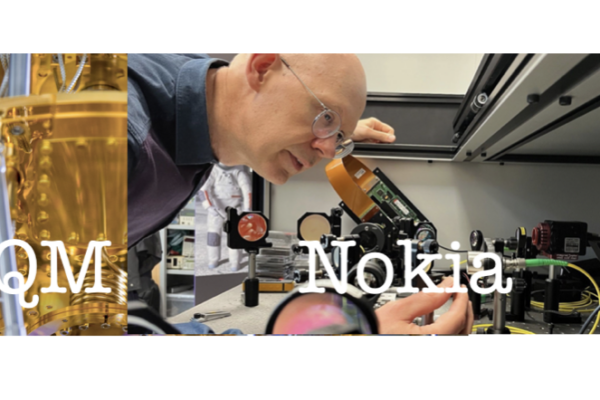
Finland has taken a decisive leap into the next era of computational capability with the unveiling of AaltoQ20, Aalto University’s newly built 20‑qubit quantum computer, a machine distinguished not only by its technical sophistication but also by its purpose: to serve as a practical, hands‑on training and research platform that places Finland among the world’s most forward‑thinking quantum education hubs. AaltoQ20 stands out globally because it is owned by the university itself and made directly accessible to students and researchers, a rarity even among leading technical institutions. According to Aalto University, the system was financed by the Research Council of Finland’s infrastructure program between 2022 and 2025 and developed under the leadership of Professor Tapio Ala‑Nissilä and researcher Suman Kundu. It incorporates components from Finnish quantum hardware companies IQM and Bluefors, symbolizing the maturity of Finland’s domestic supply chain and the strength of its innovation ecosystem. Ala‑Nissilä emphasizes that while many university‑built quantum computers worldwide have served more as experimental construction projects, AaltoQ20 is “state‑of‑the‑art” and explicitly designed for real quantum computation rather than experimental assembly.
The machine’s significance extends beyond raw performance. Though its 20 qubits do not rival the scale of leading industrial systems, its educational mission makes it uniquely influential. As Yle’s technology reporting highlights, AaltoQ20 is one of the few quantum computers internationally to be intentionally dedicated to student use, offering “practically unlimited” access for learning quantum programming, understanding qubit physics, and exploring the sensory reality of operating a dilution‑refrigerated quantum processor. This hands‑on exposure is expected to deepen Aalto’s appeal to international talent while helping Finland meet the surging workforce demand projected for the quantum sector.
The strategic timing is notable: Finland anticipates needing nearly 3,000 new quantum specialists by 2035 to maintain technological leadership and fulfil its national quantum strategy. AaltoQ20 functions as a direct response to this challenge. It reflects more than a technological milestone, it is a workforce engine designed to cultivate a new generation of Nordic quantum professionals.
Behind the launch of AaltoQ20 lies a decade of Finnish scientific groundwork. Aalto researchers have steadily pushed the frontiers of qubit quality, coherence times, and error‑reduction, often in collaboration with VTT. Earlier research demonstrated that Aalto physicists were able to create higher‑quality qubits whose error rates were reduced to half of previous benchmarks, bringing the scientific community closer to reliable quantum processors. These results, published in major international journals, showcased Finland’s openness in disseminating knowledge, contrasting with private‑sector secrecy surrounding qubit fabrication techniques.
Similarly, Aalto-led investigations into exotic materials, including work on quantum spin liquids, have pointed toward the long‑term possibility of more robust topological quantum computers, a model many researchers view as a pathway to dramatically more stable qubit architectures. Although these scientific advances remain early stage, they collectively reinforce Finland’s reputation for foundational research leadership.
The unveiling of AaltoQ20 thus marks a natural evolution in Finland’s quantum arc: from experimental materials science and early hardware prototypes in the 2010s to the construction of practical processors used directly by students and scientists. What distinguishes Finland in 2026 is not merely that it has built quantum computers before, AaltoQ20 is the fourth in the country, but that it builds them with a coherent national vision spanning academia, industry, and state strategy.
Yet Finland’s momentum is part of a broader Nordic surge in quantum innovation. The Nordic countries, collectively, are shaping a regional quantum landscape characterized by interdisciplinary collaboration, coordinated research programs, and a shared commitment to technological sovereignty.
In Sweden, one of the most ambitious initiatives is the Wallenberg Centre for Quantum Technology (WACQT), a SEK 1‑billion, 12‑year national research program headquartered at Chalmers University of Technology. WACQT aims to develop a high‑end quantum computer capable of solving problems far beyond the reach of classical supercomputers, while simultaneously strengthening Swedish expertise in quantum communications and sensing. The program’s scale and longevity underscore Sweden’s strategic intent to secure a leading position in Europe’s rapidly growing quantum sector.
Denmark, meanwhile, has established itself as a major hub in quantum materials, hardware, and multi‑modality research approaches. The Novo Nordisk Foundation Quantum Computing Programme (NQCP), based at the Niels Bohr Institute, exemplifies Denmark’s strategy of parallel explorations in superconducting, photonic, and trapped‑ion systems — a model intended to avoid early technological lock‑in and accelerate the discovery of scalable architectures. Collaborations between Nordita and NQCP have deepened the region’s expertise in superconducting qubits, coherence improvement, and the mitigation of decoherence caused by poorly understood two‑level systems in qubit materials. This partnership shows how Denmark and Sweden are pooling complementary strengths to push quantum hardware closer to fault‑tolerance.
The Danish ecosystem’s dynamism is also visible in its engagement with cloud‑based quantum service models, precision photonics, and NATO‑linked innovation programs, themes highlighted during the IQT Nordics conference held in Helsinki. The conference demonstrated how Denmark, Finland, Norway, and Sweden now see quantum technology as a shared strategic domain and are increasingly coordinating efforts across national borders.
Across the region, quantum innovation is not limited to hardware. Nordic Innovation’s assessment of national quantum ecosystems indicates that Denmark combines world‑class academic research with strong commercial infrastructure, hosting a dynamic mix of startups such as Kvantify and QPurpose, along with global players like Microsoft’s Quantum Materials Lab and Atom Computing. The country promotes technology transfer through mechanisms such as express licensing for academic spin‑offs, while fostering quantum sensing and biomedical applications through new research centres.
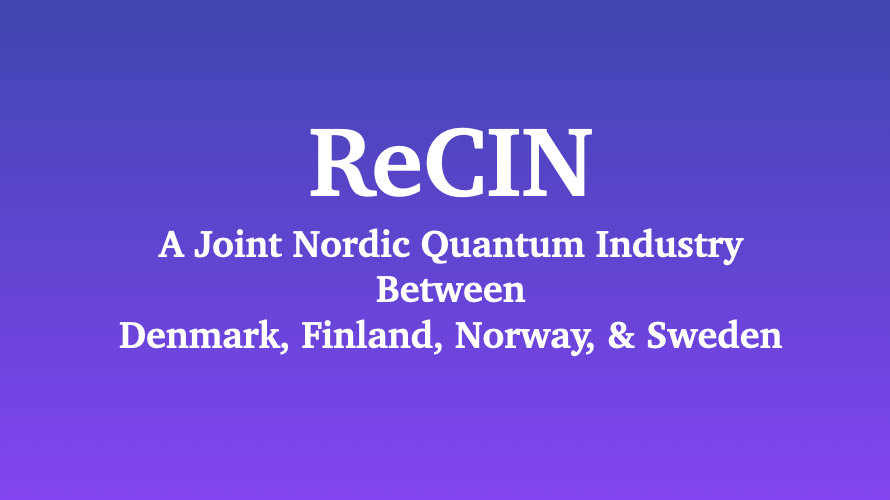
Finland, Sweden, Denmark, and Norway are now linking their national strategies in targeted cross‑Nordic initiatives. One notable example is ReCIN, a collaboration between Quantum Sweden Innovation Platform (QSIP), the Danish Quantum Community, and Finland’s InstituteQ, funded by Nordic Innovation. ReCIN seeks to identify quantum technologies capable of strengthening the resilience of critical infrastructure sectors such as water, energy, telecommunications, and navigation. It represents the first coordinated effort among Nordic quantum industry stakeholders to formulate a shared project addressing regional societal needs through quantum solutions. The initiative is supported by an advisory board comprising major Nordic industry players from Finland, Sweden, Denmark, and Norway.
Seen from this wider perspective, the arrival of AaltoQ20 is not just a Finnish achievement, it reflects the acceleration of a Nordic quantum movement built on shared goals: technological autonomy, regional competitiveness, and the creation of a sustainable talent pipeline. As quantum computing moves from experimental curiosity toward real‑world applications, the Nordic countries are positioning themselves as a uniquely cohesive cluster capable of pioneering advances in materials science, algorithm development, sensing technologies, and scalable quantum architectures.
AaltoQ20 is therefore both a symbol and a signal: a symbol of Finland’s sustained investment in research‑driven innovation, and a signal that the Nordics are moving together toward a future where quantum technologies become foundational tools across industries. In this landscape, hands‑on educational platforms like Aalto’s new machine may prove as important as the largest industrial systems, not because of raw power, but because they empower the researchers, engineers, and entrepreneurs who will build the quantum applications of the coming decades.
The Nordic region’s quantum rise is increasingly characterized by openness, collaboration, and pragmatic ambition. And if the trajectory continues, the next breakthroughs in quantum hardware, materials, sensing, and real‑world application deployment may well originate not in Silicon Valley or Shenzhen, but from Espoo, Gothenburg, Copenhagen, Trondheim, or Reykjavík, places where deep technical expertise meets long-term strategic vision, and where AaltoQ20 is only the latest milestone in a rapidly expanding frontier.