Bridging Quantum Physics and Non-Dual Philosophy
Editor’s note: This is a tricky topic but here is a clear and simplified summary of what this means:
This theory says that consciousness isn’t something created by our brains, but rather a fundamental field of reality, like space or gravity. Everything—space, time, matter, and our individual minds—is thought to emerge from this single, universal consciousness. It uses ideas from quantum physics to suggest how this one field “differentiates” to create the world we experience, similar to how a single force can split into the forces we know. This means our sense of being separate individuals is an illusion; at the deepest level, everything is interconnected. If true, it could explain mysteries like how our intention might influence quantum particles or how living things seem to share subtle connections. The idea blends modern science with ancient spiritual philosophies that see consciousness as the source of everything. Researchers suggest looking for proof in quantum experiments, brain wave studies, and even patterns in the ancient light of the universe.
This his the start of the article.
The nature of consciousness and its relationship to physical reality remains one of the most profound challenges in science and philosophy. This article synthesizes a novel framework proposed by Strømme (2025), which positions consciousness as a fundamental field rather than an emergent property of neural processes. Drawing from quantum field theory, non-dual philosophy, and the Three Principles (mind, consciousness, thought), the model introduces mathematical formulations for universal consciousness and explores mechanisms of differentiation—symmetry breaking, quantum fluctuations, and projection. The implications span physics, neuroscience, cosmology, and ethics, suggesting that space–time and individuality emerge from a unified, formless substrate. Predictions include measurable interactions between consciousness and quantum systems, coherence across biological networks, and cosmological imprints of consciousness-driven ordering. This synthesis invites interdisciplinary inquiry into the origins of structure, awareness, and reality itself.
The question of whether consciousness is fundamental or emergent has divided scientific and metaphysical traditions for centuries. Materialist paradigms typically regard consciousness as a by-product of neural complexity (Tononi, 2004), whereas non-dual philosophies such as Advaita Vedanta and Buddhist thought assert its primacy (Radhakrishnan, 1994; Garfield, 1995). Strømme (2025) proposes a unifying framework that integrates these perspectives through the lens of quantum physics, positioning consciousness as a universal field underpinning all phenomena.
The model is grounded in the Three Principles articulated by Banks (1998): Mind (universal creative intelligence), Consciousness (capacity for awareness), and Thought (mechanism of differentiation). These principles are treated as formless and eternal, preceding space, time, and matter. Consciousness is modelled as a field (Φ) analogous to physical fields in quantum theory, existing initially in an undifferentiated state (∣Φ₀⟩) and differentiating into structured states (∣Φₖ⟩) through creative processes.
Mathematical Model
Universal consciousness is represented as a superposition of potential states:
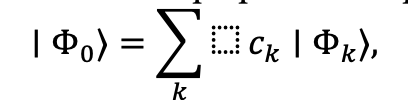
where ∣Φₖ⟩ denotes differentiated states such as space–time or individual awareness, and ∣c_k∣² reflects their probabilities. Collapse mechanisms include:
- Symmetry Breaking: Modelled via a scalar potential

mirroring phase transitions in quantum field theory (Peskin & Schroeder, 1995).
- Quantum Fluctuations: Spontaneous perturbations δΦ seed differentiation, analogous to inflationary cosmology (Linde, 1984).
- Projection:
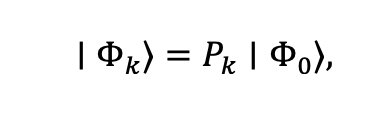
where Pₖ acts as a selection operator, paralleling quantum measurement (von Neumann, 1932).
Post-collapse, Φ evolves dynamically through wave equations, encoding space–time and matter as emergent properties.
Implications
This framework challenges reductionist neuroscience by positing consciousness as irreducible and universal. It aligns with Bohm’s implicate order (Bohm, 1980), Wheeler’s participatory universe (Wheeler & Zurek, 1983), and recent quantum gravity models suggesting space–time emerges from entanglement (Rovelli, 2018). Ethical implications are profound: if individuality is an excitation of a universal field, separateness is illusory, reinforcing interconnectedness and responsibility.
Experimental predictions include:
- Anomalies in quantum systems under focused intention (Radin, 2006).
- Coherent biological oscillations and intersubjective coupling (Popp & Yan, 2002).
- Non-random patterns in cosmic microwave background reflecting consciousness-driven ordering (Schwarz et al., 2016).
By synthesizing physics, philosophy, and consciousness studies, this model reframes reality as a manifestation of universal awareness. It invites empirical tests across quantum physics, neuroscience, and cosmology, while offering a non-dual perspective that bridges scientific rigor with ancient wisdom. Future research should explore quantization of Φ, interactions with physical fields, and implications for AI and ethics.
Sources:
Consciousness as the foundation – new theory of the nature of reality – Uppsala University